
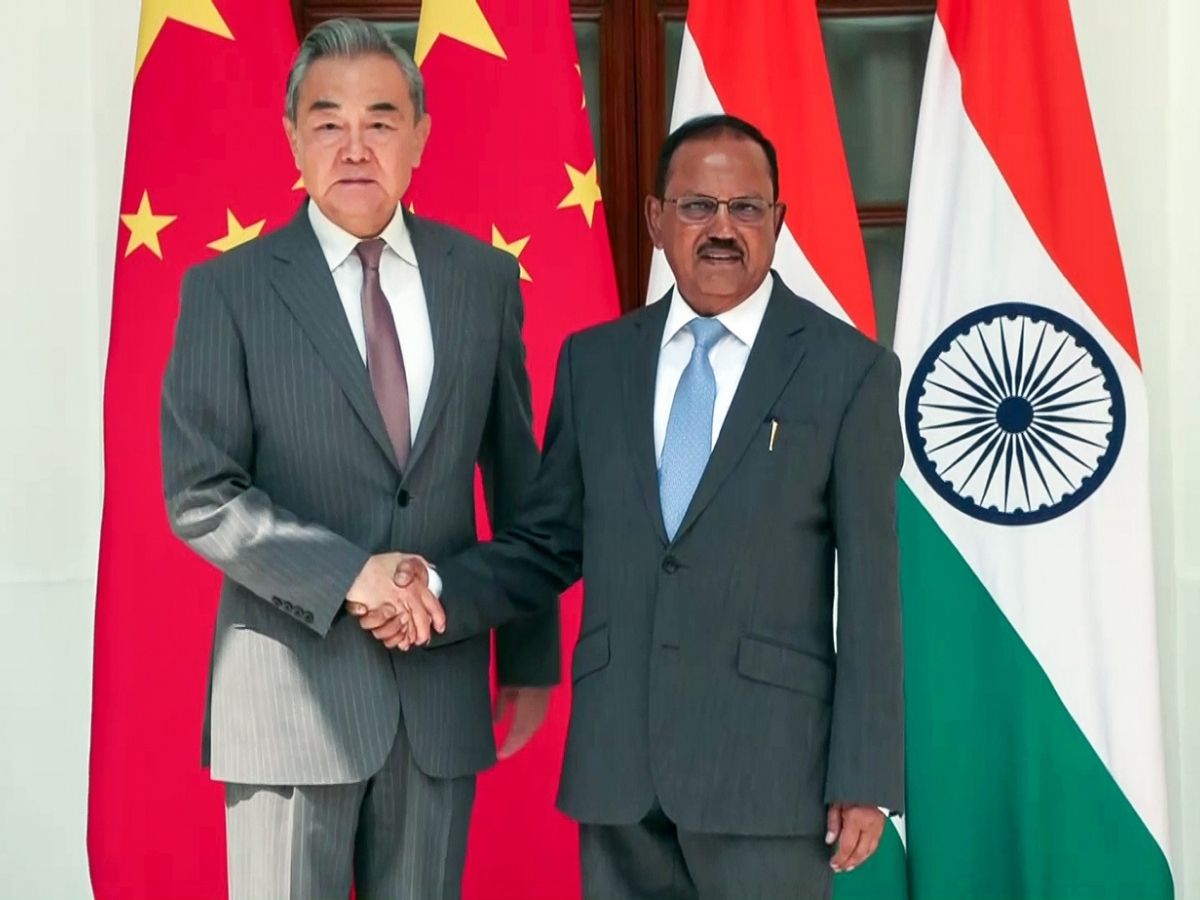

Chinese and Indian officials on Monday sat down for their 24th round of Special Representatives talks in New Delhi, marking yet another attempt at reducing border tensions and reinforcing diplomatic ties.
National Security Advisor (NSA) Ajit Doval met with his Chinese counterpart, Special Representative Wang Yi who is also a senior member of the CPC Political Bureau, for what both sides called “comprehensive, in-depth and fruitful discussions” on the boundary question and broader relations.
Building on Xi-Modi Kazan Consensus
Highlighting the importance of the Kazan meeting between President Xi Jinping and Prime Minister Narendra Modi, Wang Yi called it a “course-charting” moment for bilateral relations.
“Since the beginning of this year, bilateral relations have entered a steady development track, and the border situation has remained stable and improving,” Wang said, while stressing that China and India — as the two major developing countries — should “trust and support each other.”
Appreciating the previous round of the 23rd round of special representatives talks at the end of last year, Yi said, “At that meeting, we reached new and important consensus on the management of disagreements, stabilising the borders and moving toward a settlement. We identified specific goals and formed a working framework”.
Wang Yi expressed contentment with the restoration of stability on the borders. “Mr Doval, I appreciate the effort you made as special representative of the Indian side. Now, the bilateral relationship is facing an important opportunity of improvement and growth.”
He further said that India and China should follow the strategic guidance of their leaders, increase mutual trust through strategic communication, expand common interest through exchanges and cooperation, and “properly settle the specific issues in the borders so as to advance our relationship in a healthy and sound manner.”
He added that China looks forward to PM Modi’s upcoming visit to the SCO Tianjin Summit.
Doval Calls Kazan a Turning Point
Noting that the Kazan summit had “marked a turning point in the improvement and development of India-China relations”, Doval, for his part, credited the meeting with fostering mutual understanding and helping maintain “peace and tranquility in the border area.”
The NSA also reiterated New Delhi’s commitment to the One-China policy, and said India supports Beijing’s role as the rotating SCO chair. During his initial remarks in talks with Yi, Doval had said that PM Modi will be visiting for the SCO Summit shortly.
Focussed on Dialogue, Peace and Progress
Both sides agreed to continue following the 2005 political guiding principles and use the Special Representatives mechanism to work toward a “fair, reasonable and mutually acceptable” solution.
The duo also discussed practical cooperation in border management, demarcation talks, and cross-border exchanges, aimed to “create favourable conditions” for resolving specific issues and improving ties.
The 25th Special Representatives Meeting To Be Held in China Next Year
Amid global turbulence, both nations acknowledged the need for more cooperation to face shared challenges and reaffirmed their commitment to maintaining peace along the border.
“It is necessary to enhance understanding, deepen trust, and strengthen cooperation,” NSA Doval said, while stressing it’s essential for both nations and global peace.
Earlier, China promised to address India’s three concerns, namely rare earths, fertilisers and tunnel boring machines, news agency ANI reported, citing sources.
Wang Yi arrived in India on Monday for a two-day visit and held talks with External Affairs Minister (EAM) S Jaishankar.




