

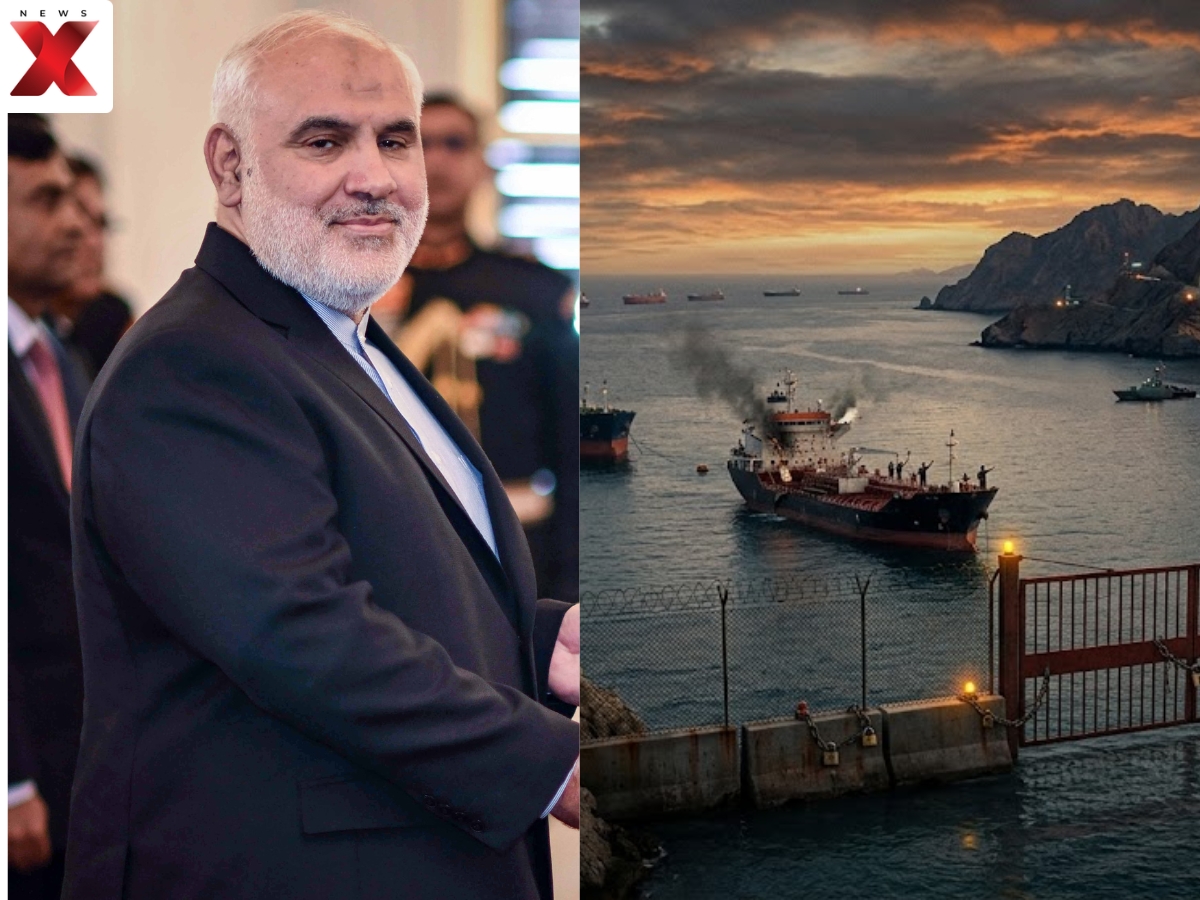
India on Saturday summoned Iran’s ambassador to register a formal protest after an Indian-flagged oil tanker came under fire near the strategically vital Strait of Hormuz, according to reports. The Ministry of External Affairs (MEA) called in Iranian envoy Dr Mohammad Fathali for a meeting scheduled at 6:30 PM following the incident, which has heightened tensions in the region. According to reports, a large Indian crude oil tanker transporting approximately two million barrels of Iraqi oil was fired upon by the Iranian Navy north of Oman. The development came shortly after reports indicated that two Indian vessels were forced to retreat from the Strait of Hormuz. The ships involved in the episode were identified as Jag Arnav and Sanmar Herald.
Indian Navy Assessing Situation
The Indian Navy is currently working to verify details surrounding the incident. Sources noted that there is no Indian naval presence within the Strait of Hormuz at present.
However, India has deployed assets in the broader region, including two destroyers, one frigate, and one tanker stationed in the Gulf of Oman.
Reports of Iranian Gunfire and Shipping Disruptions
Separately, the UK Navy reported that Iranian gunboats fired at multiple vessels attempting to transit the Strait of Hormuz. According to Reuters, citing shipping sources, several merchant ships also received radio communications from the Iranian Navy declaring that the strait had been shut again and that passage was not permitted.
Ship-tracking data showed that five vessels carrying liquefied natural gas from Ras Laffan in Qatar were approaching the strait on Saturday morning.
The situation has further strained maritime traffic, with hundreds of vessels reportedly stranded in the Persian Gulf since tensions escalated following the outbreak of conflict between the United States, Israel, and Iran on February 28.
Tehran’s decision to close the Strait of Hormuz during the conflict forced Gulf oil and gas producers to significantly cut production.
Strait of Hormuz Reopened Temporarily
Earlier, US President Donald Trump had cited “some pretty good news” about Iran, declining to elaborate. But he also said fighting might resume without a peace deal by Wednesday, when the two-week ceasefire expires.
Iran had announced its temporary reopening of the Strait of Hormuz following a separate U.S.-brokered 10-day ceasefire agreement on Thursday between Israel and Lebanon. Israel invaded parts of southern Lebanon after the Iran-allied Hezbollah militant group joined the fighting in early March.
But on Saturday Iran’s armed forces command said transit through the strait had reverted to a state of strict Iranian military control, citing what it described as repeated U.S. violations and acts of “piracy” under the guise of a blockade.
The spokesperson said Iran had earlier agreed, “in good faith,” to the managed passage of a limited number of oil tankers and commercial vessels following negotiations, but said continued U.S. actions had forced Tehran to restore tighter controls on shipping through the strategic chokepoint.
U.S. Central Command said in a statement that American forces were enforcing a maritime blockade of Iran, but did not comment on the latest Iranian actions. Near Oman
Zubair Amin is a Senior Journalist at NewsX with over seven years of experience in reporting and editorial work. He has written for leading national and international publications, including Foreign Policy Magazine, Al Jazeera, The Economic Times, The Indian Express, The Wire, Article 14, Mongabay, News9, among others. His primary focus is on international affairs, with a strong interest in US politics and policy. He also writes on West Asia, Indian polity, and constitutional issues. Zubair tweets at zubaiyr.amin





