
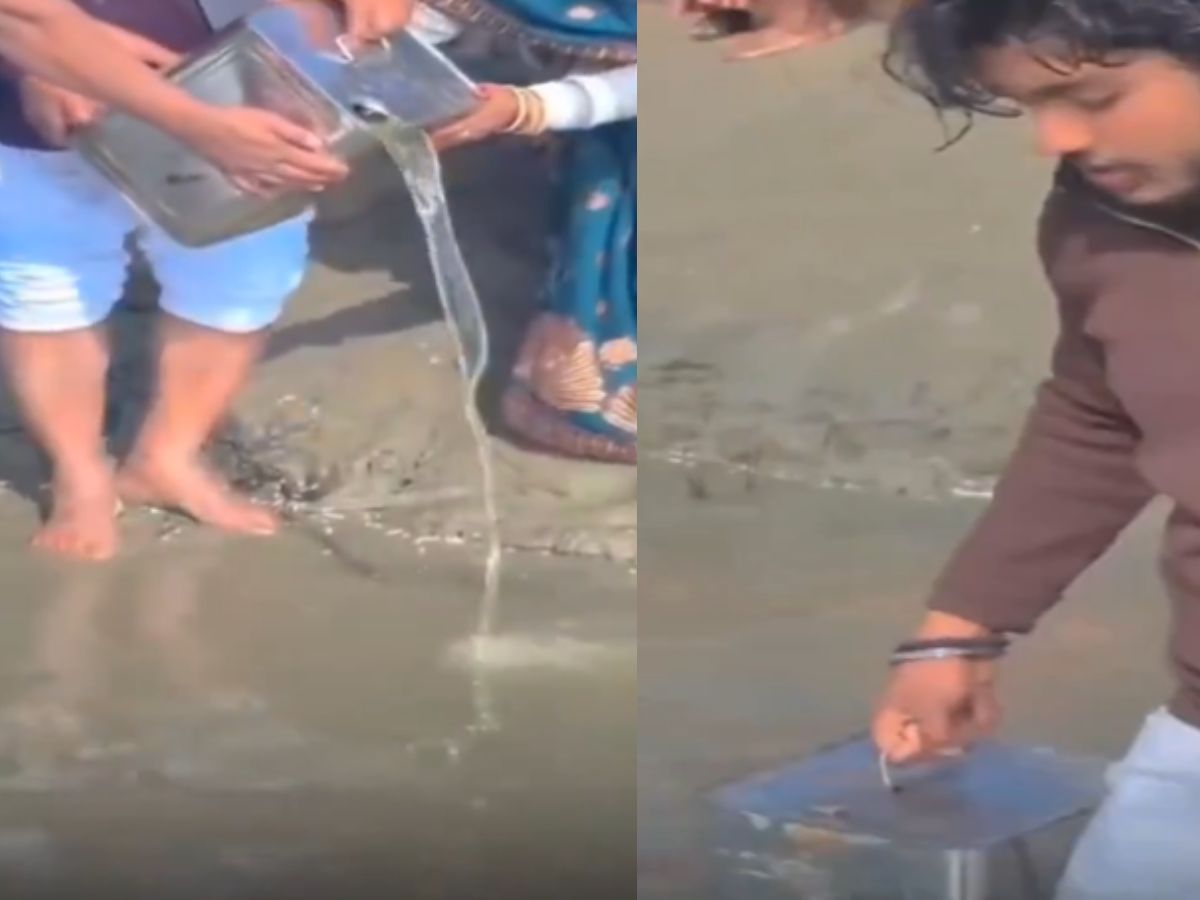

The social media world has erupted into heated arguments about a newly viral video that shows devotees dumping 165 liters of desi ghee into the River Ganga. The present incident follows a previous event which saw 11,000 liters of milk being dumped into the river, which now leads to urgent inquiries about how ancient religious practices interact with today’s environmental protection efforts. The video shows two people who stand at the muddy riverbank to pour ghee from a metal container into the river.
Devotion or Environmental Concern: Public Divided
The process of the ritual reveals the amount of the offering that people will give. The men start to move industrial-sized containers onto a boat, which proceeds to navigate toward the middle of the river.
The group uses the boat to dump their containers, which create an extensive slick of shimmering oil that flows through the sacred waters. The spiritual participants show complete dedication to their religious practice, while the online community has reacted with both disbelief and scientific worry.
Social Media Reacts Strongly to Viral Ghee Offering Video
People argue about two points which create environmental damage through their use of sacrificial “offerings.” The Ganga faces existing pollution problems, but the introduction of large fat quantities creates new environmental issues which require solutions. Critics maintain that people who practice religious faith intend to help the river, but their actions actually bring harm to its ecosystem.
Devotees pouring what is claimed to be over 165 litres of desi ghee into the Ganga during a ritual swaha offering.. https://t.co/5bwjxhFVC2 pic.twitter.com/qrw9ZKfzoo
— SriSathya (@sathyashrii) April 9, 2026
Environmental Impact of the River Pollution
The introduction of large volumes of lipids into a freshwater ecosystem creates multiple physical chain reactions that lead to harmful effects. Ghee creates a permanent semi-solid surface film because its low density prevents it from dissolving or washing away in water.
The layer of material creates a barrier that completely stops atmospheric oxygen from moving into the water column. The film creates localized hypoxia conditions that endanger all aquatic life in the Ganga River, including the endangered Ganges River dolphin.
The bacterial decomposition of high-calorie organic material results in dissolved oxygen (DO) consumption, which creates “dead zones” where fish and other organisms cannot survive.
Ritual Sustainability for Eco-Friendly Rituals
All spiritual practices need to operate through sustainable devotion to connect their sacred values with ecological protection. The people used to perform ghee and milk offerings through their rituals which produced products that the river could naturally handle.
The rituals which were originally designed for small offerings, now create an industrial waste issue through their practice, which requires at least a hundred liters of liquid. Experts state that the ritual “purity” becomes broken when participants damage the river, which people treat as a sacred mother goddess.
The Ganga’s purity needs protection through “Green Puja” practices, which use symbolic offerings or redistribute food to the needy according to their religious traditions.
A recent media graduate, Bhumi Vashisht is currently making a significant contribution as a committed content writer. She brings new ideas to the media sector and is an expert at creating strategic content and captivating tales, having working in the field from past four months.




