
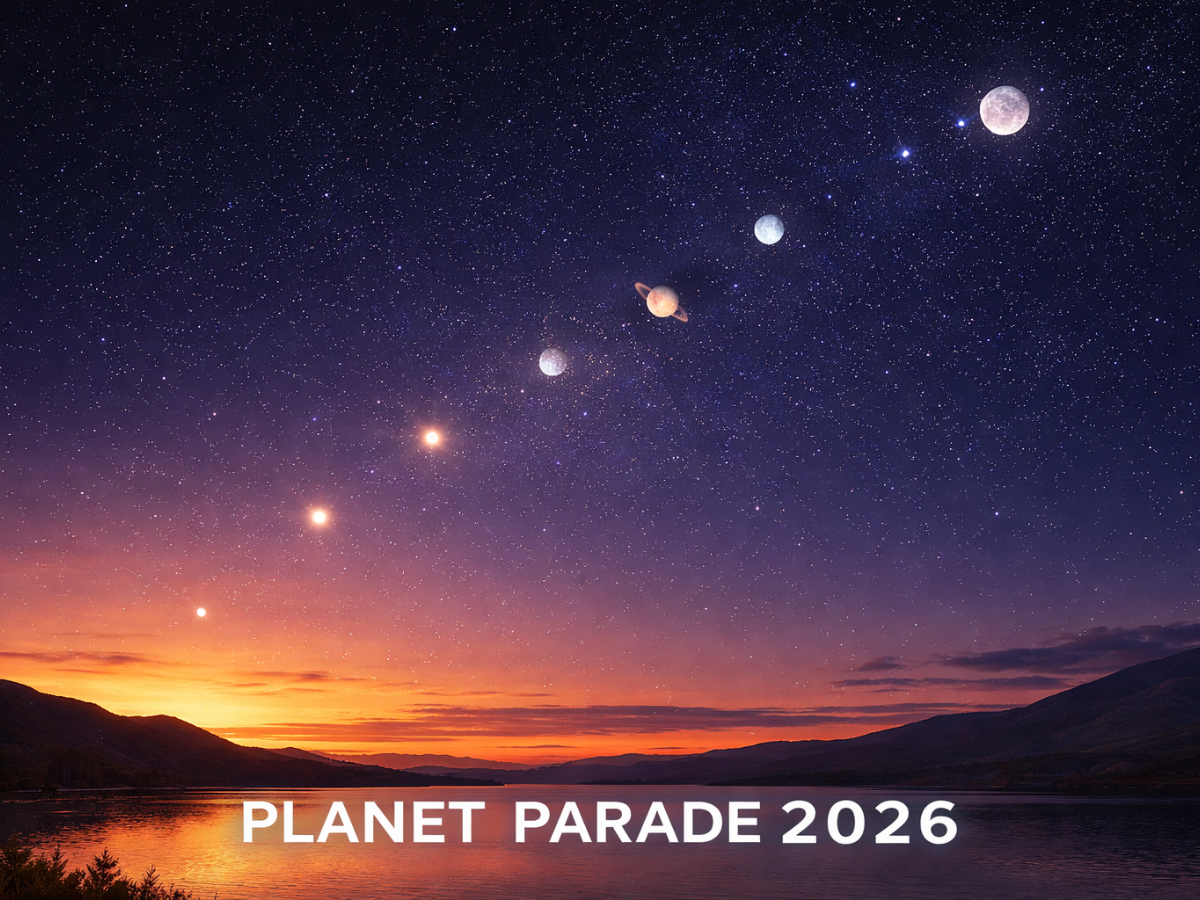

February 2026 is giving sky lovers a reason to look up. A rare sky event called the Planet Parade 2026 will light up the evening sky, and six planets will appear close together after sunset. It’s not something you see every year, and that’s why excitement is building fast.
As per reports, the best night to watch the Planet Parade 2026 is February 28. On this evening, the planets will be spread across the sky in a neat line. You won’t need fancy equipment to enjoy most of it, though binoculars will help with the fainter planets. Experts say the best time to watch the Planet Parade 2026 is about 30 to 90 minutes after sunset, once the sky gets dark but the planets are still visible.
Planet Parade 2026: Planets in the Line-Up
The planets taking part in the Planet Parade 2026 are Mercury, Venus, Saturn, Uranus, Neptune and Jupiter. Some will shine bright. Others will test your patience. A clear view of the horizon is very important, especially if you want to spot the harder ones. Astronomers advise staying away from city lights. “A clear and unobstructed view is critical,” experts say.
What Planets to See on 28th February During the Planet Parade 2026?
Here is what to look for, from lowest to highest in the sky:
1. Mercury: Very faint and close to the horizon. It is hard to spot early in the month but becomes easier to see later in February.
2. Venus: Bright and easy to see. It shines strongly near Mercury and helps guide your eyes to the lower planets.
3. Saturn: A soft yellow light near the horizon. It is dim, so binoculars will help.
4. Uranus: Fainter than Saturn but higher in the sky. Binoculars are recommended to spot it.
5. Neptune: Very faint and difficult to see. It sits low and usually needs binoculars or a telescope.
6. Jupiter: The brightest and easiest planet to spot. It appears higher than the others and is visible with the naked eye.
Planet Parade 2026: Why It Matters
The Planet Parade 2026 comes during a month already full of sky events. A near-full Moon will also be visible around the same time. Planet parades happen because planets follow the same path across the sky, known as the ecliptic. While such alignments are not extremely rare, seeing six planets spread across the sky at once is still a treat.
Also Read: Happy Rose Day 2026: Best Budget-Friendly Gifts That Speak Love Without Spending Big




