
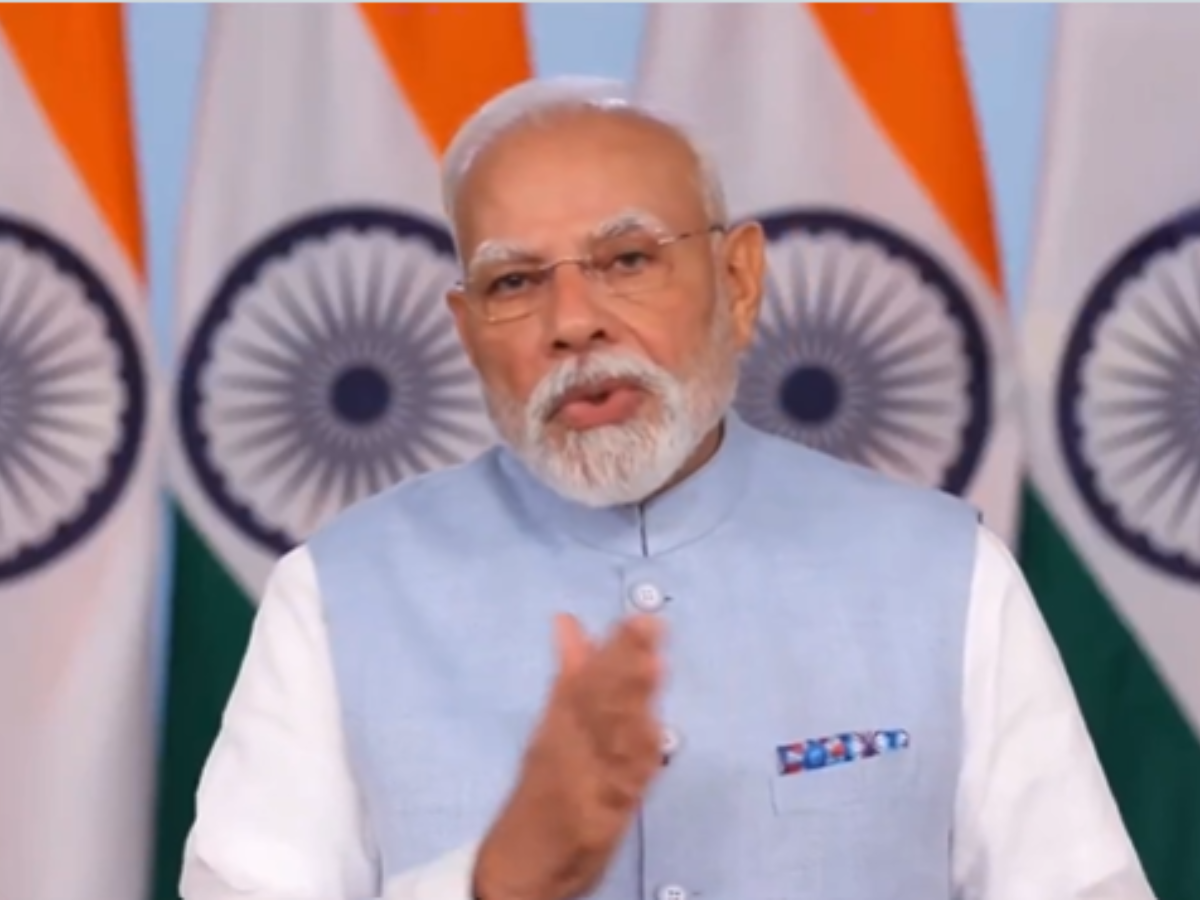

Prime Minister Narendra Modi addressed the nation ahead of the rollout of GST 2.0 reforms, announcing two festivals starting tomorrow: Navratri and a GST savings festival. He extended greetings to all citizens for Navratri, the festival of Shakti, and highlighted that India is taking a major step towards Atmanirbhar Bharat.
PM Modi said the new GST reforms will begin from the first day of Navratri, marking a historic moment for economic growth. Citizens can expect increased savings and easier access to essential and luxury items as part of the new reforms.
From tomorrow, the ‘GST Bachat Utsav’ will begin. Your savings will increase & you will be able to buy your favourite items with more ease. Be it the poor, neo-middle class, youth, farmers or others, this ‘GST Bachat Utsav’ will benefit all sections of the society.
– Hon’ble PM… pic.twitter.com/YDJi0GPZmT
— Nirmala Sitharaman Office (@nsitharamanoffc) September 21, 2025
The GST Bachat Utsav marks a major initiative aimed at increasing savings for citizens across India. Launched alongside the rollout of next-generation GST reforms, the festival encourages people to benefit from reduced tax rates, which now cover most essential goods and services. With GST slabs simplified to 5% and 18%, households can spend less on daily essentials like food items, household appliances, vehicles, and insurance. The festival not only promotes financial relief but also boosts consumption during festive seasons. Citizens across the country are expected to experience significant savings, making it a nationwide celebration of affordability and economic empowerment.
PM Modi said the GST reforms will benefit the poor, middle class, women, youngsters, and traders alike. He congratulated crores of Indians for supporting the reforms, stating they will accelerate India’s growth story, enhance ease of doing business, attract investment, and ensure equal development opportunities for every state.
The Prime Minister emphasized that these reforms reflect a continuous process of improvement. “As the country’s needs change, we implement next-generation reforms to keep pace with economic growth,” he said, reinforcing that GST 2.0 is designed to simplify taxation and boost public consumption.
Historic Context: GST Implementation in 2017
PM Modi recalled that his government implemented GST in 2017 to simplify India’s complex tax structure. He noted that previously, businesses faced multiple taxes and high logistics costs, which increased prices for consumers. He said, “Millions of companies and citizens suffered daily due to the complex tax system.
Our historic move to implement GST freed the country from this web and enabled uniform taxation.” The Prime Minister credited the cooperation of all states in making the reform possible, ensuring that GST could reach every corner of India efficiently.
Key Features of GST 2.0
Under GST 2.0, the 12% and 28% tax slabs have been removed, leaving only 5% and 18% slabs. These rates now cover almost all goods and services, except luxury items and “sin goods.”
Daily essentials such as coffee, ghee, biscuits, and cooking oil will become cheaper. New cars and medical insurance premiums will also see reduced costs. PM Modi highlighted that these changes will boost public consumption during the festive season, ensuring that households experience immediate relief and enjoy savings on essential and luxury items.
Double Bonanza: Income Tax and GST Savings
The Prime Minister termed the combination of GST reforms and income tax exemptions a “double bonanza” for citizens. “If we combine the Income Tax relief with GST savings, decisions in the past year will save Indian citizens around Rs 2.5 lakh crore,” he said. He added that the reforms will especially support the neo-middle class, enabling them to fulfill aspirations for consumer goods, travel, and leisure.
The GST savings festival, starting from tomorrow, will make essential items and discretionary purchases more affordable, improving the financial wellbeing of households across India.
Make in India: Every Home a Swadeshi Symbol
PM Modi encouraged citizens to embrace Swadeshi products as part of the Make in India initiative. He said, “Every household must become a symbol of Swadeshi. Proudly say, ‘I buy Swadeshi, I sell Swadeshi.’” The Prime Minister urged state governments to accelerate manufacturing and create an environment for investment. By promoting local products and increasing domestic production, India can achieve faster economic growth and strengthen the Atmanirbhar Bharat vision. The GST reforms, combined with Swadeshi promotion, aim to make India self-reliant, economically strong, and globally competitive.
PM Modi’s address highlighted the dual celebration of Navratri and the GST savings festival. The reforms aim to simplify taxation, boost savings, encourage domestic manufacturing, and accelerate India’s growth story. Citizens, traders, and states are expected to benefit from lower tax rates, reduced prices on daily essentials, and increased investment opportunities. The combination of income tax relief and GST reforms marks a landmark step towards an Atmanirbhar Bharat, with savings, economic growth, and equal opportunities for all states forming the cornerstone of the Prime Minister’s vision.
Also Read: PM Modi Addresses Nation: 11 BIG Takeaways From His Speech
Swastika Sruti is a Senior Sub Editor at NewsX Digital with 5 years of experience shaping stories that matter. She loves tracking politics- national and global trends, and never misses a chance to dig deeper into policies and developments. Passionate about what’s happening around us, she brings sharp insight and clarity to every piece she works on. When not curating news, she’s busy exploring what’s next in the world of public interest. You can reach her at [swastika.newsx@gmail.com]




