
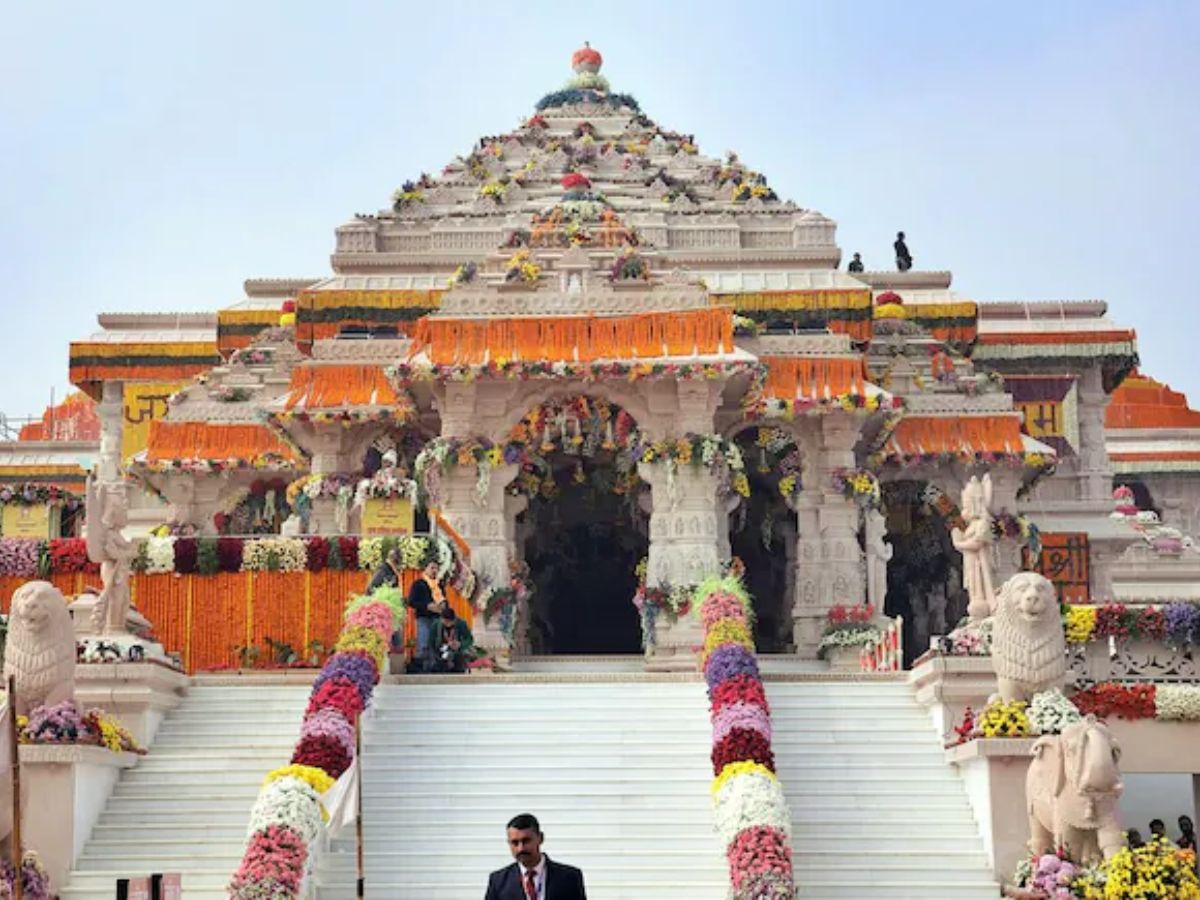

Today, January 22, 2026, marks two years since the historic inauguration of the Ram Mandir in Ayodhya. On January 22, 2024, the holy city of Ayodhya in Uttar Pradesh resonated with chants of “Jai Shri Ram” as the Ram Mandir Pran Pratishtha of Ram Lalla was performed, an event watched and celebrated across the country.
22 January symbolised far more than the return of Lord Ram after 14 years of exile. It marked the reaffirmation of Lord Ram as the embodiment of Maryada Purushottam, the ideal of righteous kingship, moral governance, and dharma that continues to guide Hindu civilisational values.
Ram Mandir Pran Pratishtha: A Cultural Icon for Hindus
As the third anniversary of Ram Lalla’s consecration is observed, the temple complex today stands as a vast, well-organised, and spiritually vibrant space. With an estimated contribution of ₹1,600 crore towards its development, the Ram Mandir Pran Pratistha has evolved into a fully furnished, multi-level spiritual and architectural landmark rather than a singular symbol of faith.
Beyond its religious significance, the temple exemplifies Indian architectural excellence and serves as a model of modern religious management, seamlessly blending tradition with contemporary planning and administration.
Ram Mandir Pran Pratishtha: What has been transformed so far?
The completion of the main temple at Ayodhya marks a defining moment in contemporary Hindu history. It symbolise the culmination of decades of faith, devotion and cultural aspiration. With the sanctum now open for darshan, devotees can witness Ram Lalla in his child form, an image that evokes innocence, divinity and the timeless bond between the deity and his followers.
Adding to the Ram Mandir Pran Pratistha, temple’s grandeur is the installation of the Ram Parivar on the first floor, which completes the sacred narrative of Lord Ram’s life and lineage. This elevation of the divine family offers devotees a fuller spiritual experience, connecting personal devotion with the broader epic of the Ramayana.
Encircling the complex is an 800-metre-long parikrama wall, thoughtfully designed to house temples dedicated to Lord Shiva, Ganesha, Surya, Hanuman, Goddess Bhagwati and Annapurna.
Ram Mandir Pran Pratistha: How the growing facilities are improving the pilgrimage experience?
The transformation of the holy city Ayodhya goes far beyond the construction of the Ram Mandir, with large-scale infrastructure projects reshaping how devotees experience pilgrimage.
The 100-foot-wide Ram Janmabhoomi Path now serves as a grand and accessible approach to the temple, easing movement for lakhs of visitors. Streamlined darshan corridors, permanent canopies, and LED information displays have significantly reduced congestion while improving crowd management and communication.
Essential amenities such as clean drinking water, modern sanitation facilities, wheelchair access for persons with disabilities, and locker services for footwear and belongings underline a focus on inclusivity and comfort.
The development of a pilgrim facility centre capable of accommodating 25,000 people, alongside a modern hospital, ensures safety and support for visitors. With an upgraded airport and railway station, Ram Mandir Pran Pratistha at Ayodhya has emerged not merely as a pilgrimage destination, but as a well-planned religious city equipped for the future.




