
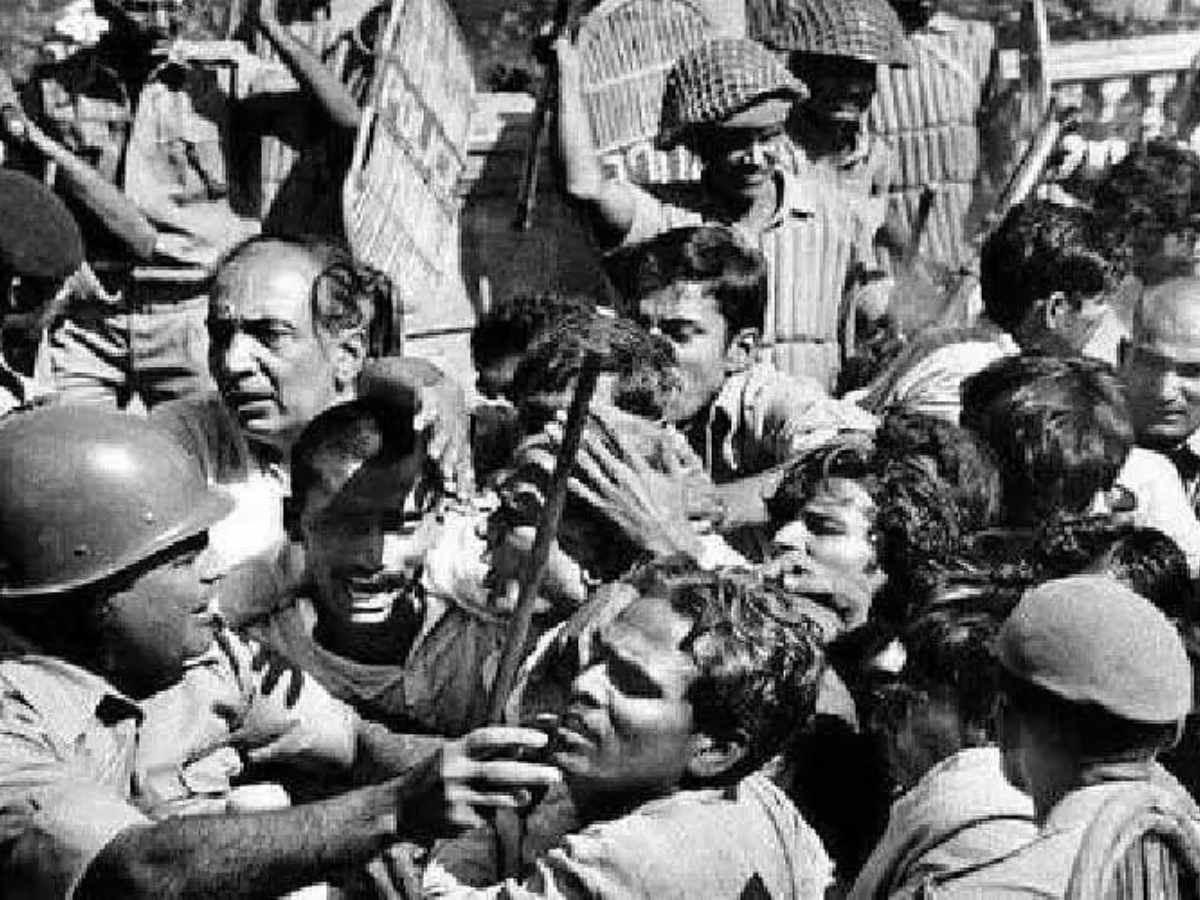

On the night of June 25, 1975, India witnessed something that had never happened before. Prime Minister Indira Gandhi declared a nationwide Emergency, citing a “deep and widespread conspiracy” against her government. This decision gave her sweeping powers and suspended the rights of Indian citizens for 21 months, until March 1977.
The declaration was made through a late-night radio address on All India Radio, following a Supreme Court ruling that allowed her to remain Prime Minister but barred her from participating in Parliament.
Why It Was Declared
Just a few days earlier, on June 12, the Allahabad High Court found Indira Gandhi guilty of electoral misconduct during the 1971 Lok Sabha elections. The court declared her election null and void, triggering a massive political crisis. When the Supreme Court gave a partial stay, her position became fragile.
Fearing protests, political instability, and what she called a “conspiracy,” Gandhi decided to act—and she used Article 352 of the Constitution to declare an Emergency, which was then officially proclaimed by President Fakhruddin Ali Ahmed.
What Happened During the Emergency?
During the Emergency, civil liberties were suspended, the press was heavily censored, and thousands of opposition leaders—including Jayaprakash Narayan, L.K. Advani, Atal Bihari Vajpayee, and Morarji Desai—were jailed without trial.
The government also pushed through several harsh measures, including forced sterilization drives led by Indira Gandhi’s son, Sanjay Gandhi, and aggressive slum clearance programs that displaced thousands. “The President has proclaimed the Emergency. This is nothing to panic about… I am sure you are all aware of the deep and widespread conspiracy…,” Indira Gandhi told the country in her address.
Timeline of Key Events
-
June 12, 1975: Allahabad High Court declares Indira Gandhi’s election invalid.
-
June 24, 1975: Supreme Court allows her to stay as PM but limits her powers.
-
June 25, 1975: Emergency declared; civil rights suspended.
-
June 26, 1975: Gandhi addresses the nation.
-
September 1976: Sanjay Gandhi launches mass sterilization drive.
-
January 18, 1977: Indira Gandhi calls for general elections.
-
March 23, 1977: Emergency officially ends.
Political Movements and Resistance
The period saw massive resistance across the country. Movements like Navnirman in Gujarat and Jayaprakash Narayan’s Bihar movement inspired people to stand up against the government. A nationwide railway strike led by George Fernandes also made headlines.
Despite the crackdown, the public anger was growing—and when elections were finally announced in March 1977, Indira Gandhi’s Congress party suffered a crushing defeat. The newly formed Janata Party came to power, marking the first time Congress lost at the national level.
50 Years Later: Remembering the Emergency
As India marks 50 years since the Emergency, the BJP-led government has declared June 25 as “Constitution Murder Day” or ‘Samvidhaan Hatya Diwas’.
Union Home Minister Amit Shah called it a day to remember the spirit of those who fought to protect democracy, “Lakhs of people were jailed without any reason and the voice of the media was suppressed,” Shah wrote on social media.
“To observe 25th June as Samvidhaan Hatya Diwas will help keep the eternal flame of individual freedom and the defence of our democracy alive…”
Prime Minister Narendra Modi echoed those sentiments, “It is also a day to pay homage to each and every person who suffered due to the excesses of the Emergency, a Congress-unleashed dark phase of Indian history,” Modi said.
Leaders Reflect on a Dark Chapter
Many political leaders from the BJP have spoken out on the significance of this day.
Lok Sabha Speaker Om Birla said, “This House strongly condemns the decision to impose emergency… The day of June 25, 1975, will always be known as a black chapter in the history of India.”
Defence Minister Rajnath Singh described it as a time when power was misused, while BJP President JP Nadda praised the bravery of those who stood up against the government.
Why It Still Matters for Gen Z
For young Indians, especially Gen Z, the Emergency might feel like ancient history—but it still shapes our democracy today. It’s a reminder of what happens when power goes unchecked and how easy it is to lose basic freedoms when citizens stay silent.
It’s also a lesson in resilience—because despite fear, imprisonment, and censorship, millions fought back, and India’s democracy survived.
Also Read: No Agreement As Of Now’: Tehran Denies Trump’s Claims Of Ceasefire Between Iran And Israel




