
Several parts of north, central, and western India continue to reel under the intense heatwave with several places crossing 45 degrere celcuis temperatures. Uttar Pradesh’s Banda continues to remain in the headlines for record-breaking heat. According to the India Meteorological Department (IMD), the city recorded 48 degrees Celsius on Thursday, the country’s highest maximum temperature. Prayagraj, another town in UP, recorded 46.4 degrees Celsius, while Hamirpur recorded 46.2 degrees Celsius and Jhansi touched 45.9 degrees Celsius. Temperatures in districts including Aligarh, Varanasi and Hardoi remained above the 43-degree mark.
For the last few days, Banda has been the hottest city in the country with temperatures on Wednesday as well crossing 48 degrees Celsius.
Temperatures Rise Sharply In Multiple Divisions in UP
The weather department noted a significant rise in daytime temperatures in the Ayodhya division, including districts such as Ambedkar Nagar, Barabanki, Ayodhya, Sultanpur and Amethi. Temperatures in these areas increased between 2.1 degrees Celsius and 4 degrees Celsius over the past 24 hours.
The Prayagraj division, comprising Prayagraj, Fatehpur, Kaushambi and Pratapgarh, recorded temperatures that were “appreciably above normal”, with deviations exceeding 5.1 degrees Celsius.
Several other divisions, including Lucknow, Jhansi, Agra and Meerut, witnessed temperatures “markedly above normal”, with deviations ranging from 3.1 degrees Celsius to 5 degrees Celsius. Districts in the Varanasi, Kanpur, Bareilly and Moradabad divisions also reported temperatures above seasonal averages.
IMD Issues Red Alert, Warns Of Warm Nights
The IMD has issued a severe heatwave red alert for UP for the next three days, which will later transition into an orange alert. The department has also warned of unusually “warm nights”, indicating that temperatures are expected to remain abnormally high even during nighttime hours.
The continuing heatwave has started affecting daily life and economic activity in several districts across the state.
Banda Residents Struggle, But Why
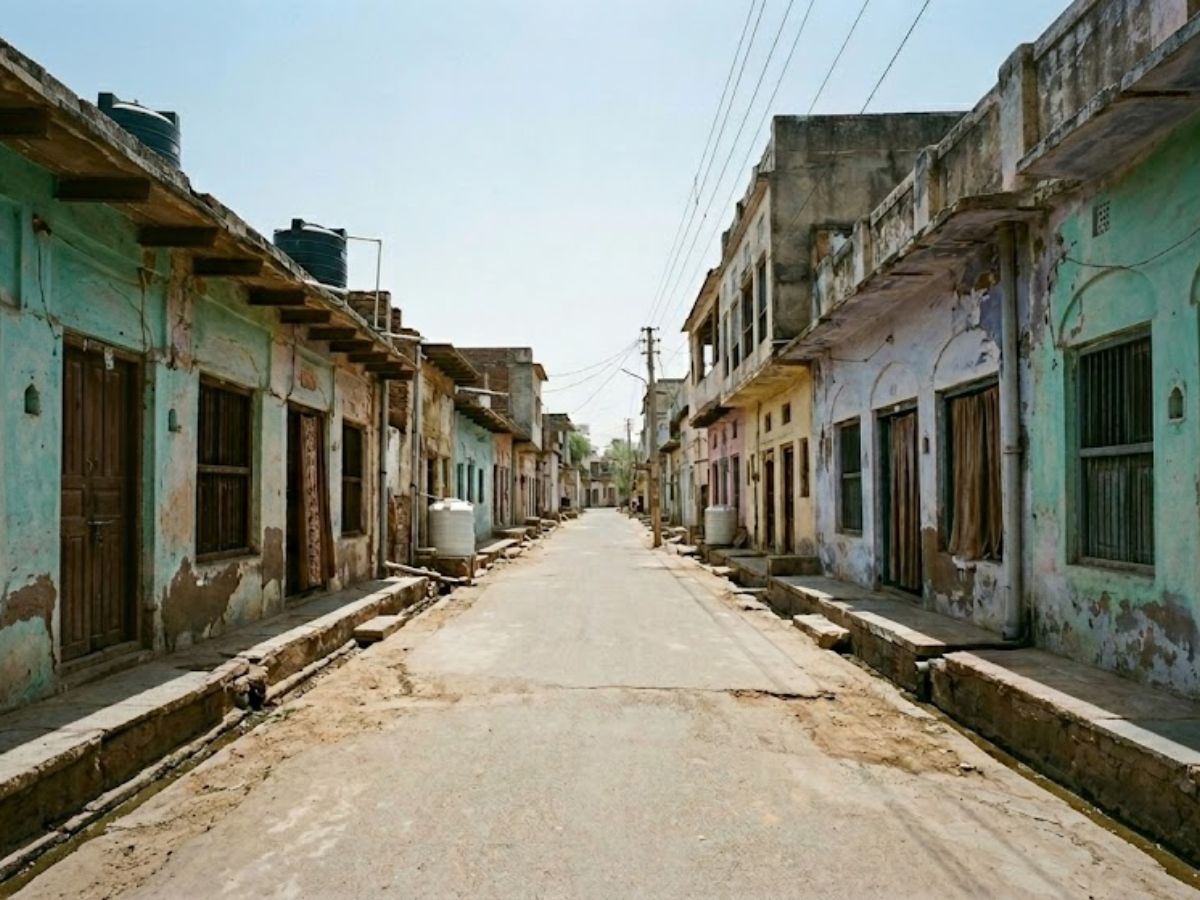
In Banda, people are heavily facing the brunt of the extreme heat. Streets in the town these days remain largely deserted during peak daytime periods to avoid the heat.
Meteorologists say that geographical and environmental conditions have made the district especially vulnerable to extreme heat. Located close to the Tropic of Cancer, the region receives intense and direct solar radiation during the summer months.
The clear skies, plateau terrain, rocky surfaces, and low soil moisture are causing temperatures to rise rapidly during the day while also remaining elevated at night.
Ecological Damage Worsening Heat Impact In Bundelkhand
According to the environmental experts, the extreme heat in Banda is being intensified not only by climatic factors but also by long-term ecological degradation in the Bundelkhand region.
Banda is gradually turning into a “heat island”, where shrinking green cover, falling groundwater levels, and excessive sand mining in rivers such as the Ken are weakening natural cooling systems that once helped regulate temperatures, experts explain.
“Scientists warn that Banda is slowly transforming into an open-air furnace with little natural cooling left,” Prof Dhruv Sen Singh from the geology department of Lucknow University was quoted by News18.
Zubair Amin is a Senior Journalist at NewsX with over seven years of experience in reporting and editorial work. He has written for leading national and international publications, including Foreign Policy Magazine, Al Jazeera, The Economic Times, The Indian Express, The Wire, Article 14, Mongabay, News9, among others. His primary focus is on international affairs, with a strong interest in US politics and policy. He also writes on West Asia, Indian polity, and constitutional issues. Zubair tweets at zubaiyr.amin





