
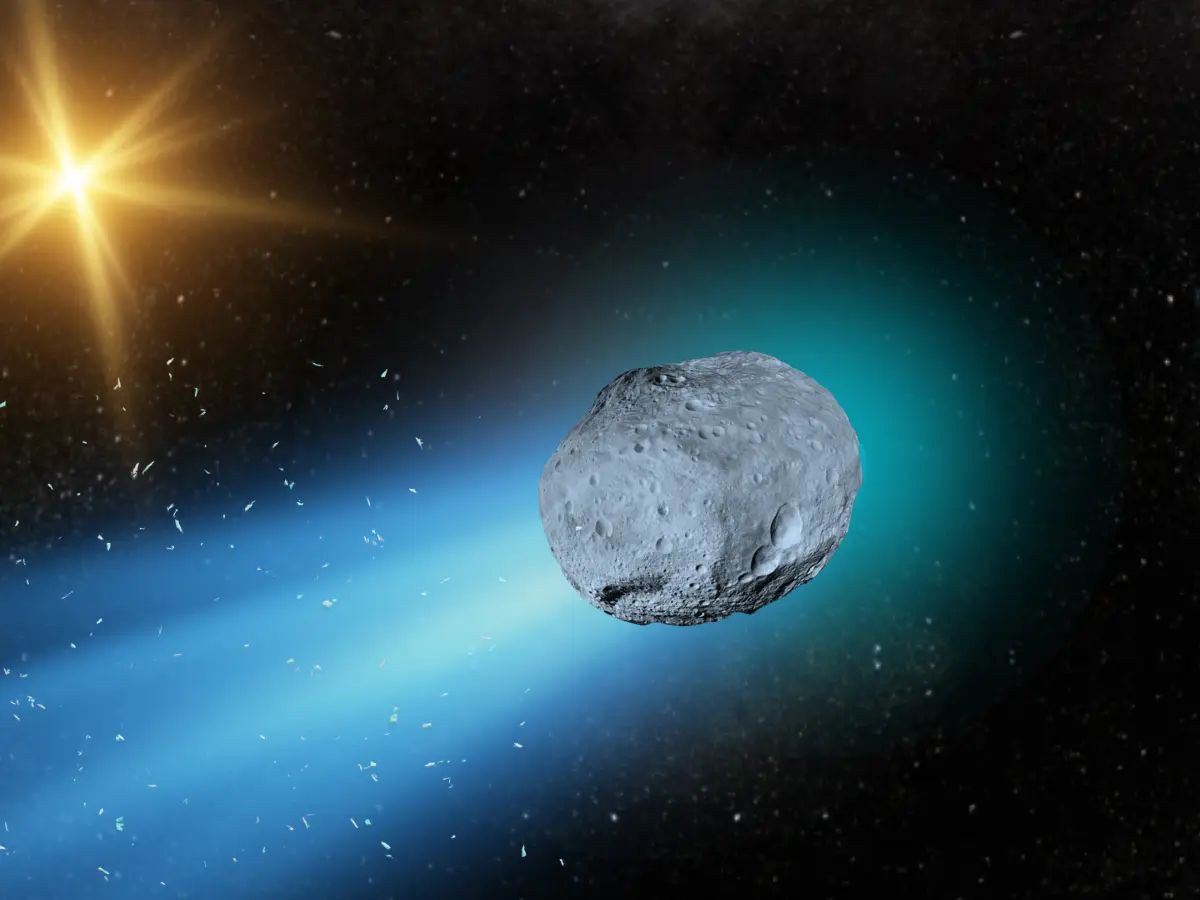

In July 2025, India’s space telescope and other astronomers observed a mysterious interstellar object dubbed 3I/ATLAS while NASA remained silent and presented some truly puzzling results that confounded or intrigued scientists globally.
What Is 3I/ATLAS?
3I/ATLAS is the third confirmed interstellar object to transit the solar system, following ‘Oumuamua and Borisov. It was first detected in July 2025 by the Asteroid Terrestrial-impact Last Alert System, who then organized a global effort closely supported by India’s telescope in studying this rare visitor from another star system.
Strange Behavior and NASA’s Silence
Scientists soon recognized that 3I/ATLAS was exhibiting strange behavior, not like a typical comet in the solar system. It’s well-observed tail exhibited an unusual change in its properties resulting in an “anti-solar” tail suddenly turning directions which nobody expected. NASA usually makes big space discoveries quickly known to the public, however 3I/ATLAS left NASA silent leading to theories and calls from scientists globally for transparency. Meanwhile, India’s telescope continued observation which helped fill some observable gaps from what has often been publicly reported.
Chemical Surprises and Unusual Features
Scientists, including those using Indian telescopes, made sensational discoveries when they detected signatures of rare chemicals like nickel vapor and nickel tetracarbonyl. This is a metal compound not typically found in comets and linked to human activities. Most perplexing of all, there was no iron where it should have been, further complicating the data for researchers.
Global Observing Effort
While NASA was mostly silent, international teams launched an emergency investigation and coordinated worldwide telescope observations, including from India. 3I/ATLAS made its closest approach to the Sun on or around October 29-30, 2025, and this was an event of the rarest of rarities, a generation, or sometime in 400 years.
Why Are Scientists Excited?
3I/ATLAS has been coined by several researchers as a potential “Black Swan” event, meaning it is something substantially outside expected realms of experience that has the potential to change everything about our understanding of the Universe we live in. Some researchers, like Avi Loeb from Harvard, even suggest it could be an alien “Trojan horse,” but the consensus is that it is a truly bizarre comet with its set of wide-ranging oddities.
What’s next for 3I/ATLAS?
The object is being monitored by telescopes worldwide, including from Indian observatories, but it will soon be lost in deep space for the foreseeable future. Data and eventual samples of 3I/ATLAS will be analyzed for many years to come to determine secrets of the origins of the formation of our solar system.
This article is based on publicly available reports and scientific observations. Further research and official confirmations from space agencies are awaited to validate the findings.
Also Read: Did 3I/ATLAS Slow Down on Purpose or Is Something Else Controlling Its Path?
Vani Verma is a content writer with over 2 years of experience in lifestyle, entertainment, health and digital media. She has a knack for creating engaging and research-driven content that resonates with readers, blending creativity with clarity. Passionate about media trends, culture, and storytelling, she strives to craft content that informs, inspires, and connects.




