

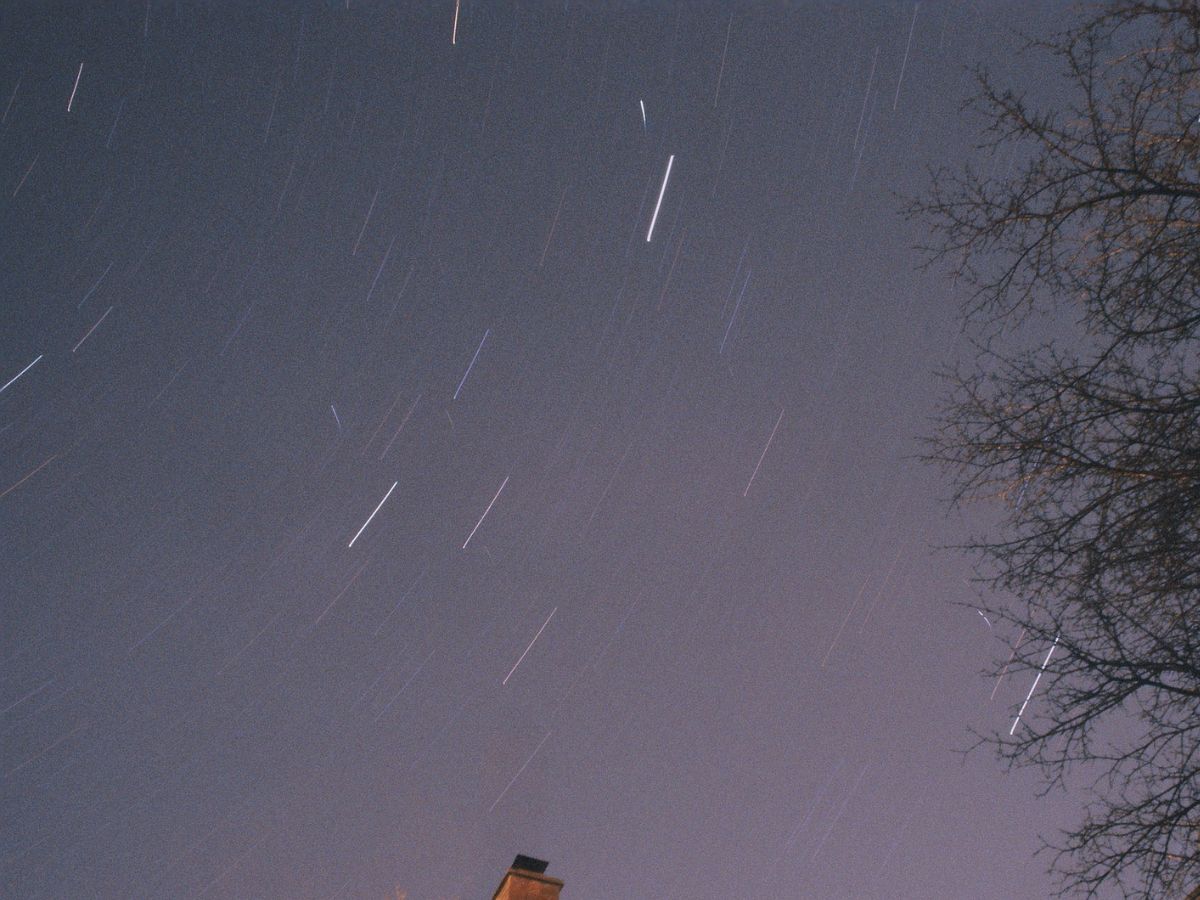
The Lyrids meteor shower has once again fascinated the skywatchers worldwide, and the spectacular celestial performance has been the climax of this phenomenon. NASA said this year the Lyrids were not disappointing and provided a bright line of lights in the sky. The space agency also released a beautiful photograph showing several meteors bursting in the night, with the trails glowing behind them and creating excitement among amateur stargazers and the experienced astronomers. The Lyrids are known to have fast and bright meteors and are one of the oldest meteor showers to be documented having been observed more than 2,700 years ago.
Lyrids Meteor Showers: NASA Shares Stunning Photo As Skywatchers Witness Celestial Spectacle Peak – Check Here
The Lyrids are debris that was left behind by the Comet C/1861 G1 Thatcher, and when Earth goes through the cosmic trail, the particles are burnt in our atmosphere, resulting in the spectacular meteor shower. This year, the peak activity enabled the audience in most regions across the world to see as many as 10 20 meteors per hour in the best of times. Observers pointed out that the optimal viewing occurred during the early pre dawn hours when the sky is darkest and the bright object within the constellation Lyra was elevated above the horizon.
Tonight, look to the East for a chance to catch a celestial treat: The Lyrid meteor shower is in its peak! 💫
Find out how to spot these “shooting stars” here: https://t.co/IVnQtNbUjX pic.twitter.com/7v3d4LGt06— NASA’s Johnson Space Center (@NASA_Johnson) April 22, 2026
Astro lovers went to social media to post their own views of the show, most of them saying that the clarity and intensity of the shower was so good this year. Although the peak is no longer, a few stragglers might still be seen during the next two nights. Phenomena such as the Lyrids can remind people of the magnificence and grandeur of the universe, and persuade them to gaze upwards and rediscover the night sky. To the unlucky ones, there are more meteor showers in the year that can give them a chance to witness more phenomena that are related to the cosmos.
Also Read: Who Is Amit Kshatriya? Indian-Origin Senior NASA Leader Behind Artemis II Success, Leads 10 Centres, Advises Jared Isaacman





