
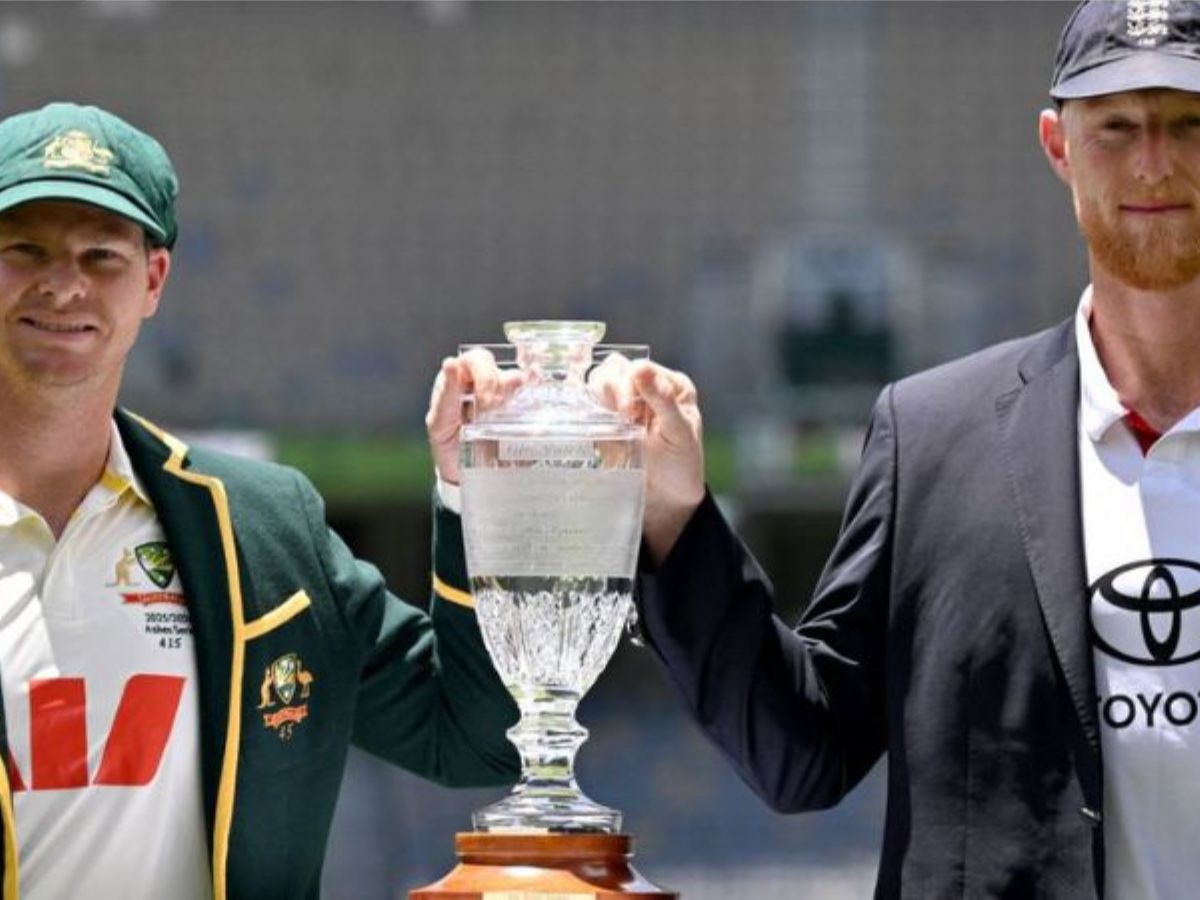

England plans to refuse any proposal to play a day-night Test with a pink ball under lights in the next Ashes series in Australia.
BBC Sport understands that the England and Wales Cricket Board (ECB) shared this view with Cricket Australia (CA) during talks after the recent Ashes series.
England lost a one-sided day-night Test at the Gabba in Brisbane by eight wickets, going 2-0 down in the series, which they eventually lost 4-1.
The discussions between the ECB and CA focused on keeping the Ashes a top-level series at a time when the future of Test cricket is being questioned.
England have firmed up their 2029/30 Ashes warmup plans 🏴🏏
H/t @GeorgeDobell1 👉 https://t.co/F5R4XNAJNC pic.twitter.com/fH1Q7WzcOp
— England’s Barmy Army 🏴🎺 (@TheBarmyArmy) January 13, 2026
150 years of the first ever test
England and Australia are still scheduled to play a one-off day-night Test at the Melbourne Cricket Ground in March 2027 to mark 150 years since the first Test was played at the venue.
These plans were announced in August 2024, and England is expected to get a warm-up match before the special MCG Test.
However, the decision to make the anniversary match a day-night Test has not been popular with everyone, and it could be reconsidered..
Pink-ball Tests are popular with broadcasters because they attract more viewers at a convenient time. The Ashes day-night Test in Brisbane had higher viewership than the matches in Perth and Adelaide.
However, Cricket Australia (CA) does not have a contract with Australian broadcasters to host a pink-ball Test every year.
Australia will host Bangladesh and New Zealand in the 2026–27 season, and none of the eight Tests in that series will be played with a pink ball.
Day-night Tests were approved by the International Cricket Council in 2015 to attract and increase audiences. The format has been well accepted in Australia, which has hosted 14 of the 25 day-night Tests played so far.
Dominance of Australia in day-night Tests
Australia also have a strong record in day-night Tests, winning 14 of the 15 they have played worldwide. England have won only two of their seven day-night Tests, including four losses in Australia.
Before the second Test in Brisbane, England batter Joe Root questioned whether a pink-ball Test was necessary in the Ashes. He said the series did not really need it, but also felt it was not a bad idea.
HE’S FINALLY DONE IT!
Joe Root has his first #Ashes century in Australia.
Live blog: https://t.co/2htO3lMX8d pic.twitter.com/9uZ26zQnPp
— cricket.com.au (@cricketcomau) December 4, 2025
Although the ball is a different colour, the pink and red balls in Australia behave similarly and offer the same swing and seam movement for fast bowlers.
The main challenge for batters is seeing the pink ball under floodlights. Australia’s left-arm fast bowler Mitchell Starc has taken more wickets than any other bowler in day-night Tests, helped by his high pace of over 87 mph.
While pink-ball Tests have helped broadcasters attract larger audiences and have been successful in Australia, England remains unconvinced about their place in the Ashes. Australia’s dominance in day-night Tests and concerns over balance and tradition continue to fuel the debate. Although a one-off pink-ball Test is still planned at the MCG in 2027 to mark 150 years of Test cricket, its format could yet be reconsidered as both boards weigh history against modern demands.
Also Read : More Pak-Based US Cricketers Denied Indian Visa For T20 World Cup 2026




