
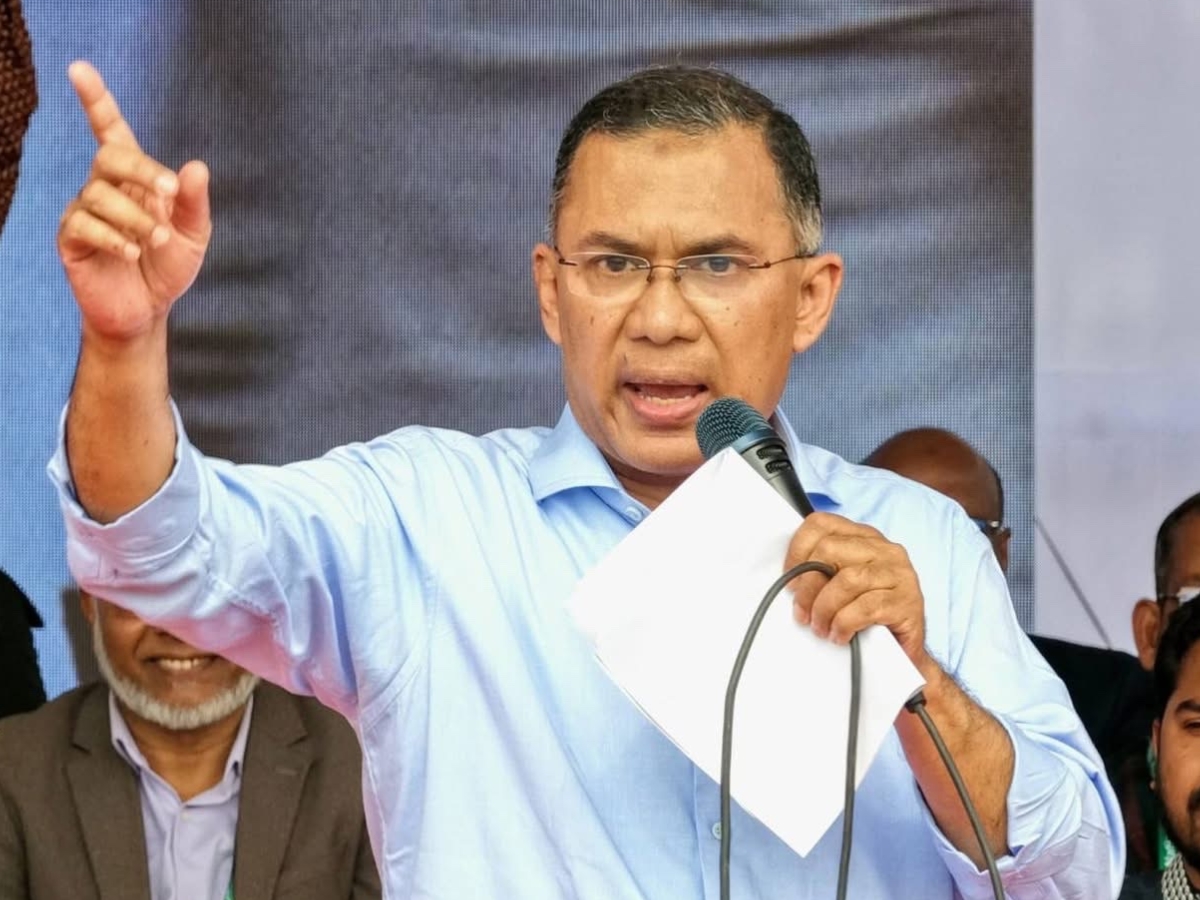

Tarique Rahman’s Bangladesh Nationalist Party (BNP) has declared victory in Thursday’s national election, positioning the 60-year-old leader to become Bangladesh’s next prime minister. This is the first national election since the July 2024 uprising that ended former Prime Minister Sheikh Hasina’s 15-year rule.
According to provisional results cited by Jamuna TV, the BNP and its allies secured 211 of the 299 constituency seats. The rival Jamaat-e-Islami alliance won 70 seats. However, the Bangladesh Election Commission has yet to formally announce the final results.
While Jamaat-e-Islami has not formally conceded defeat, it has said it is not “satisfied” with the vote count and has raised “serious questions about the integrity of the results process.” Its ally, the National Citizen Party, alleged tampering and called for an audit before the final declaration.
Alongside the general election, voters also participated in a referendum on key political reforms. Proposed changes include introducing term limits for the prime minister, strengthening checks on executive authority, and implementing safeguards to prevent excessive consolidation of parliamentary power.
What BNP’s Win Means For India
The BNP’s victory comes at a time of strained ties between Dhaka and New Delhi. Relations have deteriorated since Sheikh Hasina’s removal from office and her subsequent self-exile in New Delhi.
Since 2024, India has suspended key transshipment facilities that allowed Bangladeshi exports to pass through Indian ports and airports. It also put most regular visa services for Bangladeshis on hold, affecting one of the largest groups of medical tourists to India.
Under Hasina, Bangladesh maintained a strong pro-India orientation. However, the interim administration sought to recalibrate Dhaka’s foreign policy, balancing ties with China and Pakistan—India’s principal regional rivals.
With the BNP poised to assume office, observers expect diplomatic strain between India and Bangladesh to ease. However, experts note that renewed engagement with New Delhi should not undermine Bangladesh’s recently expanded economic exchanges with Pakistan, including the resumption of direct flights last month after a 14-year gap.
What BNP’s Win Means For Pakistan
For Pakistan, analysts say that any coalition led by the BNP or Jamaat would be favourable.
Observers say that the BNP had a long history of having good relations with Pakistan during their rule. Similarly, the Jamaat also has a strong and very positive influence in Pakistan, observers say.
Despite some shared positions, experts caution that the BNP and Jamaat are not identical in outlook. While the BNP has historically been considered pro-Pakistan, it is “not necessarily as Islamist as Jamaat or as close to Pakistan as Jamaat,” analysts note.
BNP’s Historical Equation with India
Founded in 1978 by President Ziaur Rahman, Tarique Rahman’s father, the BNP is a centre-right party emphasising Bangladeshi nationalism, economic development, and democratic governance following periods of military rule. It has governed Bangladesh multiple times.
Under Khaleda Zia’s leadership, however, New Delhi often regarded Dhaka as less predictable and less cooperative, particularly on security matters. India developed closer ties with Sheikh Hasina, viewing her as a more dependable partner.
Khaleda Zia’s tenure was marked more by distance than strategic engagement with India. While ties were not severed, the relationship remained cooler compared to the robust India–Bangladesh partnership that evolved under Hasina.
What BNP’s Win Means For The Pakistan-China Axis
India remains Bangladesh’s largest trading partner in Asia. Between April 2023 and March 2024, before Hasina’s fall, India exported goods worth $11.1 billion to Bangladesh, including textiles, tea, coffee, auto parts, electricity, agricultural products, iron and steel, and plastics.
India and China will try to outdo each other in this race for influence, and Bangladesh will try to make the most out of it, analysts note.
As far as the question of what the BNP’s win means for the Pakistan-China-Bangladesh axis, Tarique Rahman’s win is definetly a bad news for the axis in comparison to the Jamaat.
Also Read: Tarique Rahman To Be Bangladesh’s Next PM? BNP Nears Landslide, ‘Dark Prince’ Set To Take Charge
Zubair Amin is a Senior Journalist at NewsX with over seven years of experience in reporting and editorial work. He has written for leading national and international publications, including Foreign Policy Magazine, Al Jazeera, The Economic Times, The Indian Express, The Wire, Article 14, Mongabay, News9, among others. His primary focus is on international affairs, with a strong interest in US politics and policy. He also writes on West Asia, Indian polity, and constitutional issues. Zubair tweets at zubaiyr.amin




