
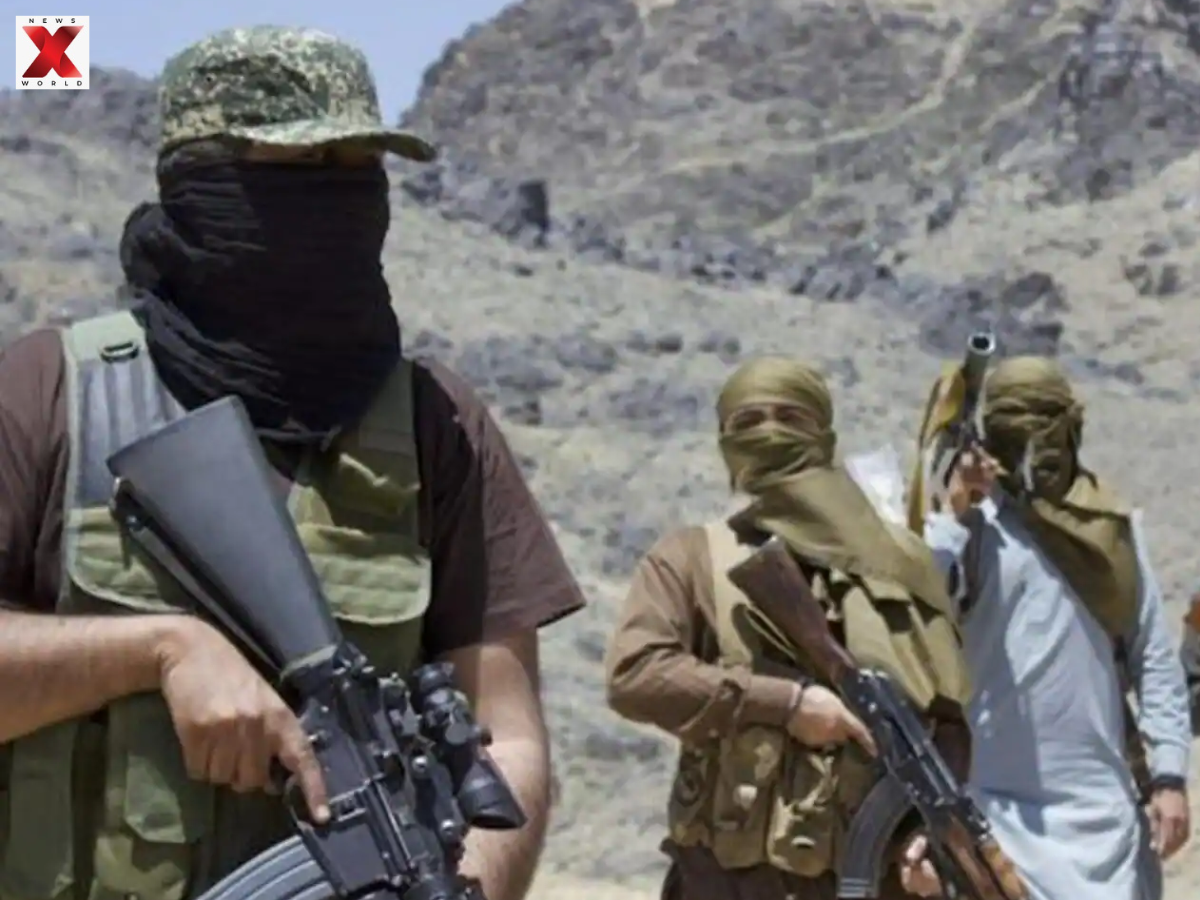

Armed factions, political leaders and segments of the Baloch population on Saturday voiced backing for the Baloch Liberation Army’s (BLA) ongoing “Operation Herof 2.0,” as the outfit claimed its fighters were still holding positions in multiple districts more than 15 hours after launching synchronized assaults across Balochistan, according to a report by The Balochistan Post (TBP).
In a revised statement, BLA spokesperson Jeeyand Baloch said activities were continuing in “different cities and key locations” and that the movement of Pakistani troops remained “under severe pressure.” He stated that fighters retained “control in several areas,” noting that the situation on the ground was “continuously changing,” as cited in the TBP report.
“Comprehensive updates and concluding evaluations will be shared at the suitable stage in line with operational developments,” the statement said. Earlier, the BLA stated that the “contribution of the Baloch nation has been decisive” in the operation, asserting that locals had assisted militants by “facilitating mobility, communication and territorial control.”
According to the group, civilian support had “countered enemy propaganda and fear” and helped sustain pressure on military targets across several districts. “This public unity has been a key element in sustaining the operation and maintaining control,” the BLA said.
The United Baloch Army (UBA), a “pro-independence” armed organisation, officially declared its support for “Operation Herof 2.0” and said it would take part in the conflict within its “capacity and available means.” In a statement, UBA spokesperson Mazar Baloch said the group was extending “complete moral, intellectual and practical support” to those involved in the operation. He lauded what he termed the “bravery, determination and national dignity” of Baloch fighters and said the UBA stood in “full solidarity” with them, TBP reported.
The UBA called on all Baloch groups and activists to “show unity, a common strategy and collective accountability,” and to stand “morally, intellectually and socially” alongside those engaged in the attacks. The organisation said the present stage of conflict “is not confined to any single organisation or segment,” but reflects a broader struggle for “national dignity, freedom and sovereignty over Baloch territory,” as noted by the TBP report.
It also urged the public to extend cooperation and social assistance “wherever Baloch youth and national activists are present,” stating that the objective was to turn the uprising into an “organised, united and resilient collective movement.”
Exiled Baloch leader Mehran Marri, speaking to international media during the second phase of the operation, said Balochistan had entered an “extremely critical stage.” He said the Baloch had appealed to the global community for decades but now believed that “freedom will not be handed over as a gift by any external force.”
“The Baloch are not waiting for Trump, nor depending on any international power,” he said, adding that the movement had evolved into “a national liberation struggle” involving “children to elders,” the TBP report highlighted.
Marri characterised Pakistan as an “unstable country” oscillating between Chinese and American influence, while the Baloch continued “on the ground defending their land.” He argued that the nation would not secure its rights “through anyone’s patronage,” but through “its own struggle and sacrifices,” as quoted by the TBP report.
At the launch of “Operation Herof 2.0,” the BLA issued a video address by its commander-in-chief, Bashir Zeb Baloch, urging the public to “step out of their homes” and join what he described as a decisive phase of the armed campaign.
“This struggle does not belong to a single individual but to collective awareness,” he said. “When a nation stands united, the enemy cannot escape defeat despite its strength. The Baloch nation is called upon to step forward and become part of Operation Herof,” TBP reported.
(With Inputs From ANI)




