
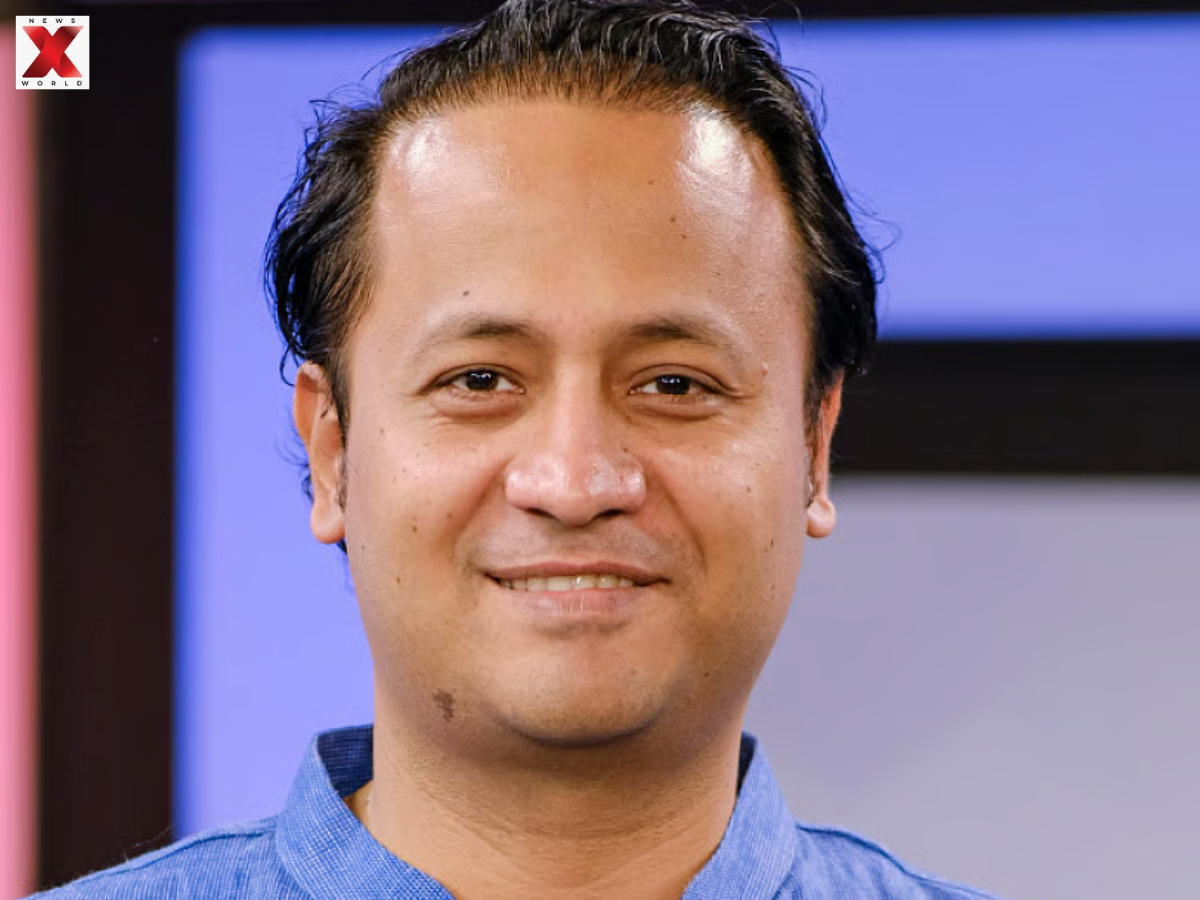

China has a strategic and economic interest in Bangladesh but Pakistan is literally taking over the intelligence institutions in India’s neighbouring country, former Bangladesh education minister Mohibul Hassan Chowdhury has told NewsX in an exclusive interview in which he opened up on the impact of the resurgence of the Bangladesh Nationalist Party (BNP) and the Jamaat-e-Islami (JeI) in his country on minorities, India-Bangladesh ties and the country’s future after the February 12 election.
Naufel, who is amongst the senior-most leaders of former Bangladesh Prime Minister Sheikh Hasina’s Awami League who had fled the neighbouring country in the aftermath of the August 2024 student-led movement that led to the fall of her regime, is one of the most vocal leaders of the party.
Speaking to NewsX, Chowdhury said that while he thinks that China would not get into the internal political dynamics of Bangladesh, it had a strategic and economic interest in Bangladesh but it was Pakistan which has an extremely multi-faceted interest in Bangladesh.
“I don’t think that China would interfere in the internal political dynamics of Bangladesh at least but they have a strategic, economic interest. Chinese interest is always very commercial. Pakistan’s interest is extremely multi-faceted and their primary objective is to attack India and weaken India from within and Bangladesh’s geographical location is such that it is not necessarily a neighbouring country of India. India surrounds us. While it is beneficial for us because of raw material imports and so on. It is also a risk factor for both countries,” Chowdhury said.
He said that Bangladesh has the longest boundary with India not Pakistan or China which is why Pakistan wants to increase access inside Bangladesh.
“Most of the India-China border is impossible to cross because of the high terrain and most of it is covered by snow. The chance of cross-border terrorism is almost negligible. Even most of the border with Pakistan is quite difficult to access as it includes the Rann of Kutch and the high altitude part of which is in plains but imagine, the entire 4000 km border with Bangladesh, is pretty accessible. There is no geographical barrier there and it is pure vegetation. Even if it is sealed through barbed wire, it is easier to broadcast extremist content from this side of the border to radicalise institutions on the other side, you don’t have to physically cross. You can hold a mehfil of extremists brought from Pakistan on this side of the border (Bangladesh) and with a loudspeaker, you can radicalise on the other side (India),” he said.
“Pakistan will never have this kind of access inside India which is why they are literally taking over the intelligence institutions inside the country, the military intelligence which is called the DGFI and the civil intelligence which is called the National Security Intelligence (NSI) and the police. The head of police in Dhaka said on a public platform that he could not fight in the liberation war of 1971 and that if there is any war with any country in future, he specifically mentioned that it will be India because in his view, India is an enemy whom he wants to fight. A commissioner of police of the capital city saying this is a clear indication that the ISI operatives are running the institution,” he said.
“Pak the biggest foreign master”
He further alleged that the entire clan, friend circle and legal fraternity of former Chief Justice of Bangladesh Syed Refaat who recently resigned was based in Lahore and that he was installed as Bangladesh’s Chief Justice.
“Through his relatives and contacts in Pakistan, Refaat installed pro-Pakistan-minded judges to top posts in the judiciary without them having any legal qualification required to sit in those positions. He had done this personally as a favour to his foreign masters..Pakistan being the biggest foreign master,” he said.
Opening up on the ban on the League in this election, he stated that it is the only time in the history of Bangladesh when the state has imposed a ban on a major political party and is hell bent on holding an election between political allies not competitors.
“Even during the time of military rule, each and every registered political party was allowed to participate. During our time in 2014, out of their own volition, the BNP-led alliance boycotted the election, they intentionally boycotted the election…we didn’t impose any ban. In 2018, the same alliance took part in the election under our custodianship and in 2024, they themselves excluded themselves from the election but it is for the first time where the ruling party has been excluded from the election. So, it is a landmark election in a way that a major section of the electorate has been disenfranchised by the state machinery which is illegally holding power at this point of time,” he said.
Further, he said that it is for the first time that in the parliamentary election, a referendum is also being held simultaneously in which people don’t know what they are voting for.
Alleging that the referendum set to be held with the February 12 election was “intended to change the social fabric and the constitutional structure of Bangladesh without letting the people know what they were voting for,” he said that the referendum was just a “yes or no” vote for Constitutional amendments that are not clear.
“…They don’t want to include the Awami League because we were the architects of the secular Constitution which they want to change into something they call more modern and they don’t want a secular and liberal Bangladesh. There are 86 constitutional amendments for which a referendum is being held and none of them are clear from the so-called referendum….The Constitution of Bangladesh does not even provide for a referendum. You need a 2/3rds majority to change the Constitution. Why didn’t they wait for an election in which everyone would have participated and thereafter the one with the majority vote could have decided on the Constitutional future of the country?,” he asked.
Calling the February 12 election as “an election under duress,” he said that while the interim government is touting the election as “a transitory process towards a democratic government,” before coming to the democratic part, “they needed to follow the democratic process” which is not happening.
Chowdhury alleged that even the BNP had been warned (by the current regime) that “if they didn’t vote for the “yes” in the referendum, power won’t be handed over.”
Calling the Awami League’s exclusion from the election “illegal,” he said that he feels that a large section of people will boycott this election.
“But we have already seen that pro-BNP and pro-Jamaat-e-Islami (JeI) newspapers have reported that ballot papers have been distributed to voters by police and not by the Election Commission officials and stamps are being found by police. There is an attempt to add at least 20 per cent turnout by printing ballot papers and stamping them.” he alleged.
Asked about what the election will mean for the minority communities of Bangladesh especially the Hindus – hundreds of whom have been targeted since the fall of the Hasina government, he said that whatever the outcome may be, the feeling within the minorities is that “at least they will be freed from “one the current set of extremists.”
“There is a feeling that one set of extremists who have illegally usurped the power and unleashed militants from jail and have been promoting communal violence in the name of going after agents of India and have been attacking minority community’s temples,homes, businesses and also, the liberal Sufis and Ahmadiyyas..are on their way out. There is a sense of relief that the extremists and anarchists are on the way out,” he said.
“There is a feeling that whosoever comes to -power will be a political actor. The difference between a political and non-political actor is huge because political actors, irrespective of their ideological inclination, are answerable to the electors, party members and state institutions. The non-political actors only have to answer the foreign masters and hence, they don’t have to perform..The Army has been used to target the minority communities rather than protect them. They are changing the social fabric by forcing the Army to cosy up with Pakistan with which we don’t have a major trade relationship,” he said.
“Under the second Zia regime, it was rumoured that it was Rehman not Zia who aligned with Pak”
He alleged that while by 2008 (under Khaleda Zia and three care-taker governments), operatives of Pakistan’s intelligence agency ISI had a substantial presence in Bangladesh, now they have an additional force in the form of Rohingya refugees.
Asked if the BNP under Tarique Rehman-the frontrunner in the election – would be different than the BNP under former PM Khaleda Zia, Chowdhury pointed out that under the second term of Khaleda Zia, it was rumoured that it was Rehman and not Zia who had been aligning with Pakistan.
“During the time of Begum Khaleda Zia, the complaint/allegation was that it wasn’t Zia who was aligning with Pakistan, it was her son. In the first tenure of Zia, there was no state-sponsored activity towards militancy but in her second tenure, all the fingers were pointed towards her son who was a young Turk back then. There was a discussion within the BNP that he was out of control at that time. Whether he has matured during his stay in exile abroad for a long time, that is yet to be seen. It was him and senior Jamaat leaders…when all the ISI-sponsored activity happened through the ministries controlled by JeI and the national security intelligence and the DGFI,” he said.
Asked about the possible approach of the radical political party Jamaat-e-Islami (JeI) if it comes to power, Chowdhury said that the JeI shows its true colours rarely and it would reveal its true side only once it gains full power.
“They recently said that work for women is akin to prostitution. JeI have talked about compensating women for not working and staying at home because for them women going out is akin to prostitution. That is the real Jamaat….they have already declared that they want 50 lakh students to prepare for their utopian dream of the so-called Ghazwa-ul-Hind,” he said.
“JeI may do what they have been dreaming if they don’t need allies”
Asked about the party’s decision to ban women candidates from participating in the election, Chowdhury said that the JeI has taken pride in banning women candidates.
“They have a women’s wing whose simple work is to promote within them that they should stay at home and support their husbands but JeI has had a woman MP who was the current president’s wife…wherever they have opportunity, they will take it. It is their idealistic vision to not have women in politics and yet, they were under the leadership of Begum Khaleda Zia for many years. So, they will do whatever suits them. Their primary goal is to gain power and then achieve their ideological dream. Before this, they were allied with others, so they had to behave in a tolerant manner and compromise but now the danger is that if they ever come to power on their own, they won’t need any allies and they may do what they were always dreaming,” he said.
On the approach of the Gen-Z population (which drove the movement to ensure the fall of the Hasina regime) in this election, Chowdhury said that it is the urban gen-Z population especially in Dhaka who were instigated by their upper-middle class parents in Dhaka (against the Awami League government).
“It was they who led different protests against the government but Dhaka was the epicentre. Within Dhaka, you have the cosmopolitan Gen-Z population but across the country, there are youngtsers who got work under Awami League government, they were not the vocal portion of society which had protested against our government. It was the vocal portion which was against us and not the others. A lot of them now feel they have been misled and the complete ouster of the government has led to a situation where the country has no confidence on global forums. They were promised that Bangladesh will become Singapore but now they see, that the country is heading towards Myanmar and Afghanistan. That is something they did not anticipate,” he said.




