
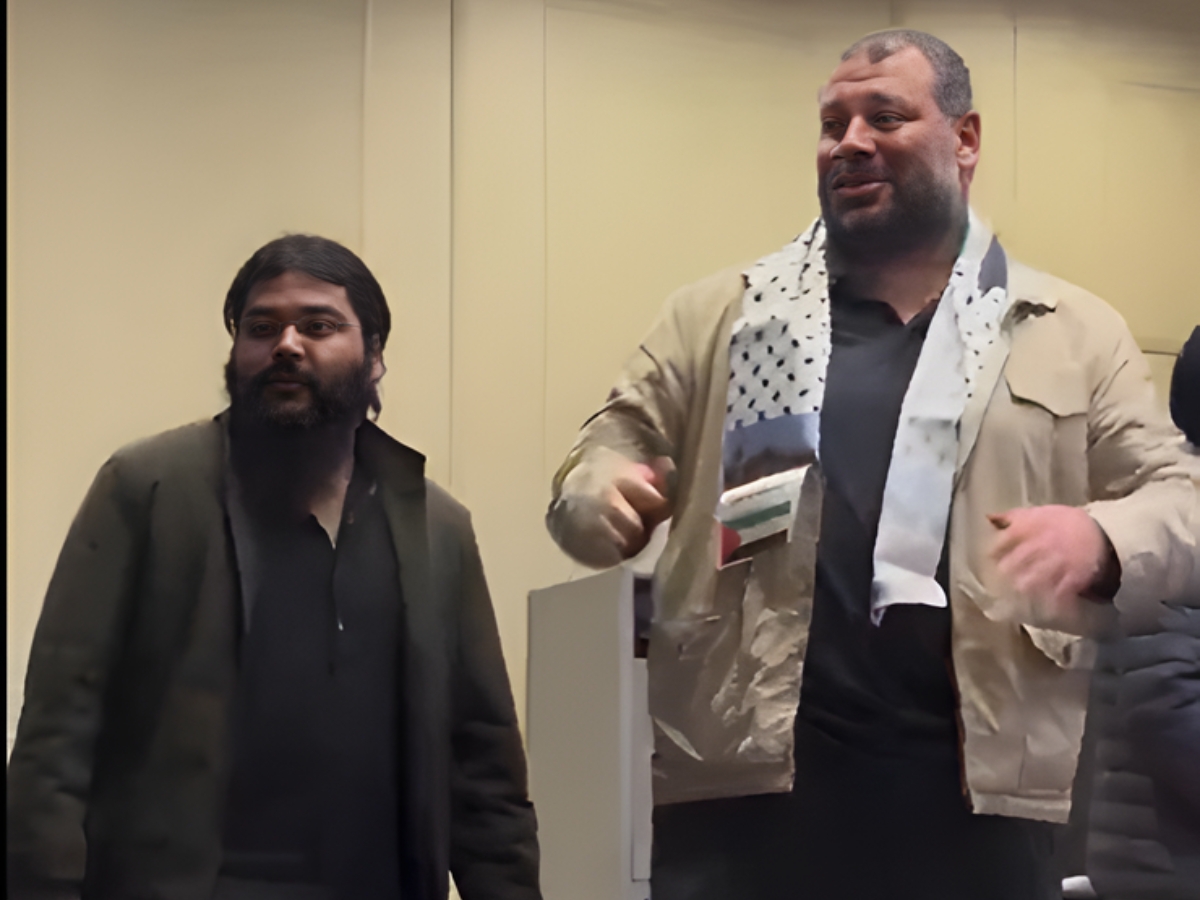

Hamas and Pakistan’s terror outfit, Lashkar-e-Taiba (LeT) are having a bonhomie. The leaders of the two groups have met several times in recent years after Israel’s offensive in Gaza. Observers are saying that the two terror outfits are coming closer with a growing operational and ideological nexus. Senior leaders of Hamas and Let recently held a high-profile meeting in Pakistan’s Gujranwala, where senior Hamas commander Naji Zaheer was seen sharing a stage with Rashid Ali Sandhu, a senior commander of Lashkar-e-Taiba. The event was organised by the Pakistan Markazi Muslim League (PMML), a group widely regarded as the political front of Lashkar-e-Taiba.
Not an Isolated Interaction: Video Shows Hamas Leader, Lashkar-e-Taiba Commander Together
Video footage circulating on social media appears to show Zaheer and Sandhu standing together on stage, with Zaheer participating as the chief guest at the event.
Security analysts note that this meeting is not an isolated episode. Naji Zaheer has travelled to Pakistan multiple times in recent years, engaging openly with Islamist and militant networks across the country.
An undated video shows Hamas operative Naji Zaheer meeting a Lashkar commander in Gujranwala, with confirmed links to PoK.
From Kashmir, this reinforces #Pakistan’s ISI-backed terror ecosystem exporting violence while denying accountability. pic.twitter.com/kdGlegYbUN
— Zaara Nazir زارا نذیر (@NazirZaara) January 7, 2026
In February 2025, Zaheer visited Pakistan-occupied Kashmir (PoK) along with other Hamas members. During that visit, he addressed an anti-India rally, sharing the stage with commanders from both Lashkar-e-Taiba and Jaish-e-Mohammed (JeM), another Pakistan-based terrorist organisation.
Zaheer’s engagements in Pakistan can be traced back to at least 2023, when he appeared in Karachi and Islamabad. Those visits included media interactions and receptions hosted by various Islamist organisations.
Growing Visibility of Hamas in Pakistan
Analysts say these repeated visits and public engagements point to an increasing visibility of Hamas-linked figures within Pakistan. They also indicate a deliberate effort to forge ties with ideologically aligned militant networks operating in the region.
Such outreach, observers note, suggests more than symbolic solidarity and raises concerns about potential coordination between Middle Eastern and South Asian jihadist groups.
Regional Security Concerns Intensify Amid Hamas-LeT Bonhomie
The timing of the Gujranwala meeting comes amid heightened geopolitical tensions and renewed concerns over cross-border militancy in South Asia. Indian and international security agencies have long monitored connections between Pakistan-based terror outfits and global jihadist movements.
The latest developments are likely to raise fresh alarms in New Delhi and other capitals monitoring terrorism financing, recruitment, and operational coordination.
What Pakistan Says On Harbouring Hamas
Pakistan has consistently denied harbouring or supporting terrorist organisations on its soil. However, public gatherings involving leaders of internationally designated terror groups have repeatedly undermined those claims.
Islamabad has not issued an official comment on this specific meeting. However, analysts warn that such interactions could complicate regional security dynamics, particularly if emerging ties between Hamas and Pakistan-linked groups lead to shared planning, resources, or coordinated action.
Israel Urges India to Designate Hamas
The issue has also drawn attention at the diplomatic level. Weeks ago, Israel called on India to formally designate Hamas as a terrorist organisation, citing what it described as “significant” ties between Hamas and Lashkar-e-Taiba.
Israel has already proscribed LeT and has expressed expectations of “reciprocation” from India. Senior Israeli officials have stated that New Delhi’s stance on the matter carries substantial regional influence.
A senior official in Israel’s Ministry of Foreign Affairs, speaking to reporters in Jerusalem, said there is an understanding within the Indian government of the “networks and linkages” associated with these groups.
Zubair Amin is a Senior Journalist at NewsX with over seven years of experience in reporting and editorial work. He has written for leading national and international publications, including Foreign Policy Magazine, Al Jazeera, The Economic Times, The Indian Express, The Wire, Article 14, Mongabay, News9, among others. His primary focus is on international affairs, with a strong interest in US politics and policy. He also writes on West Asia, Indian polity, and constitutional issues. Zubair tweets at zubaiyr.amin




