
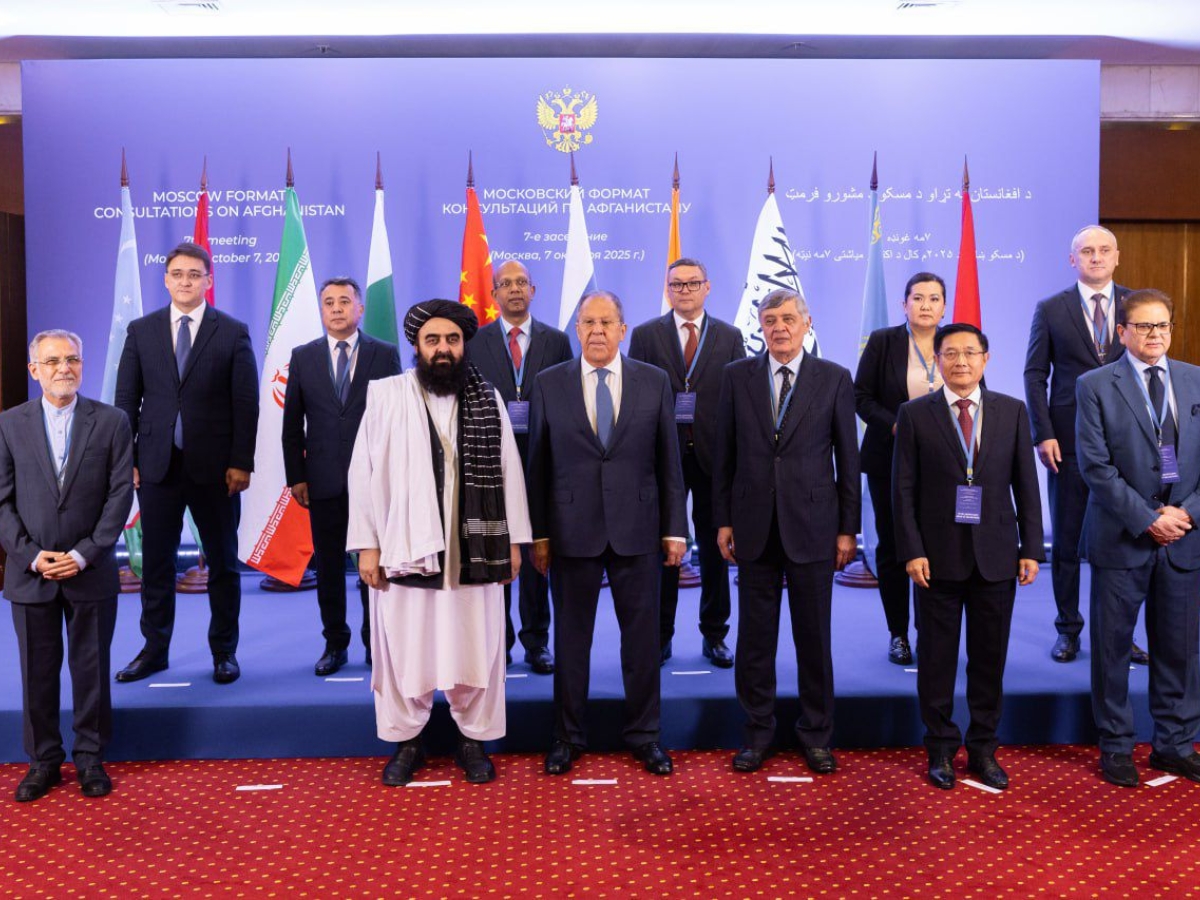

The seventh meeting of the Moscow Format Consultations on Afghanistan was held in the Russian capital, bringing together special representatives and senior officials from Afghanistan, India, Iran, Kazakhstan, China, Kyrgyzstan, Pakistan, Russia, Tajikistan, and Uzbekistan. A delegation from Belarus also participated as guests.
Afghan Delegation Joins as Full Member for First Time
For the first time, the Afghan delegation participated as a member, led by Foreign Minister Amir Khan Mottaqi. This marked a significant shift in Afghanistan’s engagement with the regional forum.
The participating countries reaffirmed their unwavering support for the establishment of Afghanistan as an independent, united, and peaceful state.
Also Read: India Rebukes Pakistan At UNSC Over Remarks On Kashmiri Women`s Security, Watch
Sergey Lavrov Highlights Security and Counter-Terrorism Gains
In his opening remarks, Russia’s Foreign Minister Sergey Lavrov acknowledged the evolving situation in Afghanistan and the region:
“The situation in the region and the world as a whole is complicated – we are now referring to our common region – and it is not becoming simpler. We can see that your government is working towards stability in the Islamic Emirate of Afghanistan. It is generally agreed that there have been major positive changes in the struggle against the terrorist threat. The relevant UN bodies have noted a substantial decrease in the areas sown with narcotic plants.”
Lavrov also underlined Russia’s commitment to supporting Afghanistan’s security and social stability:
“We are interested in providing all-round assistance to our Afghan colleagues’ struggle against drug trafficking, terrorism and organised crime, and their efforts to strengthen normal peaceful life in the interests of the Afghan people. A number of relevant agreements and complementary documents have been signed. I hope to be able to discuss all this with you today.”
Regional Leaders Focus on Economic Cooperation and Regional Integration
The participating countries stressed the need to develop economic and trade exchanges and enhance investment cooperation between Afghanistan, regional nations, and the wider international community. They expressed interest in developing regional economic projects with Afghan participation, while promoting sustained progress in healthcare, poverty alleviation, agriculture, and disaster prevention.
The parties emphasized that these steps would help Afghanistan achieve independent and sustainable development at an early stage. They also voiced support for Afghanistan’s active integration into regional connectivity frameworks.
The consultations reiterated a commitment to continue humanitarian support for the Afghan people. Participants called on the international community to intensify emergency humanitarian assistance, while reaffirming their opposition to any attempts to politicize humanitarian aid.
Strong Emphasis on Counter-Terrorism in Afghanistan
The meeting also focused on strengthening counter-terrorism cooperation at both bilateral and multilateral levels. The parties stressed the importance of supporting Afghanistan in taking comprehensive measures to eliminate terrorism within a short timeframe, ensuring that Afghan territory is not used as a threat to the security of neighboring countries and beyond.
They underscored that terrorism remains a serious threat to Afghanistan, the region, and the wider world, and highlighted the significant role of regional frameworks in addressing these challenges.
Leaders Oppose US Deploying Military Infrastructure in Afghanistan, Hint at Bagram
Participants urged the countries primarily responsible for Afghanistan’s current predicament to fulfill their commitments on the country’s economic recovery and future development.
They also rejected any attempts by foreign countries to deploy military infrastructure in Afghanistan or neighboring states, calling such moves unacceptable and contrary to the interests of regional peace and stability.
Zubair Amin is a Senior Journalist at NewsX with over seven years of experience in reporting and editorial work. He has written for leading national and international publications, including Foreign Policy Magazine, Al Jazeera, The Economic Times, The Indian Express, The Wire, Article 14, Mongabay, News9, among others. His primary focus is on international affairs, with a strong interest in US politics and policy. He also writes on West Asia, Indian polity, and constitutional issues. Zubair tweets at zubaiyr.amin




