

The first step in the 20-point peace plan of US President Donald Trump is in the process of completion. All the Israeli hostages who are still alive have been released by Hamas, while the mortal remains of the deceased hostages are being returned. It is an emotional moment for the families of the hostages, who have been praying for over two years that their loved ones be returned to them. It is now finally happening.
The United States, Egypt, Turkey, and Qatar have signed the peace declaration. The next step in the 20-point peace plan is going to be difficult and sensitive- to disarm Hamas, to demilitarize Gaza, and to rebuild it from the ruins. More importantly, the fragile ceasefire that has now been achieved- the question is, will it sustain? What will peace in fact return to Gaza? That is the big question. And what role must Israel play, amongst other state actors, to accomplish the peace plan?
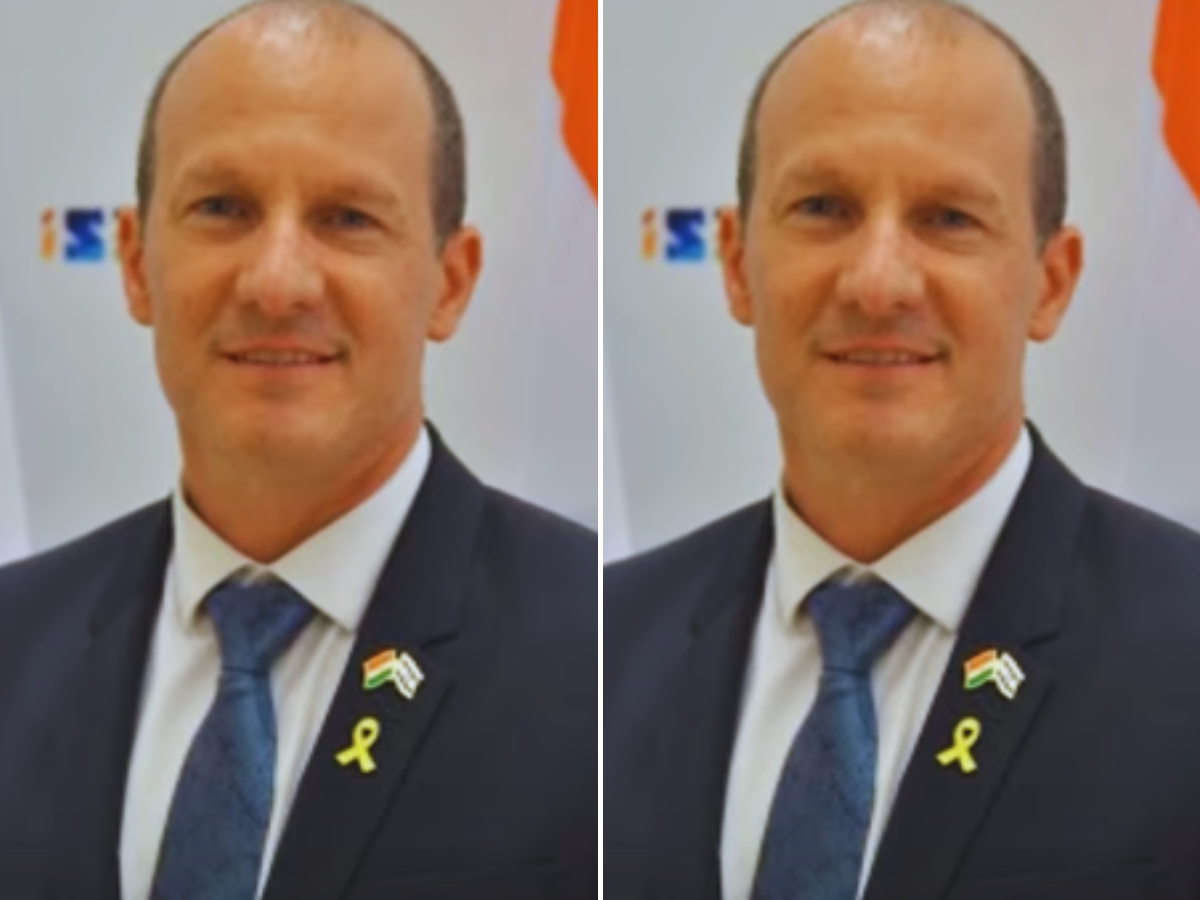
In an interview with Megha Sharma, Senior Executive Editor, NewsX, His Excellency Reuven Azar spilled the beans on hostages returning home, Trump’s peace plan, and other crucial aspects.
Megha Sharma: Let’s discuss this and a lot more. Joining me on the show today is His Excellency Reuven Azar. He’s the Israeli Ambassador to India. Your Excellency, it’s a relief. Congratulations for having achieved this humongous task for which Israel and the rest of the world have been fighting for. The hostages have returned home. It’s an emotional moment for their families and the people of Israel. The hostages have gone through immense trauma and hardships. What support is the Israeli government providing to them to cope at this moment?
H.E. Reuven Azar: Thank you, Megha, for this opportunity. Thank you for the invitation. Indeed, this is a great joy that we’re having in Israel of having our living hostages back. It’s been a huge trauma for the families, for the entire people of Israel, and the government is giving a lot of support. First of all, we’re taking them for checks in the hospitals, allowing them to gradually encounter members of family and friends, trying to start a very long process of healing, both physically and psychologically. Some of these hostages have been maintained in terrible conditions. Megha, one of them, for example, was chained for a whole year, wasn’t allowed to leave the tunnel that he was in. It was torturing, really terrible stories, terrible conditions, and now, finally, hostages are meeting their families and Israel is celebrating.
Megha Sharma: Yes, I saw those pictures. The hostages are completely emaciated, they did not get food. You talk about torture and the trauma, mental as well as physical, that they have been going through for the last two years. And I do want to ask the question with regards to the deceased hostages that are in the process of being released by Hamas. There still is a long way to go. If you could shed light on what happens next if these remaining 21 hostages are not released?
H.E. Reuven Azar: Well, first of all, they are not deceased; they have been murdered. Megha, many of them were murdered after being kidnapped alive, and we have proof of that. So, the plan is very clear under the condition of the first phase to which Hamas actually has agreed. All 24 were supposed to be freed. Unfortunately, what we’ve seen so far is that only eight of them have been freed, and even one of them is not even a deceased or murdered hostage, it’s an unidentified person. So, we still have at least 17 hostages that are murdered and haven’t been released, and we are going to be vigilant and we are going to be stubborn. We have to have, under the agreement, all these hostages back home.
Megha Sharma: Now, no sooner did the peace declaration get signed at Sharm El Sheikh in Egypt, Hamas conducted mass executions of Palestinians on the streets of Gaza, accusing them of collaborating with Israel. Will the road to disarmament of Hamas be difficult, and can we sustain lasting peace in Gaza?
H.E. Reuven Azar: It will be a difficult road, a difficult path. We need implementation. There is a gap between what Hamas committed in Sharm El Sheikh and what they are saying now to their own people, and of course their behavior. We’ve seen these brutal executions on the streets of Gaza. This is not very promising for the future. Look, we have an amazing opportunity here. The Palestinian people have a huge opportunity. The entire world has actually agreed on a plan that gets Palestinians into a better place, that brings peace to our region. And it would be terrible if, because of this Hamas stubbornness, Palestinians would miss this opportunity. And what is needed now is pressure on Hamas. The Arab countries, the Muslim nations have to put pressure on Hamas in order not to miss this opportunity. We are going to get this plan, the opportunity it deserves. Israel is sticking to its commitments. We’ve released about 2,000 prisoners. We’ve released murderers, murderers of babies and civilians.
Megha Sharma: US President Donald Trump has been at the forefront. He has played a massive role in ensuring that the hostages were released. This is just the first step. Of course, there’s been an announcement that he would be awarded the Presidential Medal of Honor by Israel. There have been a number of times that the Israeli Prime Minister has spoken about how he will endorse awarding the Nobel Peace Prize to U.S. President Donald Trump. Could you shed light on how Israel and the U.S. have been working together in the larger aspects of ending conflict and hostilities?
H.E. Reuven Azar: The U.S. role has been incredible, indispensable, and the fact that President Trump adopted this plan, the fact that he convinced the international community, the Arab world, he brought 20 leaders into Sharm El Sheikh- this is incredible. The role of the envoys and Kushner- that was very important. At the end of the day, we need cooperation. I think that for the first time since the 7th of October, we are having international consensus on a plan that is actually led by the United States but is supported by the entire international community, and now we have to see it through. This wouldn’t have been possible without the United States.
Megha Sharma: You spoke about the hostage release, which is just the first step. You spoke about how it is a humongous task of demilitarization of Gaza, which must begin now. Have there been decisions made amongst the Muslim nations, Israel, and the United States of America? How is this going to happen? What are going to be the rules of engagement here on?
H.E. Reuven Azar: Well, the specifics for the second stage are not there yet. We have to make sure, first of all, the first phase is implemented, and we trust the United States and all our partners in the region that we will get involved in a more detailed way in order to create a plan that actually leads to reconstruction, that leads to dismantlement of tunnels, that prevents a situation in which Hamas rebuilds a military industry, that creates stability on the border. If these conditions are applied, Israel will withdraw. We have zero interest in controlling the Gaza Strip. However, if we fail, we’ll have to stay. And therefore, here the role of the Arab countries is crucial. And as they were crucial in convincing Hamas to agree to this plan, they have to be crucial in convincing Hamas and the other Palestinian factions to implement all of it.
Megha Sharma: Absolutely. Going back to the first step and the completion of it, which is extremely essential and crucial for the next steps to follow. What happens if this release- the release of the murdered hostages, as you said is delayed or does not happen?
H.E. Reuven Azar: Well, we have pressure points that we will apply, and we will coordinate this with the United States and other partners in the region. We have declared yesterday that as long as Hamas doesn’t meet the commitment, we will limit the number of lories that are allowed to enter the Gaza Strip. The Rafa crossing point will not be opened. Look, Megha, we have a huge opportunity after Israel cornered Iran and its proxies and has debilitated the forces of jihad and the forces that were threatening to destroy the region. Now we have a chance. All the countries that are free from these threats now can work together. This is our opportunity, and I hope that we do it. We don’t want to deal with limiting the prospects of this program. We want to deal with actually bearing, you know, getting the fruits of implementation of this plan, and this is what we’re hoping for.
Megha Sharma: Gaza has been raised to the ground. It’s going to take billions of dollars to reconstruct it. What stake does Israel, along with the Arab nations and the United States, have in the rebuilding process?
H.E. Reuven Azar: First of all, let’s remember that this destruction happened because Hamas was using these buildings and these facilities to create booby traps and to attack Israeli forces. So, Hamas bears responsibility for the destruction. Another thing that we’ve seen, Megha, is that when Palestinians rejoiced after the ceasefire, suddenly we saw that all these stories about starvation in Gaza are fake, because all the people that were celebrating were not emaciated as were the hostages. So we have here a situation that indeed there is a lot of devastation. There’s a lot of work that we can do together. We can work with these countries to actually facilitate the movement of building materials in order to build what is required. Israel is already supplying water to the Gaza Strip. Israel is supplying electricity to the Gaza Strip. It can supply more. There’s no limit to what we can do in order to get prosperity into Gaza, but it demands implementation of the Trump plan.
Megha Sharma: How will it be ensured that peace in Gaza is sustained? There is a delicate ceasefire right now. But what if Hamas breaks this ceasefire?
H.E. Reuven Azar: In that case, Israel will have to defend itself. We will not agree to a situation where another 7th of October can happen. So, we will not allow Hamas to rearm and regroup. We won’t allow Hamas to attack our villages again. Therefore, we have to concentrate on demilitarization and de-radicalization. Prime Minister Netanyahu was very clear yesterday in his interviews when he said that we consider militarization a situation in which Hamas is not allowed to build a military industry, when the tunnels are dismantled and when the monopoly on power moves to a government that is not radical. This is the beginning. This is what we need now in order for peace to be sustainable.
Megha Sharma: Do you think now the time is ripe? We are coming closer, and perhaps the proposal of expanding the Abraham Accords, which got stalled because of the war that took place two years ago and has now in the process maybe closing in to conclusion, can be grabbed with both hands to include Saudi Arabia and perhaps even Indonesia into this expansion of the Abraham Accords?
H.E. Reuven Azar: Absolutely. And we are not talking about just these two countries. We’re talking about more countries. The prospects are huge, and the potential is immense, because as I told you before, we have consensus on what is needed in order to achieve peace, and we have opportunity. We have seen how our security cooperation increased during the last two years with many of these Arab countries. We’ve seen that although there was a lot of criticism on Israelis defending themselves, none of these Abraham Accord countries have cut ties with Israel. We see that we have a common vision and a common interest, and therefore the prospects are there, and they are also there for India. By the way, because if the region gets more stable, more investors will attract investments. India has a lot to offer. You are the fastest growing nation in the world today economically, and there are a lot of opportunities in the Middle East, a lot of stakes when it comes to workforce, logistics, trade, and paid infrastructure.
Megha Sharma: Talking about the economic collaborations between Israel and India and of course this huge billion-dollar project that was announced many years ago before the war, which suspended all development, it was IMAC, the India-Middle East Economic Corridor. What are the prospects of it resuming constructively and fast once the war ends?
H.E. Reuven Azar: The economic interest is there because when you look at the trajectory, you see that trillions of dollars of merchandise are going to move east to west and west to east, and IMAC provides a good alternative for movement of merchandise, a good alternative for the infrastructure of communications, energy, and much more. When we have stability, I think companies will have to make their own choices. What we can do as governments is to support that process and try to coordinate what is needed in order to allow the private sector to take action.
Megha Sharma: Now, in the past few months, there has been chastisation from European countries, especially the United Kingdom, Germany, and France, who decided to even ban export of arms into Israel, and there have been other steps taken. Now, there has been a removal of partial bans and a rollback of these bans on Israel. Do you think normalization of ties between Europe and Israel is on the anvil?
H.E. Reuven Azar: We have very vast interests that connect us with the Europeans in many fields, whether it be economic, cultural, defense, you name it, and I’m sure that we’re going to find a way to do that. I think these voices that came from some European countries had to do a lot with domestic pressures that some of these governments had from radicalized audiences or far-left groups, and this derailed governments from implementing their self-interest. So, very naturally, we are already seeing a process with Germany, and we see it with other countries as well. I’m pretty sure.
Check the full interview here:




