
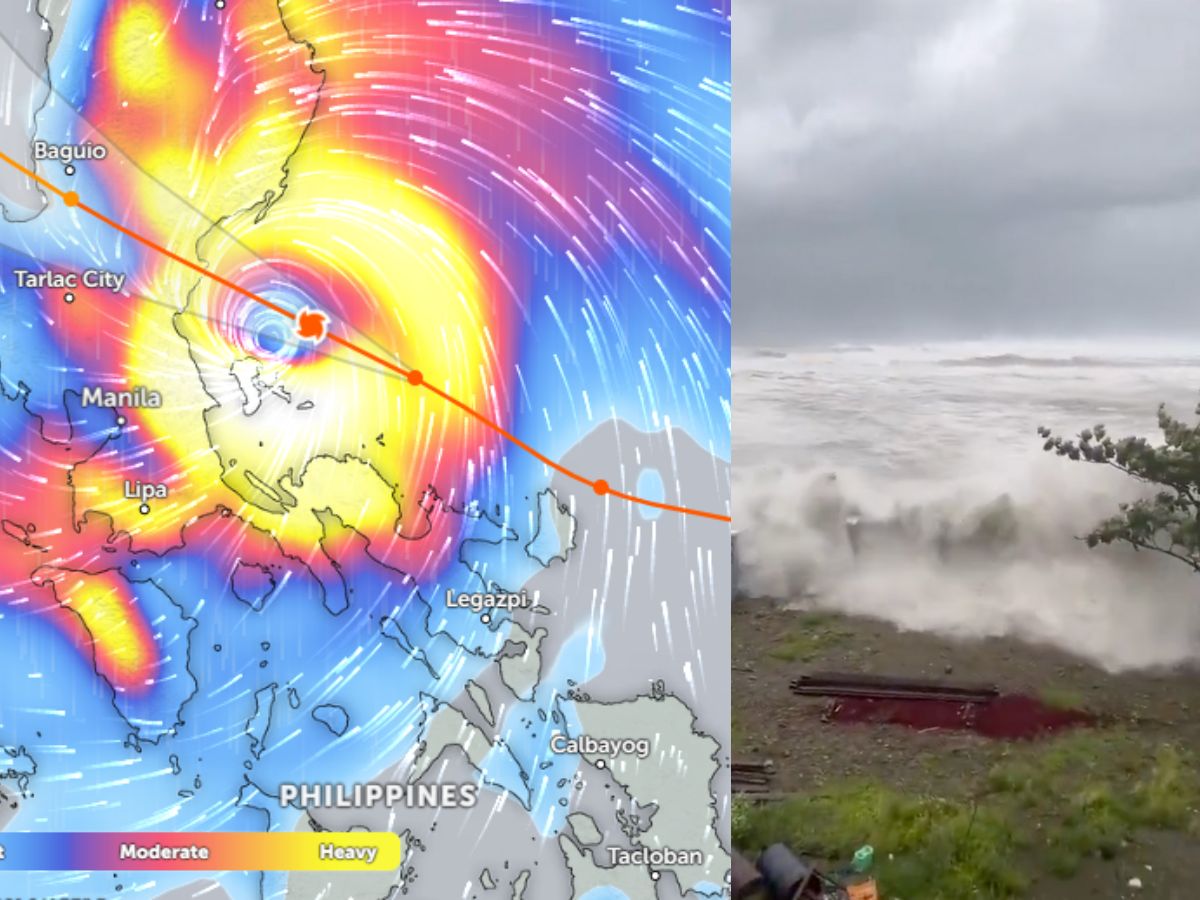

Typhoon Fung-wong swept through northern Philippines overnight, leaving at least two dead and isolating several towns. On Monday morning, residents emerged after a sleepless night to survey the damage.
Authorities evacuated over a million people before Fung-wong, classified as a super typhoon, made landfall in the eastern town of Dinalungan in Aurora province on Sunday night. The storm battered Luzon, the country’s main island, with strong winds, heavy rainfall, and storm surges throughout the night.
Typhoon Caused huge damage
In Santiago city, Isabela province, the typhoon known locally as “Uwan” caused significant damage to homes, while uprooting trees and knocking down electric poles.
“We could not sleep last night because of the winds hitting our metal sheets and the tree branches falling,” said Romeo Mariano, who was sheltering with his grandmother in their home.
“Almost all of the tree branches nearby fell, and when we got out to check our home, we saw the damage,” he added.
At least two people were killed by the typhoon, according to an early report from the Civil Defence office, with two others injured.
Inaccessible Life conditions
Aurora vice-governor Patrick Alexis Angara said at least three towns were inaccessible due to landslides and broken roads.
“Assessment and clearing operations are underway,” Angara told broadcaster DZMM.
The state weather agency said the typhoon was now moving over the South China Sea, and is forecast to shift northeast towards Taiwan. It warned that a large portion of the country still faced heavy rains and severe winds, along with storm swells in coastal areas.
Over 400 flights have been cancelled since Sunday, the civil aviation regulator said.
Fung–wong was the 21st storm to hit the Philippines this year and came immediately after Typhoon Kalmaegi, which last week killed 224 in the country and another five in Vietnam.
(With Reuters Inputs)
ALSO READ: US Shutdown May End Soon: Trump Signals Senate Deal On Government Funding
Sofia Babu Chacko is a journalist with over five years of experience covering Indian politics, crime, human rights, gender issues, and stories about marginalized communities. She believes that every voice matters, and journalism has a vital role to play in amplifying those voices. Sofia is committed to creating impact and shedding light on stories that truly matter. Beyond her work in the newsroom, she is also a music enthusiast who enjoys singing.




