
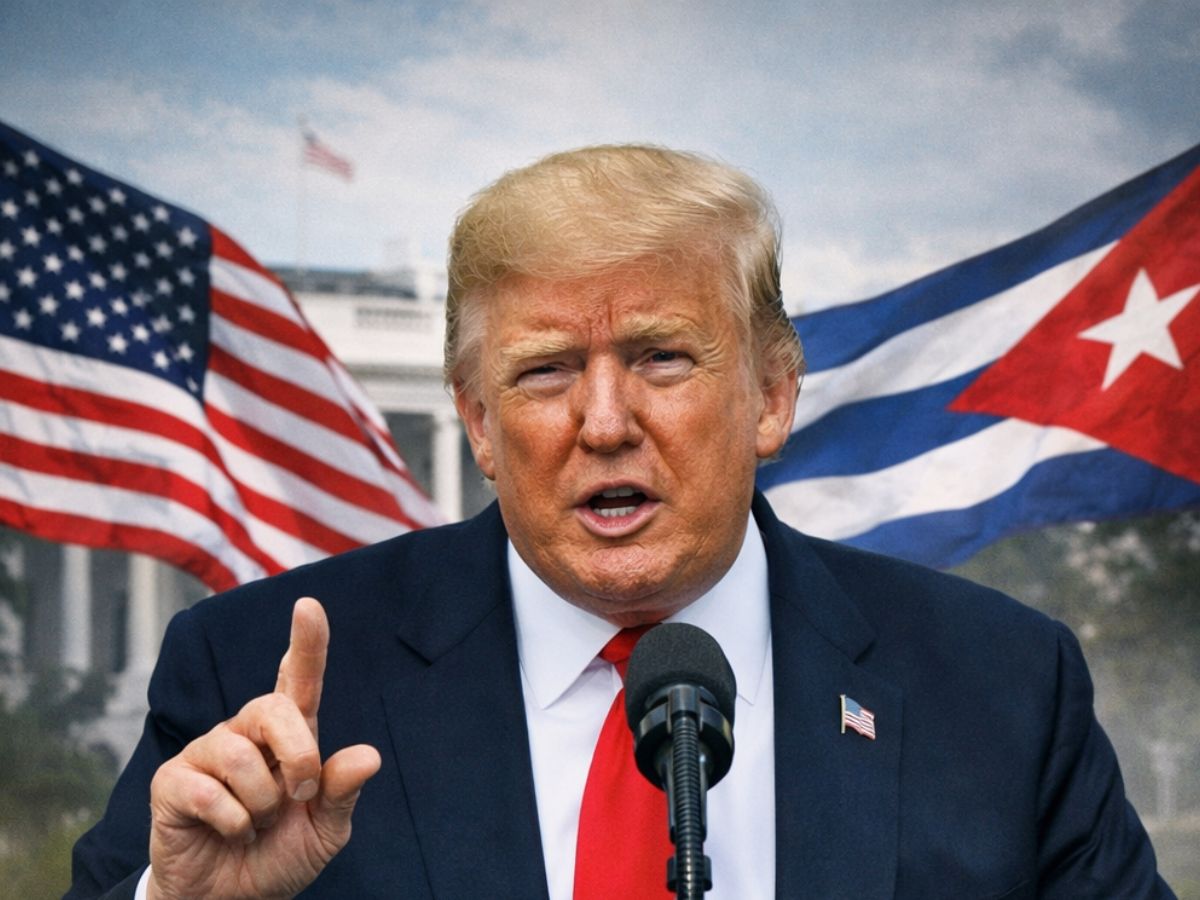

Third Strike Warning By US President Trump Raises Stakes in Middle East
US President Donald Trump on Tuesday intensified pressure on Tehran by announcing that the United States plans to conduct a third military strike against Iran, potentially expanding the current conflict. The move signals that the military campaign will continue following the death of Iranian Supreme Leader Ayatollah Ali Khamenei during the opening phase of Operation Epic Fury.
President Trump Participates in a Bilateral Meeting, Mar. 3, 2026 https://t.co/omh44X1ozj
— The White House (@WhiteHouse) March 3, 2026
Does this represent a strategic show of strength, or could it trigger a broader confrontation between rival nations? Trump’s warning suggests that the next stage of the conflict could reshape power dynamics in the Middle East, drawing significant international attention.
Speaking ahead of a bilateral meeting in the Oval Office with German Chancellor Friedrich Merz, Trump said, “As you know, 49 people were taken out in the first hit. And I guess there was another hit today on the new leadership, and it looks like that was pretty substantial also. So they’re getting hit very hard, and we’ll see what happens.”
He added, “I guess you have a third wave coming.”
Before making his sweeping claim, Trump framed the operation as nothing short of a knockout punch. He described the strikes to reporters as swift attacks that achieved their military objectives while inflicting major damage on Iran’s leadership and military operations. Did the Washington mission succeed in delivering its intended fatal blow, or did it serve as a message to the world?
Trump prudly flexed that two waves of US-Israeli strikes had eliminated figures considered potential successors in Tehran as including the supreme leader in first phase.
“Most of the people we had in mind are dead,” he said. “Now we have another group. They may be dead also, based on reports.”
He further asserted that Iran’s naval and air capabilities had been dismantled.
“They have no navy – it’s been knocked out. They have no air force; that’s been knocked out. They have no air detection; that’s been knocked out. Their radar has been knocked out, and just about everything’s been knocked out,” he told reporters.
What was the real endgame behind the joint US-Israel offensive? Swift Retaliation Across The Gulf
Officials stated that the mission aimed to eliminate Iran’s nuclear and missile capabilities, along with destabilizing its leadership structure. The message from Washington and Tel Aviv appeared uncompromising – neutralize the threat and reset the regional balance of power. Tehran responded with actions of its own.
Iran launched a forceful retaliation by targeting US military installations in Bahrain, Kuwait, and the UAE, as well as the US Embassy in Riyadh. The conflict expanded further when Hezbollah joined the fighting, launching strikes against Israel following Khamenei’s death.
Does this military engagement represent a limited conflict, or is it the beginning of a broader regional confrontation? With each strike and counterstrike, tensions in the Gulf continue to rise, increasing risks that could extend beyond the region and impact global security.
Mixed Messages From Washington
Was the strike carried out as a response, or as a preventive measure? The Trump administration has presented two distinct accounts of the situation. Secretary of State Marco Rubio stated that the United States acted only after discovering Israel’s plans to launch an attack, describing Washington’s role as reactive and coordinated.
President Trump, however, offered a different version, saying he took necessary measures to prevent what he feared would be an imminent Iranian attack. The situation now includes two explanations under a single military operation, as debate continues over what truly triggered the escalation. With tensions rising, observers are left to question whether the events were carefully coordinated or driven by urgency and timing.
“Based on the way the negotiation was going, I think they (Iran) were going to attack first. And I didn’t want that to happen,” he said.
“So, if anything, I might have forced Israel’s hand.”
Aishwarya is a journalism graduate with over three years of experience thriving in the buzzing corporate media world. She’s got a knack for decoding business news, tracking the twists and turns of the stock market, covering the masala of the entertainment world, and sometimes her stories come with just the right sprinkle of political commentary. She has worked with several organizations, interned at ZEE and gained professional skills at TV9 and News24, And now is learning and writing at NewsX, she’s no stranger to the newsroom hustle. Her storytelling style is fast-paced, creative, and perfectly tailored to connect with both the platform and its audience. Moto: Approaching every story from the reader’s point of view, backing up her insights with solid facts.
Always bold with her opinions, she also never misses the chance to weave in expert voices, keeping things balanced and insightful. In short, Aishwarya brings a fresh, sharp, and fact-driven voice to every story she touches.




