
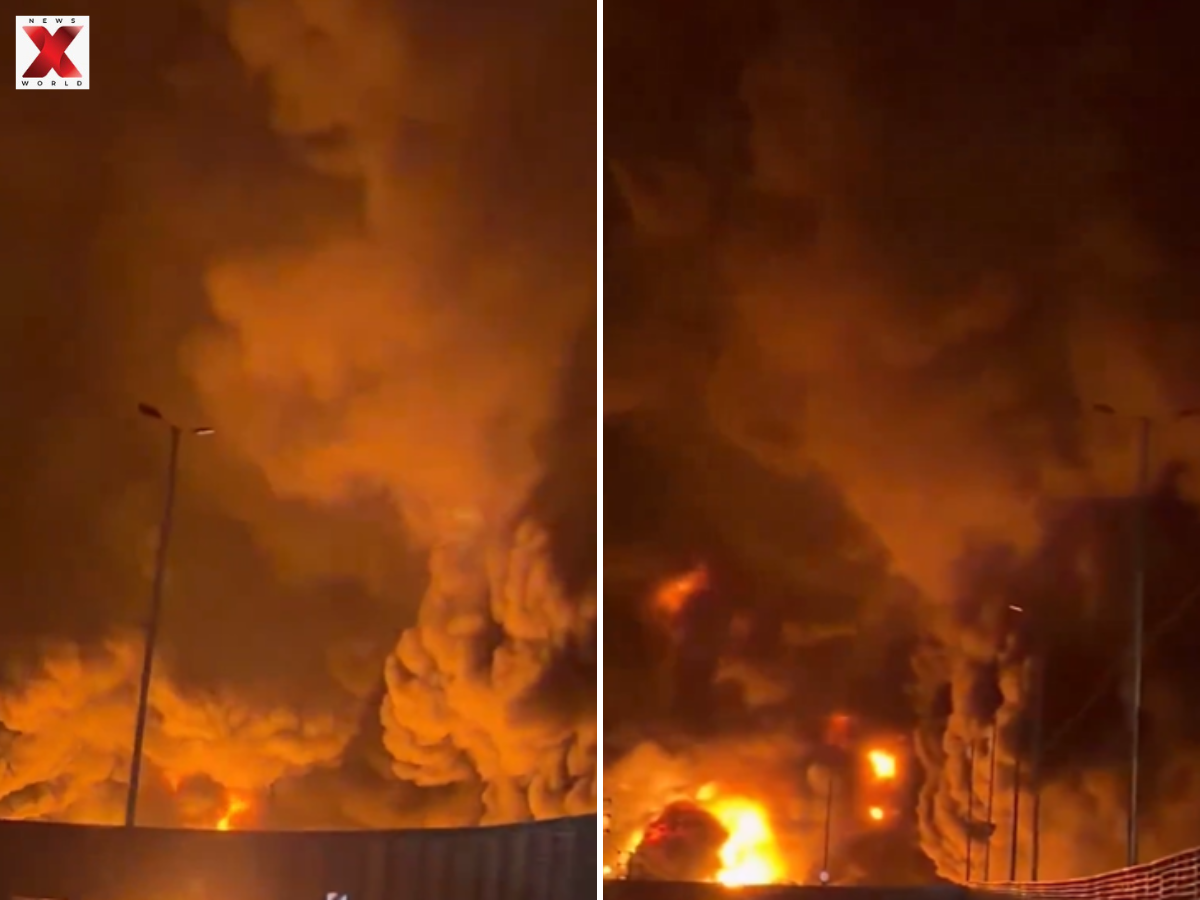

IRAN OIL DEPOTS ATTACKED: Israeli airstrikes hit 30 Iranian fuel depots on Saturday, and the move caught US officials off guard, Axios reports. Even though Israel gave Washington a heads-up before the attack, American officials didn’t expect the strikes to be so widespread.
Israel Strikes 30 Iranian Fuel Depots In Tehran, US reacts ‘WTF’
One Israeli official said the US reaction was basically, “WTF,” when they saw just how far the fires spread. The US isn’t happy about it.
They’re worried this kind of attack could actually strengthen the Iranian regime instead of weakening it. If ordinary Iranians see their fuel supplies burning, they might start rallying behind their leaders.
Plus, the dramatic images of fire and smoke could easily spark panic and send oil prices through the roof. After the strikes, thick smoke covered Tehran, and the flames were visible from miles away.
A former Trump official didn’t mince words, saying it’s just not smart to go after oil depots.
CRAZY FOOTAGE 🔴
Apocalyptic scenes coming out of Tehran right now pic.twitter.com/VVejLZfaVq
— Open Source Intel (@Osint613) March 7, 2026
Tehran Engulfed In Smoke After Israeli Strikes
Trying to justify the operation, the Israeli Defence Forces said the depots help supply fuel to Iran’s military, not just civilians. They framed the attack as a warning shot, hoping to deter future strikes on Israeli infrastructure.
Still, US officials say Israel didn’t make clear just how big the attack would be. “We don’t think it was a good idea,” a senior US official admitted.
A Trump adviser told Axios that President Trump isn’t happy about the whole thing either. These weren’t oil production sites, but US officials worry that burning depots might spook the market and drive oil prices even higher.
“The president doesn’t like the attack. He wants to save the oil. He doesn’t want to burn it. And it just reminds people of higher gas prices,” the adviser said.
‘Apocalyptic’ Scenes In Tehran
One of the depots had fuel that was leaking and it caught fire. Local said that there was a river of fire running through the streets. Following the strike that discoloured rainwater, water that was mixed with oil and soot, has fallen and man has been cautioned to stay at home as reports of acid rain are spread.
The humanitarian and green cost is not the only problem of the Israeli strikes, as military observers noted that this is an ominous development in the war. The other is economic.
The next day, after Israel attacked, oil prices, which were already high due to the war and the blockade of the Strait of Hormuz, a major route to energy shipping, by Iran, which was already in use, shot to a new high of more than US100 per barrel, the first time in close to four years.
Monday, a barrel of Brent crude, the global benchmark, stood at US107.97 following a resumption of trade in the Chicago Mercantile Exchange; it surged 16.5 per cent compared to its Friday size of US192.69.
And the light, sweet crude of West Texas Intermediate, which was produced in the US was trading at 106.22 a barrel, or approximately 16.9 per cent higher than at the end of last week.




