
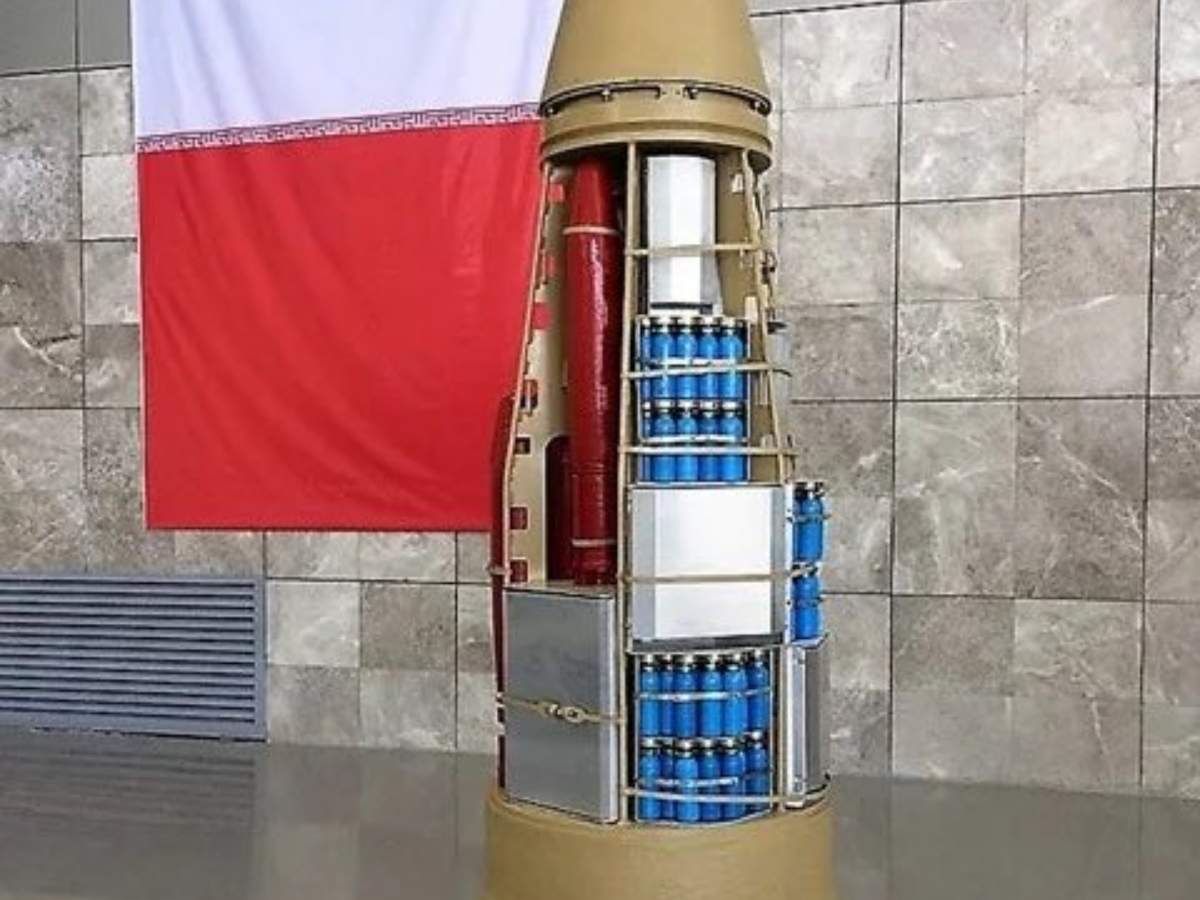

Iran used a cluster bomb warhead in a missile fired by Iran during its June 19 attack on Israel, the Israel Defense Forces (IDF) alleged.
The IDF claim has raised international concern over the use of weapons widely criticized for endangering civilians.
This is the first reported use of cluster munitions in the ongoing conflict between Iran and Israel. The Israeli allegation has taken security aback while reigniting the debate over these controversial weapons.
Cluster bombs are notorious for leaving behind unexploded submunitions that can pose threats for years.
What is a Cluster Bomb?
A cluster bomb releases multiple smaller explosives, known as submunitions, over a wide area, unlike standard warheads that explode on a single impact. These submunitions are dispersed mid-air, often kilometers above the ground, and fall freely without guidance.
The IDF has alleged that the missile’s warhead detonated at an altitude of 7 kilometres, releasing approximately 20 submunitions across an eight-kilometre area in central Israel.
“These submunitions are not guided and do not manoeuvre,” the IDF said. “They are intended to explode upon ground impact, but many fail to detonate and remain dangerous.”
Also Read: Where Are US Bases In the Middle East? Key Details Of America’s Massive Military Footprint In Region
Cluster Bombs Risk Civilian Lives
The aftermath of such attacks often leaves behind unexploded devices that continue to threaten civilian populations long after combat has ended.
“They are egregious weapons with their wide-area destruction, especially if used in a civilian populated area,” said Daryl Kimball, executive director of the Arms Control Association. “And [they] could add to the unexploded ordnance left over from conflicts.”
According to The Times of Israel, one submunition struck a home in Azor, a town in central Israel. No injuries have been reported so far, but the Israeli authorities have warned residents to stay vigilant.
“Do not touch any fallen objects or suspicious objects,” the Israeli Home Front Command cautioned in a post on X (formerly Twitter). “Immediately call 100.”
Can Countries Use Cluster Bombs? Legal Status Explained
Cluster munitions are not universally banned. despite being considered a civilian threat. The 2008 Convention on Cluster Munitions prohibits their use, stockpiling, production, and transfer. However, several major military powers, including Iran, Israel, the United States, and Russia, have not signed the treaty.
In 2023, the US supplied cluster bombs to Ukraine, prompting mutual accusations between Kyiv and Moscow of using them in combat.
Also Read: 290 Indians, Mostly Kashmiri Students, Evacuated From Iran; More Flights To Follow
Zubair Amin is a Senior Journalist at NewsX with over seven years of experience in reporting and editorial work. He has written for leading national and international publications, including Foreign Policy Magazine, Al Jazeera, The Economic Times, The Indian Express, The Wire, Article 14, Mongabay, News9, among others. His primary focus is on international affairs, with a strong interest in US politics and policy. He also writes on West Asia, Indian polity, and constitutional issues. Zubair tweets at zubaiyr.amin




