
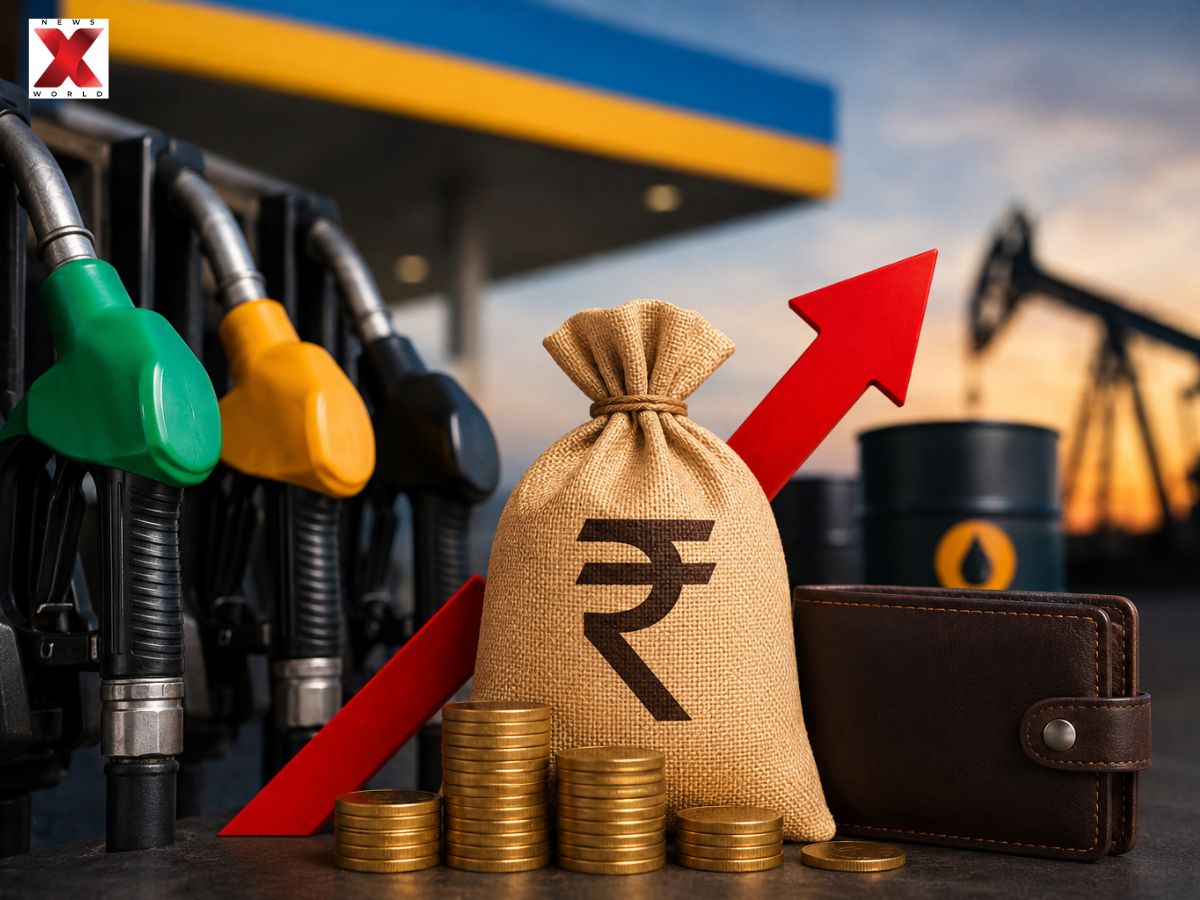
Fuel Export Tax Twist: Petrol Gets Costlier While Diesel & ATF Catch a Break. India has launched what it calls a “windfall tax” on petrol exports. For the first time since the West Asia crisis erupted last month, the government is levying a duty of ₹3 per litre across all petrol exports from May 16. Diesel and aviation turbine fuel (ATF) exporters will see a partial reprieve, with duties lowered to ₹16.5 and ₹16 per litre respectively. In other words: petrol exporters, you will be forced to pay the “extra drama surcharge.” And what does this mean for diesel and jet fuel exporters? They, too, will have to pay a surcharge – a bit less harshly, though.
Diesel and ATF Export Duties Reduced
The Finance Ministry also announced a reduction in export duties on diesel and aviation turbine fuel (ATF):
- Diesel export duty: Reduced to ₹16.5 per litre from ₹23 per litre
- ATF export duty: Reduced to ₹16 per litre from ₹33 per litre
How India’s Fuel Export Duties Have Changed Amid the West Asia Crisis
| Review Date | Diesel Export Duty | ATF Export Duty | Petrol Export Duty |
|---|---|---|---|
| March 26 Review | ₹21.50 per litre | ₹29.5 per litre | Not Applicable |
| April 11 Review | ₹55.5 per litre | ₹42 per litre | Not Applicable |
| April 30 Review | ₹23 per litre | ₹33 per litre | Not Applicable |
| May 16 Revision | ₹16.5 per litre | ₹16 per litre | ₹3 per litre |
No Shock At Indian Fuel Pumps, YET!
Before you panic-buy fuel and give your bike’s petrol gauge a very condescending stare, here’s the good news: the government has not altered duty rates on domestic petrol and diesel. So, for now, your local fuel station is safe from an immediate new fuel price hike via the burns of this export tax shuffle. The new amendments nominally apply to fuel exports, making the road and infrastructure cess on petrol and diesel exports zero as well , essentially the government’s way of putting up an “exports under adjustment” sign while attempting to appease the domestic fuel crowd. “For now” is always a big phrase in the fuel sector, though.
Why The Government Introduced The Windfall Tax
The government introduced the windfall tax to reduce excessive fuel exports and maintain sufficient availability of petroleum products within the country. The move comes amid the ongoing West Asia crisis and rising global crude oil prices, which have increased pressure on domestic fuel supplies and created concerns about energy security and price stability.
Why The Government Suddenly Remembered The Windfall Tax
The windfall tax is generally the government’s way of saying, “maybe let’s keep enough fuel at home first.” As the US-Israel-Iran conflict drives crude oil prices over the horizon, India wants to keep the domestic fuel supply from vanishing into the export market chasing bigger global profits. The trick is to stop exporters from cashing in too aggressively while the local consumer bears the fuel anxiety. In short, when global oil markets begin acting like a thriller movie, governments also start making very stylish policy moves.
Aishwarya is a journalism graduate with over 4.5 years of experience thriving in the buzzing corporate media world. She’s got a knack for decoding business news, tracking the twists and turns of the stock market, covering the masala of the entertainment world, and sometimes her stories come with just the right sprinkle of political commentary. She has worked with several organizations, interned at ZEE and gained professional skills at TV9 and News24, And now is learning and writing at NewsX, she’s no stranger to the newsroom hustle. Her storytelling style is fast-paced, creative, and perfectly tailored to connect with both the platform and its audience. Moto: Approaching every story from the reader’s point of view, backing up her insights with solid facts.
Always bold with her opinions, she also never misses the chance to weave in expert voices, keeping things balanced and insightful. In short, Aishwarya brings a fresh, sharp, and fact-driven voice to every story she touches.





