
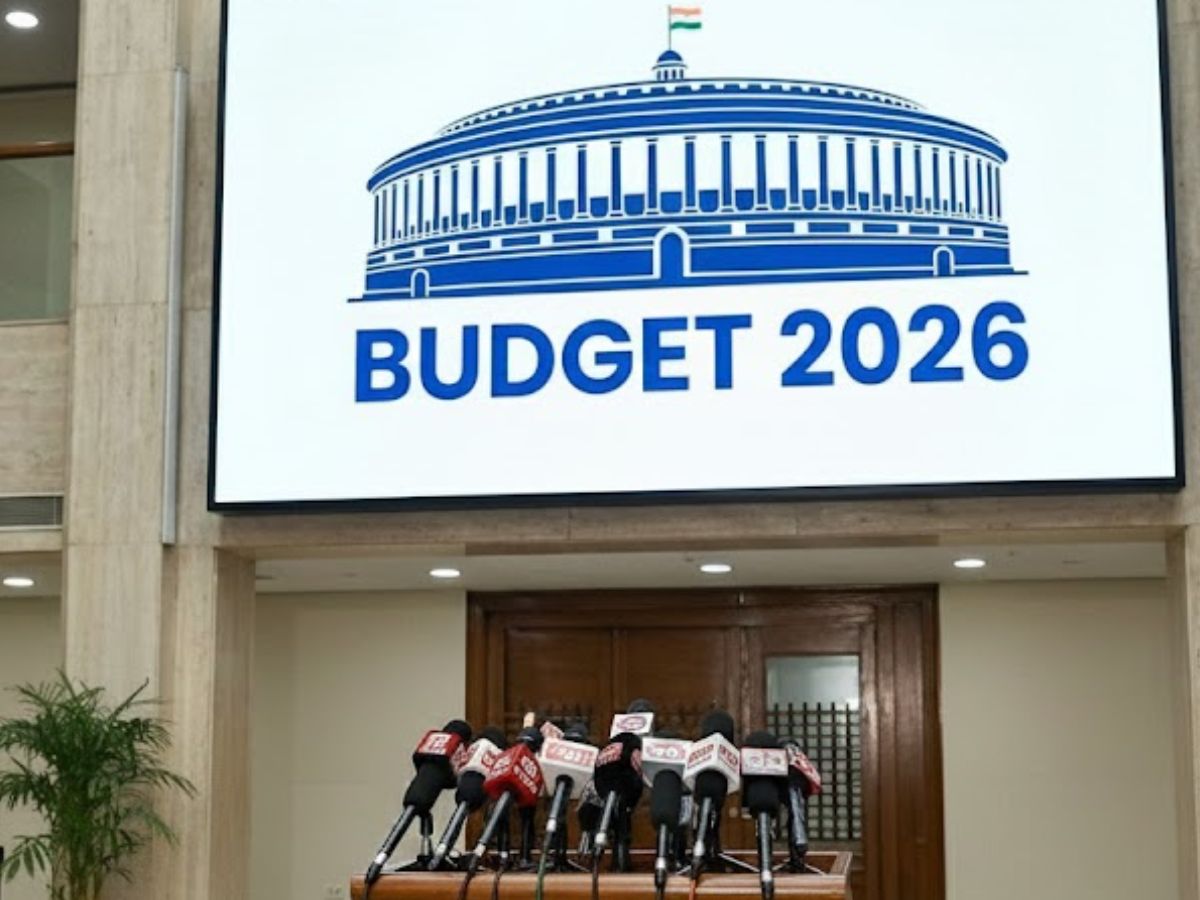

SBI Urges Tax, Insurance, and Pension Reforms in Union Budget 2026 to Boost Financial Security
The central government, in its upcoming Union Budget 2026, is expected to focus on reforms across taxation, insurance, and pension sectors to strengthen household financial savings, reduce compliance burdens, and enhance social security coverage, according to a report by the State Bank of India (SBI).
Declining Household Savings in Bank Deposits
The report highlighted a decline in bank deposits as a share of household financial savings, from 38.7% in FY24 to 35.2% in FY25. To encourage savings through formal banking channels, SBI suggested implementing tax relief measures for depositors. The report recommended that the tax treatment for interest income on bank deposits be brought at par with long-term and short-term capital gains (LTCG and STCG).
SBI also proposed reducing the lock-in period for tax-saving fixed deposits to three years, aligning it with Equity Linked Savings Schemes (ELSS) of mutual funds, to improve deposit mobilization. Additionally, the removal of TDS on savings bank deposit interest or an increase in the threshold was suggested to provide relief for small savers.
Simplifying GST Compliance for Banks
On the indirect tax front, SBI recommended amendments in GST provisions related to Input Service Distributors (ISD) to enhance clarity and reduce litigation. Key suggestions included replacing the phrase “for or on behalf of distinct persons” with “for the benefit of distinct persons” in relevant GST Act, 2017 sections, deletion of certain provisions to address interpretational issues, and adding an explanation to Section 20(3) to allow ISD distributed by banks without disputes over valuation.
The report also highlighted practical challenges faced by banks in complying with GST TDS on payments such as interchange fees routed through settlement agencies like NPCI, Visa, and MasterCard. Since these transactions settle in real-time and invoice details are received later, banks must pay GST TDS and then claim refunds. SBI recommended that GST TDS should not apply to banking services.
Insurance Penetration Requires Immediate Attention
SBI’s report noted a decline in insurance penetration in India, dropping to 3.7% in FY25 from 4% in FY23 and 4.2% in FY22. Life insurance penetration fell to 2.7%, while non-life insurance remained at 1%. The decline is seen as a concern for IRDAI’s mission of “Insurance for All by 2047.” The report also highlighted that 69% of complaints in FY25 were related to claims, emphasizing the need for reforms, especially in the health insurance sector.
Pension System Reforms Needed
The report further stressed the importance of a structured pension system with a minimum pension guarantee to ensure long-term financial security for citizens.
SBI concluded that addressing these reforms in the Union Budget 2026 could strengthen household financial security, enhance economic stability, and support long-term growth.
(This article has been syndicated from ANI)
Aishwarya is a journalism graduate with over three years of experience thriving in the buzzing corporate media world. She’s got a knack for decoding business news, tracking the twists and turns of the stock market, covering the masala of the entertainment world, and sometimes her stories come with just the right sprinkle of political commentary. She has worked with several organizations, interned at ZEE and gained professional skills at TV9 and News24, And now is learning and writing at NewsX, she’s no stranger to the newsroom hustle. Her storytelling style is fast-paced, creative, and perfectly tailored to connect with both the platform and its audience. Moto: Approaching every story from the reader’s point of view, backing up her insights with solid facts.
Always bold with her opinions, she also never misses the chance to weave in expert voices, keeping things balanced and insightful. In short, Aishwarya brings a fresh, sharp, and fact-driven voice to every story she touches.




