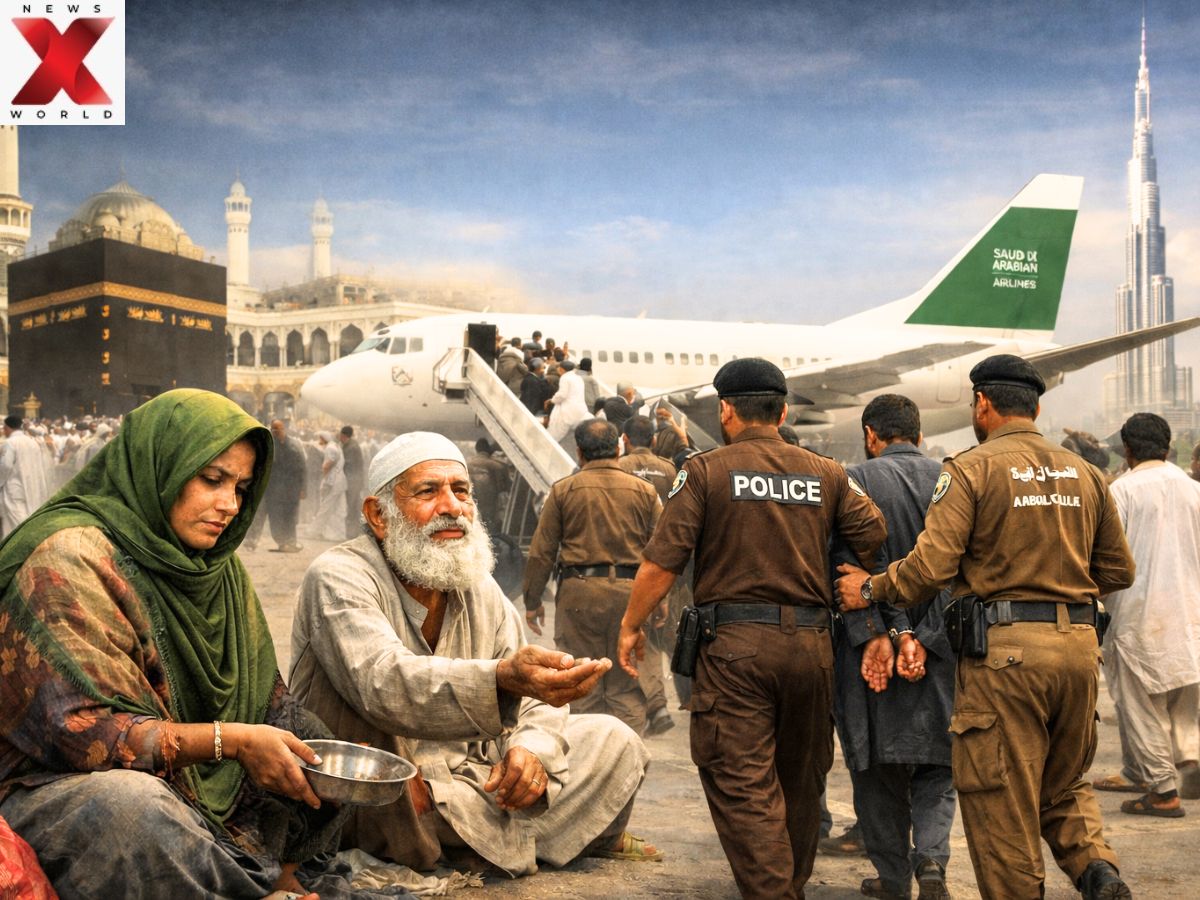

Saudi Arabia has deported nearly 56,000 Pakistani nationals involved in begging, exposing a deep-rooted socio-economic crisis in Pakistan and triggering serious concerns among Gulf nations. The mass deportation comes despite Pakistan enforcing no-fly lists, exit control measures and stricter airport screening to prevent organised begging networks from operating abroad.
The revelation was made by Pakistan’s Federal Investigation Agency (FIA), which admitted that organised begging syndicates continue to exploit pilgrimage and tourist visas to travel to Arab countries, especially Saudi Arabia, where almsgiving is common due to religious customs.
The issue has now escalated into a diplomatic, economic and reputational challenge for Pakistan, affecting genuine pilgrims, workers and students seeking visas to Gulf countries.
Saudi Arabia Deports 56,000 Pakistani Beggars
According to FIA Director General Riffat Mukhtar, around 56,000 Pakistanis involved in organised begging were recently deported from Saudi Arabia. The data was disclosed to a parliamentary panel of Pakistan’s National Assembly, months after Islamabad placed thousands of suspected individuals on the Exit Control List (ECL) and issued stern warnings.
Saudi Arabia, home to Islam’s holiest cities Mecca and Medina, had earlier urged Pakistan to stop its nationals from misusing Umrah and pilgrimage visas for begging. Saudi authorities warned that continued violations could negatively impact Pakistani Umrah and Hajj pilgrims, leading to tighter restrictions.
Despite these warnings, Pakistani beggars have continued to travel or attempt to travel to Gulf nations. In 2025 alone, Pakistan’s FIA offloaded 66,154 passengers at airports, suspecting them of attempting to travel abroad solely for begging.
Why Pakistanis Prefer Begging in Arab Countries
The preference for Arab countries, particularly Saudi Arabia and the UAE, is driven by a combination of economic desperation, religious perceptions and organised networks.
Severe Economic Distress in Pakistan
Pakistan is grappling with high inflation, unemployment, poverty and currency devaluation, leaving millions struggling to meet basic needs. For many, begging becomes a survival strategy, and foreign destinations are seen as more lucrative.
Perception of Religious Generosity
Arab countries, especially Saudi Arabia, are perceived as places where sadaqah (charity) is routinely given, particularly near mosques and holy sites. Beggars believe that religious pilgrims are more likely to donate generously, making begging more profitable than in Pakistan.
Misuse of Umrah and Tourist Visas
Many individuals enter Saudi Arabia on Umrah or visit visas, only to engage in begging near Mecca, Medina and busy marketplaces. Saudi authorities have repeatedly flagged this misuse, calling it a violation of visa norms.
Organised Begging Networks
Officials say many beggars are not individuals acting alone but part of organised trafficking and begging rings. These networks arrange visas, flights and accommodation, and deploy beggars strategically in foreign cities.
Legal expert Rafia Zakaria, writing for Dawn, described these individuals as “professional beggars” who know how to emotionally manipulate pilgrims into giving money.
‘Professional Beggars’ Damage Pakistan’s Image Abroad
FIA chief Riffat Mukhtar acknowledged that illegal migration and organised begging have severely damaged Pakistan’s global image. The visible presence of Pakistani beggars in Saudi cities has alarmed host countries and embarrassed genuine Pakistani travellers.
In 2024, Saudi Arabia’s Ministry of Religious Affairs warned that if the trend continued, Pakistani Umrah and Hajj pilgrims could face collective consequences.
Social media has also reflected growing frustration. One Pakistani pilgrim posted on X after returning from Umrah that he felt “ashamed of being Pakistani” after seeing fellow countrymen begging inside stores and near holy sites.
The fallout has been significant. Genuine Pakistani workers, students and pilgrims now face stricter visa scrutiny, higher rejection rates and delays.
UAE and Gulf Nations Tighten Visa Rules
The problem is no longer limited to Saudi Arabia. In 2024, the United Arab Emirates stopped issuing visas to most Pakistani citizens, citing concerns over criminal activities and begging.
Pakistan’s Secretary for Overseas Pakistanis Zeeshan Khanzada revealed that 90% of beggars detained in several West Asian countries were from Pakistan, a staggering statistic that has worsened Islamabad’s standing with Gulf governments.
Which Other Countries Have Acted Against Pak Beggars
Saudi Arabia is not the only country deporting Pakistani beggars. Several nations have taken action:
-
Saudi Arabia: 4,498 deportations in 2024; 535 more in 2025
-
Iraq: 242 deportations in 2024; five in 2025
-
Malaysia: 55 deportations
-
UAE: 49 deportations; nine in 2025
-
Qatar and Oman: Smaller but ongoing deportations
In total, 4,850 Pakistani beggars were deported in 2024, while 552 were sent back in 2025 so far, according to Pakistan’s Ministry of Interior.
Recently, the FIA stopped three women at Karachi airport attempting to fly to Saudi Arabia under the guise of Umrah pilgrims. Officials found they had no return tickets or hotel bookings, raising red flags. The same women had earlier been stopped at Lahore airport.
Deep-Rooted Crisis With No Easy Fix
Experts say deportations alone will not solve the problem. Pakistan’s begging crisis is rooted in structural poverty, lack of employment opportunities and weak social welfare systems.
Many deported individuals return home only to attempt the journey again, often through different routes or forged documents. This cycle continues to strain Pakistan’s relations with Gulf countries and hurts millions of law-abiding Pakistanis.
Unless Pakistan addresses economic inequality, unemployment and organised trafficking networks, the export of beggars is likely to continue with severe consequences for the country’s global reputation and its citizens abroad.
Sofia Babu Chacko is a journalist with over five years of experience covering Indian politics, crime, human rights, gender issues, and stories about marginalized communities. She believes that every voice matters, and journalism has a vital role to play in amplifying those voices. Sofia is committed to creating impact and shedding light on stories that truly matter. Beyond her work in the newsroom, she is also a music enthusiast who enjoys singing.