
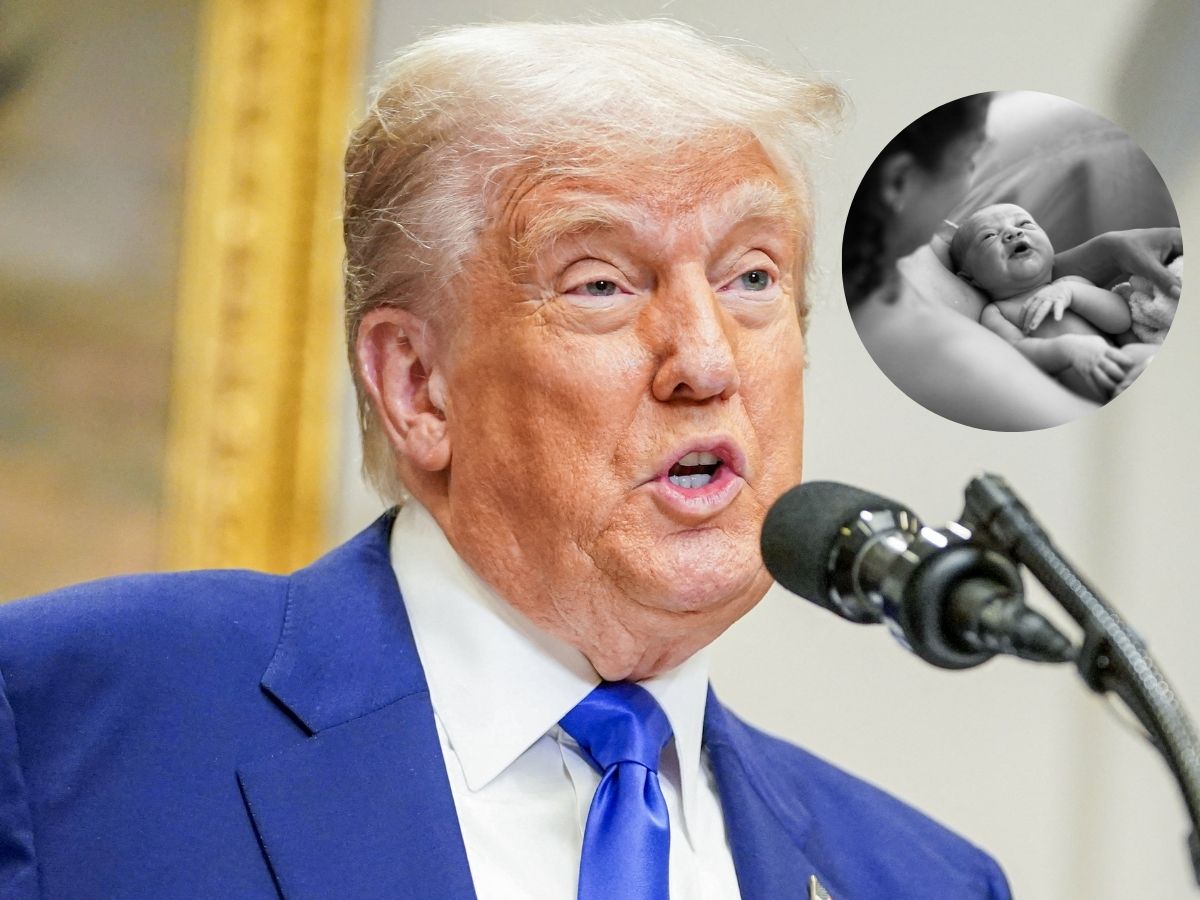

The United States has issued a sharp clarification, reiterating that tourist visas will be denied to applicants whose primary purpose of travel is to give birth in the country to secure American citizenship for their child.
The announcement from the US Embassy in India on Thursday comes at a time when President Donald Trump is pushing to end birthright citizenship, a move that has triggered intense political debate and legal challenges. For Indian travellers, expectant parents and families planning to visit the US, the crackdown has significant implications.
US Embassy Issues Warning: ‘Birth Tourism’ Not Permitted
In a statement posted on X, the US Embassy in India underscored that consular officers will refuse tourist visas if they believe an applicant intends to travel to the United States primarily to give birth. The Embassy emphasised that such travel is not considered a permissible purpose under a standard B-1/B-2 tourist visa.
U.S. consular officers will deny tourist visa applications if they believe the primary purpose of travel is to give birth in the United States to obtain U.S. citizenship for the child. This is not permitted. pic.twitter.com/Xyq4lkK6V8
— U.S. Embassy India (@USAndIndia) December 11, 2025
Although US laws do not forbid foreigners from giving birth in the country, the intent behind the travel is crucial. If consular officers determine that the primary motive is to obtain US citizenship for the baby, the visa application will be denied.
This clarification aligns with existing rules strengthened during Trump’s first term. In January 2020, the administration introduced a regulation categorising childbirth as a medical activity that must be supported by legitimate medical necessity and financial capability. Applicants with no medical justification and who cannot prove they can bear the cost of childbirth in the US are automatically suspected of intending to exploit birthright citizenship.
Trump’s Push to End Birthright Citizenship
The renewed emphasis on birth tourism comes alongside President Donald Trump’s effort to end birthright citizenship entirely. On January 20, he signed an executive order aimed at stopping the automatic granting of citizenship to nearly all children born on US soil. This practice, rooted in the 14th Amendment, has been in place for more than 150 years.
The executive order has not come into effect due to several lawsuits. Federal courts have issued preliminary injunctions, and the matter has now reached the US Supreme Court, which recently agreed to hear the case. If the Court sides with the administration, it could upend a century-old legal understanding of citizenship. Trump has repeatedly argued that the 14th Amendment was never meant to give citizenship to the children of foreign nationals who are in the US illegally or temporarily. In a recent interview, he claimed that the Citizenship Clause was originally intended only for the children of formerly enslaved people following the Civil War.
Even as the legal battle continues, the US Citizenship and Immigration Services (USCIS) has already drawn up a blueprint for implementation, outlining how the policy will be enforced if the judiciary clears it. The issue has become one of the defining aspects of Trump’s second-term immigration agenda.
Why the US Is Cracking Down on Birth Tourism
Birth tourism refers to pregnant foreign women travelling to the US to give birth so their children automatically obtain American citizenship. The Trump administration argues that this practice exploits US laws and creates loopholes in the immigration system. It has also raised concerns about misuse of public resources, identity documentation risks, and the potential for future family-based immigration initiated by the US-born child when they turn 21.
The new consular instructions are meant to prevent these perceived abuses. While childbirth itself is not unlawful, travelling with the primary intention of securing citizenship is. Officers are therefore expected to scrutinise travel plans, medical documents and applicants’ financial resources more closely.
Digital and Social Media Screening Also Tightened
The warning against birth tourism coincides with expanded digital screening for international travellers. A notice published by the Department of Homeland Security states that foreigners travelling to the US without a visa under the Visa Waiver Programme may soon be required to provide extensive information, including five years of social media accounts, email histories and family details. Although India is not part of this programme, the move indicates a broader strategy of tightening entry procedures across visa categories.
Applicants who refuse to make their social media profiles public may face additional scrutiny or possible denial. The new checks have raised concerns among civil liberties groups, who warn that increased monitoring could chill free speech and disproportionately target people based on political views.
What the Crackdown Means for Indian Travellers
For Indian travellers, the renewed emphasis on intent will make tourist visa applications more stringent. Pregnant women or couples seeking to travel late into pregnancy will face more questions from consular officers, especially if they do not have a clear medical reason or treatment plan in the US.
Visa interviewers are likely to probe travel dates, hospital arrangements and financial capability to ensure that the purpose of the trip is not childbirth.
Indians who legitimately need to travel to the US for medical treatment related to pregnancy will be required to furnish strong evidence, such as doctor’s letters, confirmed hospital appointments and proof that they can fully cover all medical expenses. Even then, consular officers may deny visas if they suspect the underlying intention is tied to birthright citizenship.
The measures will also impact Indians who have long viewed US-born children as a future pathway for education and migration. With the legality of birthright citizenship now under review and the US openly discouraging childbirth-based travel, such long-term plans face uncertainty.
For families who already have children born in the US, there is currently no indication that their existing citizenship status will change. Trump has said he has “not thought about” retroactive measures, but the future remains unclear until the Supreme Court delivers its ruling.
A significant shift
The US government’s decision to deny tourist visas linked to birth tourism marks a major shift in its immigration posture. Combined with the Trump administration’s push to end birthright citizenship and tighten digital screening measures, the message to Indian travellers is unequivocal: using a tourist visa to give birth in the United States is not permitted, and visa scrutiny will only get stricter.
As the Supreme Court prepares to take up one of the most consequential immigration questions of the decade, Indian families planning US travel must prepare for deeper checks, more documentation and an increasingly cautious consular approach.
Sofia Babu Chacko is a journalist with over five years of experience covering Indian politics, crime, human rights, gender issues, and stories about marginalized communities. She believes that every voice matters, and journalism has a vital role to play in amplifying those voices. Sofia is committed to creating impact and shedding light on stories that truly matter. Beyond her work in the newsroom, she is also a music enthusiast who enjoys singing.




