
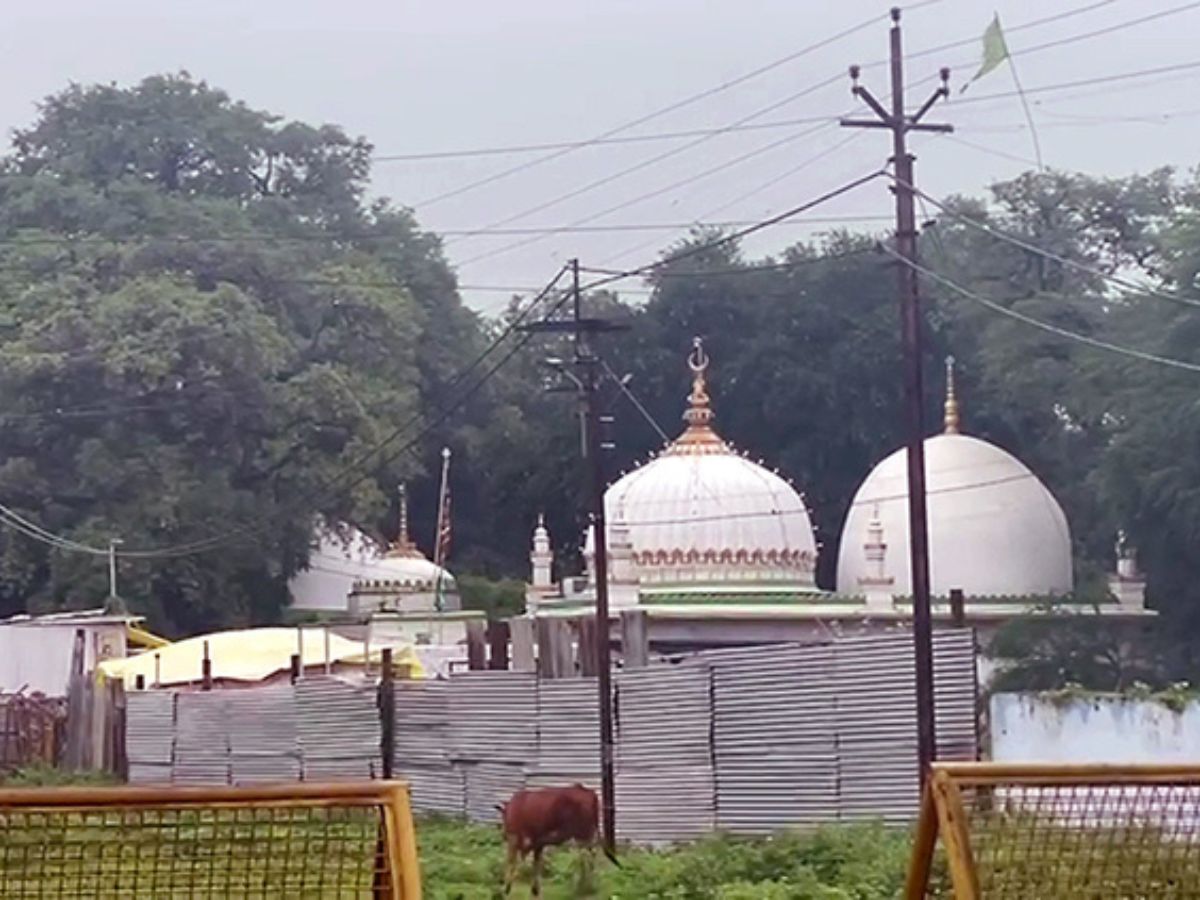
In a big win for the Hindu petitioners, the Madhya Pradesh High Court on Friday ruled that the disputed Bhojshala in Madhya Pradesh’s Dhar is a temple. The court ruled that the Bhojshala area is a temple connected to Goddess Vagdevi, so it basically affirmed the Hindu right to worship there. It also maintained religious access while it turned down the opposing assertions, which makes it a pretty big decision in the long running dispute about that place.
A bench of Justices Vijay Kumar Shukla and Justice Alok Awasthi, while passing he order, observed that there were indications of a Sanskrit teaching centre and a temple of Goddess Saraswati in Bhojshala.
“We have noted continuity of Hindu worship at the site here has never been extinguished. We record findings that historical literature places establish the character of the dispute area was Bhojshala as centre of Sanskrit learning associated with Raja Bhoj of parmar dynasty,” the court said.
The Hindu community considers Bhojshala a temple while the Muslim side maintains that the site has functioned as the Kamal Maula Mosque for centuries. The court asked the Muslim community to approach the state government for allotment of separate land in the district for construction of a mosque.
What Is Bhojshala And Why Has It Been At The Centre Of A Long-Running Dispute?
The Bhojshala complex in Madhya Pradesh’s Dhar district has remained one of the state’s most sensitive religious sites for decades. Hindus believe the structure is an ancient temple dedicated to Goddess Vagdevi, also known as Saraswati, the goddess of knowledge and learning. Muslims, however, identify the site as the Kamal Maula Mosque.
Protected by the Archaeological Survey of India (ASI), the monument has functioned under a special arrangement introduced in 2003 to accommodate both communities. Under the system, Hindus were allowed to offer prayers every Tuesday and on Basant Panchami, while Muslims could offer Friday namaz for a limited period in the afternoon.
The arrangement often led to tension, especially in years when Basant Panchami coincided with Friday prayers. Such situations triggered disputes and heavy security deployment in 2006, 2013 and 2016.
Why Did The Matter Reach High Court?
Previously on May 2022, the legal battle began after the Hindu Front for Justice filed a Public Interest Litigation in the Madhya Pradesh High Court. The petition challenged the ASI’s shared-use arrangement and sought exclusive worship rights for Hindus at the site.
The organisation argued that Bhojshala is a temple of Goddess Vagdevi and claimed that only Hindus have the constitutional right to perform religious rituals there.
Tensions Around The Site
The Bhojshala dispute has witnessed several flashpoints over the years. In September last year, authorities tightened security after an idol of Goddess Vagdevi was placed inside the structure. Police later removed the idol peacefully. Because both Hindus and Muslims claim religious ties to the site, Bhojshala continues to remain politically and socially sensitive in the region.





