
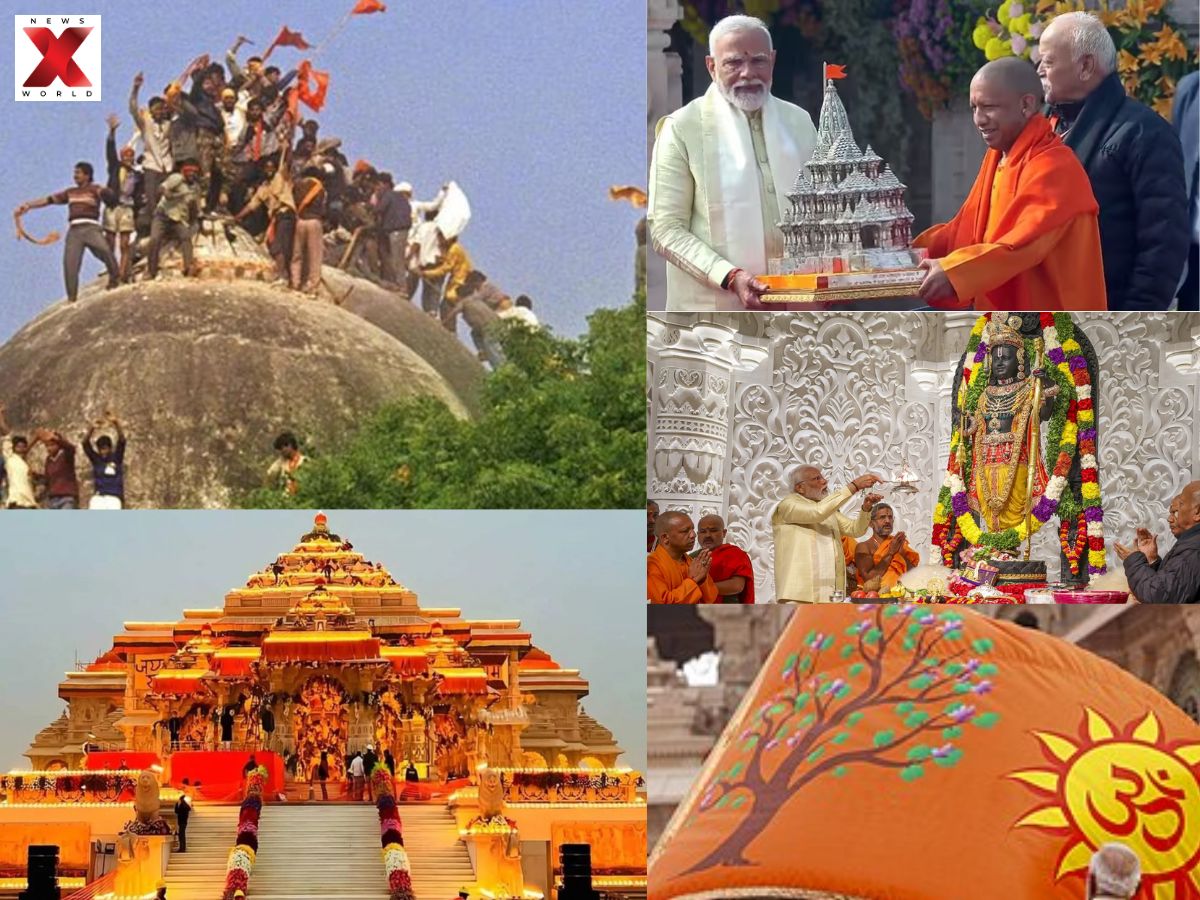

Babri Masjid Demolition: Why the Babri Masjid Episode Still Echoes Through Uttar Pradesh
The demolition of the Babri Masjid in Ayodhya wasn’t just another event in the news cycle, it was the final chapter of a decades-old drama that had every element India is famous for: faith, politics, emotion, courtroom suspense, and of course, street-level chaos. What started as a local dispute eventually became one of the biggest turning points in India’s modern political story.
Let’s be honest, Babri Masjid and everything surrounding it now live rent-free in the minds of UP’s people. Whether you’re Hindu or Muslim, you know the emotional baggage this site carries. The gunshots, the riots, the fear, the entire state went through a nightmare that no one has forgotten. And no matter which side people stood on, everyone remembers the tension in the air like it was yesterday.
For many Hindus, the issue wasn’t merely political theatre, it was about reclaiming a sacred birthplace they believed was theirs long before Babur’s commander ever laid a brick. And whether one agrees or not, the sentiment was powerful enough to move millions.
Fast forward to today: the Modi government has built the grand Shri Ram Mandir on the site the Supreme Court declared rightful. And just like that, a centuries-long wait found closure, at least for one side.
The emotions, the debates, the controversies? Oh, they’re still alive and kicking. But India wouldn’t be India without a little drama, right?
Babri Masjid Demolition: What Is The Whole Story Behind the Famous Tussle Between Politics and Religion?
If Ayodhya had a voice, it would probably sigh, “I’ve seen enough drama for ten lifetimes.” Because the story of the Babri Masjid, Ram Janmabhoomi dispute is not just history, it’s a blockbuster saga of faith, power, emotion, and decades of political plot twists.
Our tale begins in the sacred city of Ayodhya, revered by millions as the birthplace of Lord Rama. In 1528, Mir Baqi, general to emperor Babur, built the Babri Masjid at a site many Hindus believed once housed a grand Ram temple. Whether a temple was demolished or not became the legendary spark that refused to die out for centuries.
Fast-forward to the 19th century, when tempers flared often enough for the British to step in, not to solve the problem, of course, but to tactically park it. In 1859, they built a fence dividing the complex: Muslims prayed inside, Hindus worshipped outside. Think of it as an imperial-era “you stay on your side, I’ll stay on mine” arrangement.
But the real twist arrived post-Independence. In December 1949, idols of Lord Rama suddenly appeared inside the mosque, an event that created shockwaves nationwide. The government, caught between faith and law, declared the site disputed and locked the gates. Hindus were later allowed limited worship in the outer courtyard, which only deepened the emotional and spiritual attachment to the spot.
From there, Ayodhya evolved from a local quarrel into one of India’s most defining political-religious flashpoints, a story overflowing with passion, identity, unresolved questions, and the weight of centuries.
History rarely gets more dramatic than this.
Aishwarya is a journalism graduate with over three years of experience thriving in the buzzing corporate media world. She’s got a knack for decoding business news, tracking the twists and turns of the stock market, covering the masala of the entertainment world, and sometimes her stories come with just the right sprinkle of political commentary. She has worked with several organizations, interned at ZEE and gained professional skills at TV9 and News24, And now is learning and writing at NewsX, she’s no stranger to the newsroom hustle. Her storytelling style is fast-paced, creative, and perfectly tailored to connect with both the platform and its audience. Moto: Approaching every story from the reader’s point of view, backing up her insights with solid facts.
Always bold with her opinions, she also never misses the chance to weave in expert voices, keeping things balanced and insightful. In short, Aishwarya brings a fresh, sharp, and fact-driven voice to every story she touches.




