

India is moving towards a major shift in its war-fighting doctrine as the Army looks to raise a dedicated “rocket-cum-missile” force, a long-pending proposal aimed at countering growing military threats from Pakistan and China.
The move highlights changing battlefield realities, where long-range missiles, rockets, and drones are increasingly replacing traditional troop-heavy engagements.
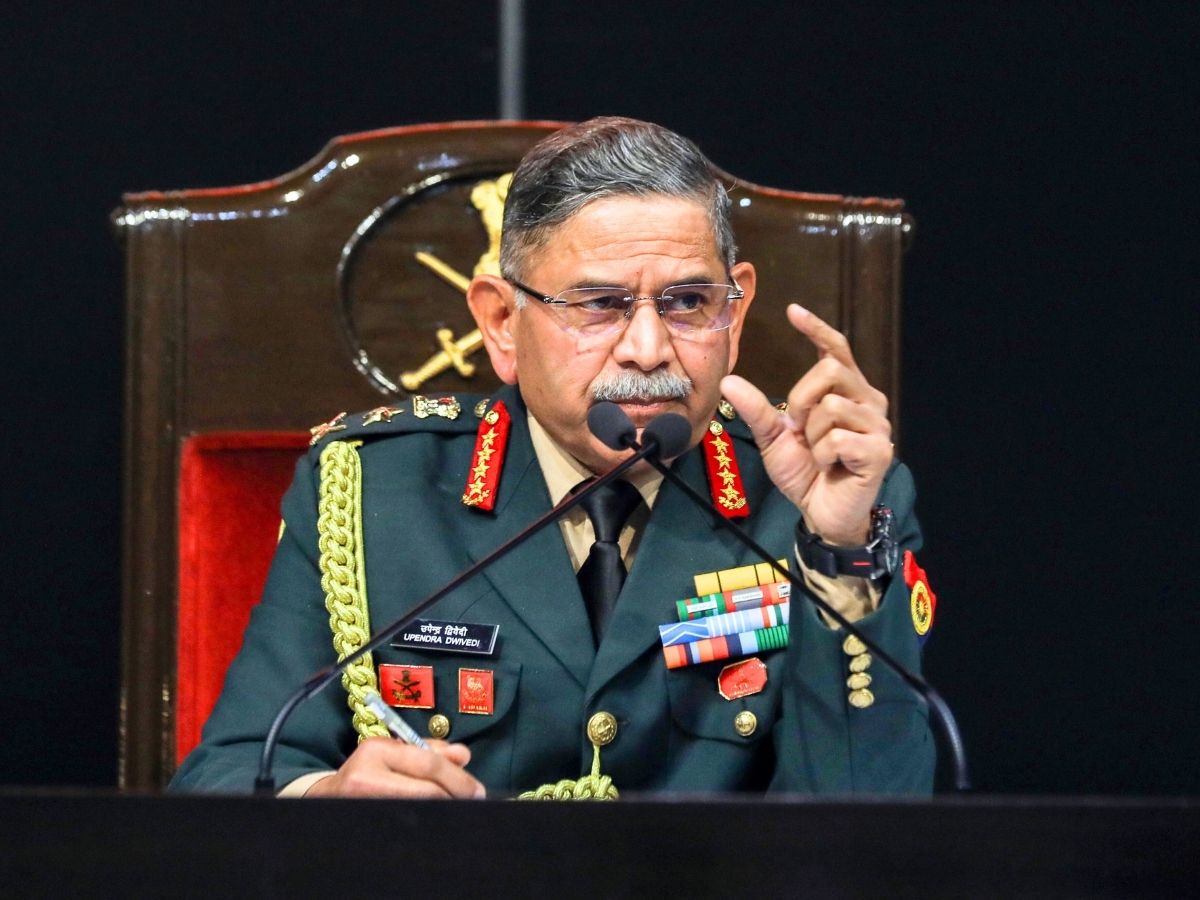
Army Chief General Upendra Dwivedi, speaking on Army Day, detailed the urgency of such a force, pointing out that both India’s principal adversaries already operate specialised rocket and missile units.
“Pakistan has established a rocket force, and China has also created such a force. It is the need of the hour,” he said.
Why Is India Planning a Rocket-Cum-Missile Force?
Recent global conflicts from Ukraine to the Middle East have ushered in what military experts call a “missile renaissance.”
Modern warfare is increasingly non-contact, relying on precision strikes delivered from long distances to neutralise enemy bases, airfields, and command centres.
India’s own experience during Operation Sindoor, where missiles were used to strike terror camps deep inside Pakistan, reinforced the effectiveness of long-range strike capabilities.
According to officials, the operation exposed vulnerabilities in Pakistan’s defences and showcased India’s growing missile prowess, particularly with systems like BrahMos.
The Army believes that bringing rockets and missiles under a single command will allow faster decision-making, better coordination, and more lethal strike options during short, intense conflicts.
Rockets vs Missiles: Why Both Matter
While rockets and missiles are often spoken of interchangeably, the Army Chief said that the modern warfare has blurred the distinction.
“Rockets and missiles have become intertwined. Both can deliver decisive impact,” General Dwivedi said.
Rockets, such as Pinaka, are ideal for saturation attacks over large areas, while missiles offer precision strikes against high-value targets using internal guidance systems.
Combining both under one force would allow India to conduct layered strikes overwhelming enemy defences while maintaining accuracy.
India’s Existing Missile Arsenal
India already possesses a diverse mix of indigenous and jointly developed missile systems, including:
-
BrahMos (supersonic cruise missile)
-
Agni series (ballistic missiles)
-
Prithvi
-
Pralay (short-range ballistic missile)
Recently, India successfully tested the Pinaka long-range guided rocket with a range of 120 km.
The Army Chief revealed that contracts have already been signed for missile systems with ranges extending 300-450 km, significantly enhancing India’s deep-strike capability.
At present, missiles and rockets are managed by the Artillery Regiments and the Army Air Defence (AAD), but experts argue that fragmented control limits operational efficiency.
Rocket-Cum-Missile force: How China and Pakistan Are Already Ahead Structurally
China operates the People’s Liberation Army Rocket Force (PLARF) one of the most powerful missile commands in the world. The PLARF controls both conventional and nuclear missiles and enjoys minimal civilian oversight, allowing rapid deployment and flexibility.
According to a recent US Pentagon report, China possesses over 1,250 ballistic and cruise missiles and more than 600 nuclear warheads, a number expected to cross 1,000 by 2030.
Pakistan, meanwhile, announced the formation of its Army Rocket Force Command (ARFC) in August 2025, following setbacks during Operation Sindoor. Though Pakistan lags behind India in missile quality and range, experts warn that its rocket force could pose challenges during short conflicts through saturation attacks.
What India Can Learn from Iran’s Missile Doctrine
Military analysts suggest India should closely study Iran’s missile model, which has emerged as one of the most potent in the world.
Iran’s Islamic Revolutionary Guard Corps Aerospace Force (IRGCASF), established in 2009, operates independently of the regular air force and reports directly to Supreme Leader Ayatollah Ali Khamenei. The force controls ballistic, cruise, hypersonic missiles and drone operations.
During last year’s conflict with Israel, Iran’s missile barrages managed to penetrate Israel’s Iron Dome, highlighting the effectiveness of volume-based and concealed launches.
A key strength of Iran’s missile force lies in its vast underground tunnel networks, which allow missiles to be stored and launched from hidden locations, making detection extremely difficult. US estimates suggest Iran possesses around 3,000 ballistic missiles, the largest stockpile in the Middle East.
Experts argue that Iran’s missile capability has acted as a powerful deterrent, preventing full-scale military action by Israel or the US.
How a Rocket-Cum-Missile Force Will Boost India’s Combat Power
A unified rocket-missile force would give India:
-
Stand-off strike capability without exposing troops
-
Rapid response options during high-intensity conflicts
-
Reduced casualties through non-contact warfare
-
Greater deterrence against nuclear and conventional threats
General Dwivedi noted that modern battlefields demand precision and speed. “Missile forces today form a single strike ecosystem,” he said, stressing the need for structural reform.
‘Rocket-Cum-Missile’ force: The Strategic Imperative Ahead
India’s geography, hostile borders, and evolving threat matrix make the creation of a rocket-cum-missile force increasingly unavoidable. With both Pakistan and China already fielding dedicated rocket commands, India’s move signals a doctrinal shift towards long-range precision warfare.
In fact, the global conflicts continue to underline the dominance of missiles and drones, the Army Chief’s call reflects not future ambition but present battlefield reality. The question is no longer whether India needs such a force but how quickly it can operationalise it.
Sofia Babu Chacko is a journalist with over five years of experience covering Indian politics, crime, human rights, gender issues, and stories about marginalized communities. She believes that every voice matters, and journalism has a vital role to play in amplifying those voices. Sofia is committed to creating impact and shedding light on stories that truly matter. Beyond her work in the newsroom, she is also a music enthusiast who enjoys singing.




