
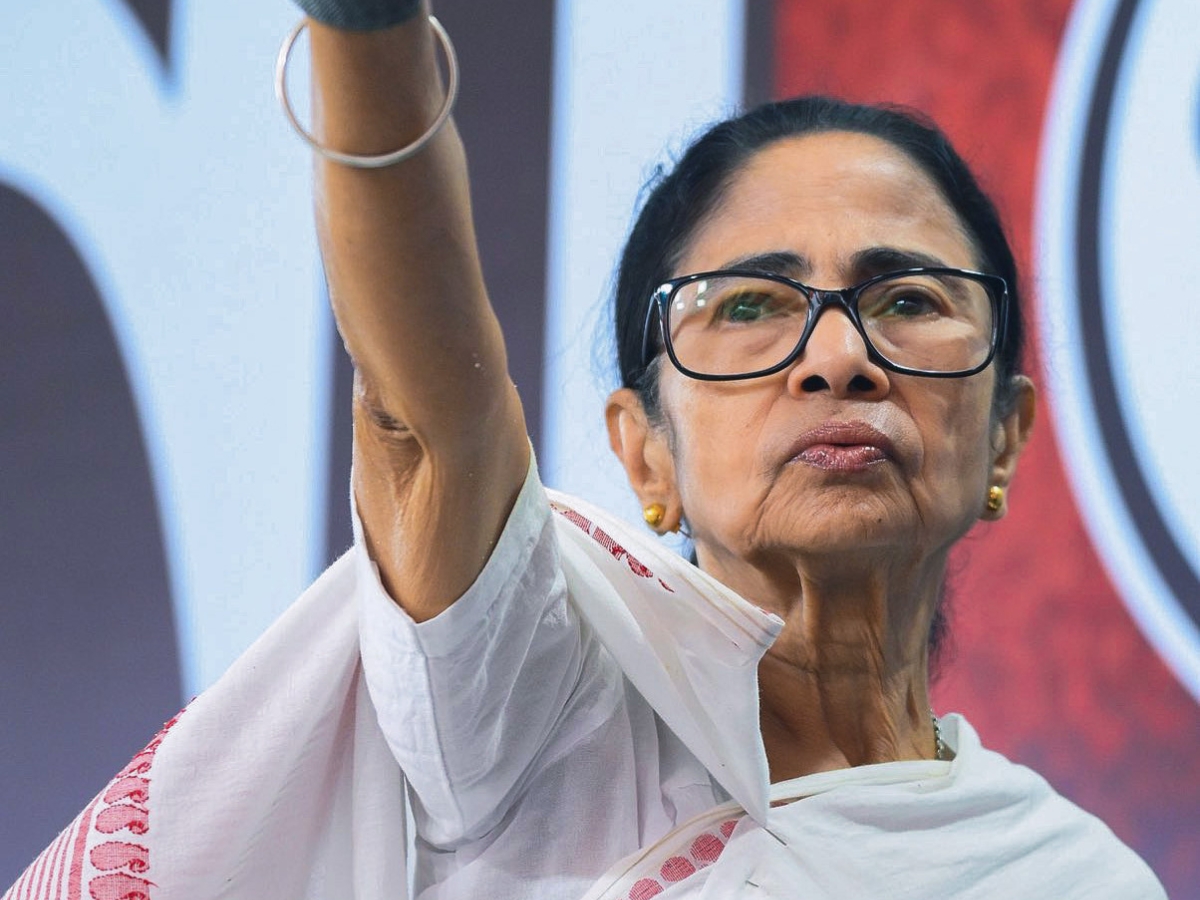

Mamata Banerjee is the woman of many firsts. She is the first woman to serve as the Chief Minister of West Bengal. She is the only woman to win three back-to-back chief ministerial berths alongside Delhi CM Sheila Dikshit. With her fiery oratory and grassroots connections, Banerjee has repeatedly challenged dominant political forces, most notably the Bharatiya Janata Party (BJP).
Mamata Banerjee: Early Life and Education
Mamata Banerjee was born in January 1955 in Calcutta to a lower-middle-class family. She holds Bachelor degrees in Arts (BA), Education (B.Ed), Law (LLB), and a Master’s degree in Arts (MA) from the University of Calcutta.
She was attracted to politics from a very young age. As a student at Jogmaya Devi College, she joined the West Bengal Chhatra Parishad and later became a member of its working committee serving between 1977to 83.
Mamata Banerjee’s Political Career
Mamata Banerjee began her formal political career with the Indian National Congress. In INC, she held several positions:
General Secretary, West Bengal Congress (Indira) (1979–80)
Secretary, West Bengal Provincial Trade Union Congress
Secretary, Women’s Wing of the Indian National Trade Union Congress (1983–88)
Secretary, South Calcutta District Congress (Indira) (1980–85)
In 1984, she was elected as Member of Parliament from Jadavpur. She was re-elected to Parliament multiple times (1991, 1996, 1998, 1999, 2004, and 2009), representing South Kolkata and becoming one of India’s most experienced parliamentarians.
Mamata Banerjee As A Central Minister
Banerjee has served in multiple capacities at the central government:
Minister of State for Youth and Sports, Women and Child Development (1991)
Railway Minister of India (1999, 2009), becoming the first woman to hold the portfolio twice
Cabinet Minister for Coal and Mines (2004)
Leaving Congress and Founding the Trinamool Congress
In December 1997, Mamata Banerjee left Congress after differences with the party. She founded the All India Trinamool Congress (AITC or TMC) in 1998, becoming its first chairperson. She is among the very few politicians in India who stood her ground and did not join Congress back.
Alliances With NDA & BJP
She briefly joined the BJP-led National Democratic Alliance (NDA) government in 1999 as Railway Minister but left in 2001. She later allied with the Congress in state elections to challenge the Left Front.
Mamata Banerjee’s Biggest Success: Breaking the Left in West Bengal
In May 2011, Banerjee led the TMC to a historic victory, ending 34 years of Left Front rule in West Bengal. She won on the promises of welfare schemes, women-centric initiatives, strategic alliances, and her ability to unify diverse voter groups.
She became West Bengal’s first woman Chief Minister on 20 May 2011, a position she has held for three terms.
However, in the 2021 West Bengal Assembly elections, while the TMC retained power, she lost her own seat in Nandigram to former aide-turned-BJP candidate Suvendu Adhikari by a narrow margin.
Known for her combination of populist policies, assertive governance, and political acumen, Banerjee remains a dominant force in the state, often described as a leader who blends welfare politics with electoral strategy.
Mamata Banerjee Net Worth
According to a 2024 report by the Association for Democratic Reforms (ADR, Mamata Banerjee is the poorest among all 31 CMs in India. Her net worth is a little over 15 lakh. Her movable assets are worth Rs. 15,38,029. She doesn’t have any immovable assets, according to the report.
FAQS
Q1: From which assembly constituency does West Bengal Chief Minister Mamata Banerjee contest elections?
Ans: Bhabanipur
Q2: Is Mamata Banerjee a Hindu? What is Bengal CM’s religion?
Ans: Yes, she is a Brahmin Hindu.
Q3: For how long has Mamata Banerjee served as West Bengal Chief Minister?
Ans: Since 2011, for three consecutive terms.
Zubair Amin is a Senior Journalist at NewsX with over seven years of experience in reporting and editorial work. He has written for leading national and international publications, including Foreign Policy Magazine, Al Jazeera, The Economic Times, The Indian Express, The Wire, Article 14, Mongabay, News9, among others. His primary focus is on international affairs, with a strong interest in US politics and policy. He also writes on West Asia, Indian polity, and constitutional issues. Zubair tweets at zubaiyr.amin




