
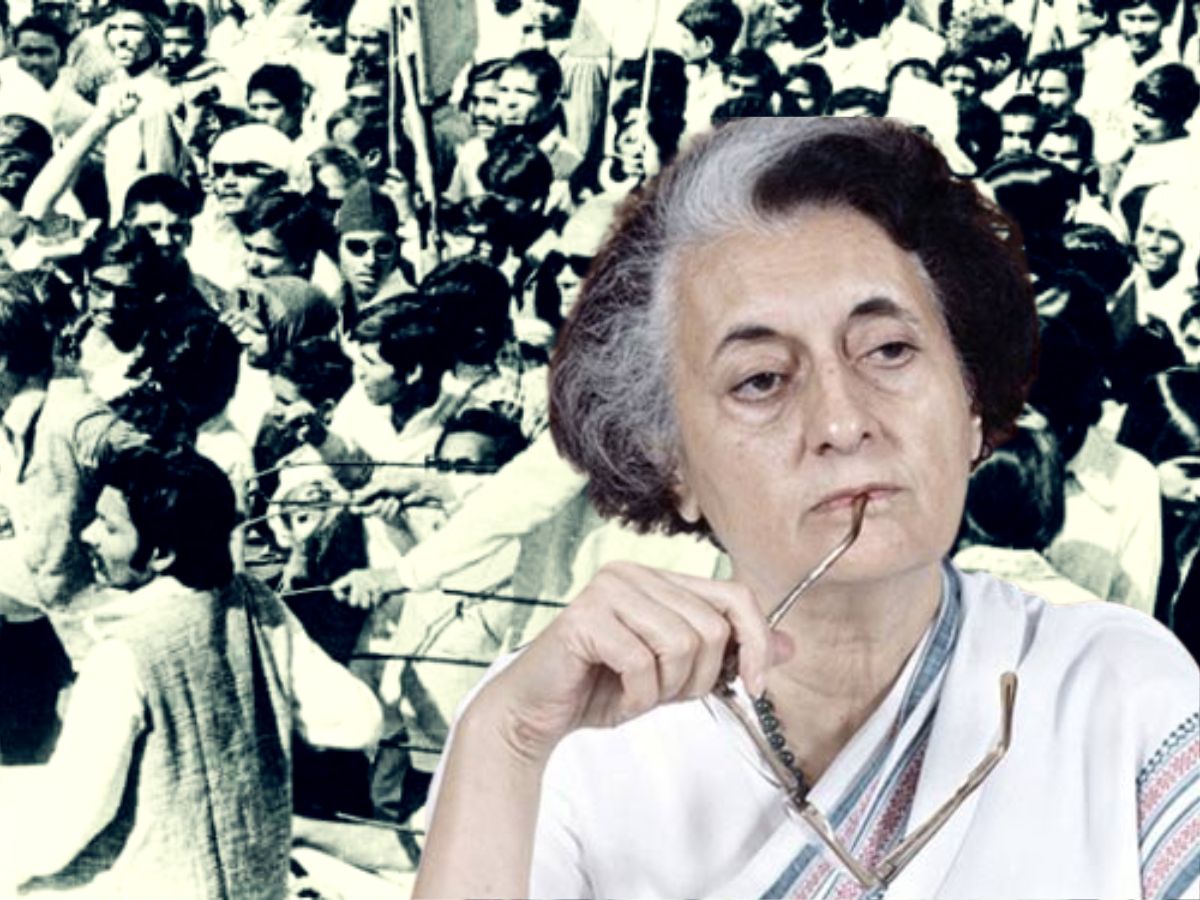

The day June 25 is commemorated as Samvidhaan Hatya Diwas across India. The third Modi government has officially given this name upon it. Samvidhaan Hatya Diwas also referred to as ‘Constitution Murder Day’, as designated officially by the Centre.
The darkest period of India began on June 25, 1975 when Indira Gandhi declared national Emergency. This is widely remembered as one of the darkest periods in India’s democratic history, where thousands faced brutalities and human rights violation.
The emergency was lasted from June 25, 1975 to March 21, 1977, around 21 months. Fundamental rights were suspended, press freedom was silenced and thousands of opposition leaders were detained in jail during this emergency period. The Constitution, according to most historians, was practically circumvented.
“Gross abuse of power”
Earlier, in a gazette notification, the central government stated June 25 would be remembered as a reminder of the “gross abuse of power” and as a tribute to those who fought against it. The notification said:
“Whereas, the Emergency was proclaimed on June 25, 1975 and since then, there was extreme abuse of power on the part of the government of the time and excesses and atrocities were perpetuated on the people of India… the Government of India has announced June 25 as ‘Samvidhaan Hatya Diwas”.
Central government has instructed all states and Union Territories to observe the day and initiate a year-long commemoration of the Emergency’s 50th anniversary. According to the officials, this move is focused at not only paying tribute to those who opposed Emergency, but also to create awareness on the significance of Indian Constitution and democratic rights.
PM Modi, in his remarks, highlighted how democracy was compromised during emergency time. “For 21 months, India’s Constitution was held hostage. The judiciary was silenced, Parliament was subverted, the media was gagged, and ordinary citizens were stripped of their freedoms,” he said.
The national Emergency was declared by Indira Gandhi under Article 352 of the Indian Constitution, citing “internal disturbance.” But what followed was a period where individual liberty violated, the press was heavily censored, and following this government critics were imprisoned without trial. Laws were passed without parliamentary debate and discussion.
Shocking Mass sterilisation drive
Critics say forced sterilisation drive, initiated under the guidance of Sanjay Gandhi, Indira Gandhi’s youngest son as one of the most brutal aspects of the Emergency. It was not just brutal but was also controversial. The cruel drive, aimed at population control, saw lakhs of men particularly from poor and marginalised communities being forced into sterilisation. A close associate of Sanjay Gandhi, Rukhsana Sultana has played a key role in implementing these policies in Delhi’s Muslim-dominated areas.
Another shocking incident was that, Rajan, an engineering student from Kerala who disappeared during the Emergency following alleged police custody torture. His death is a reminder of the unpunished violence during emergency.
Is this the first National Emergency?
In fact, India has imposed a national emergency 3 times- one was during the Indo-China conflict in between 1962–68, the Indo-Pak conflict of 1971, and the 1975 Emergency owing to “political instability”. But it’s the 1975 Emergency that has become more controversial, not because of war or external threat, but because of the government’s own repression against its citizens.
Social activists, Opposition leaders, journalists, all found themselves on the wrong side of the law, many put behind bars. Indira Gandhi’s political grip tightened, leaving institutions like the judiciary and the media paralysed.
Criticisms also raised after Modi Government’s official acknowledgement of June 25 as Samvidhaan Hatya Diwas. Though critics have labeled the initiative politically driven, others say such remembrance is fundamental in a democracy so that the errors of history are not repeated.
ALSO READ: No Oath, No Office, Just Power: How Sanjay Gandhi Turned National Emergency Into Personal Rule
Sofia Babu Chacko is a journalist with over five years of experience reporting on Indian politics, crime, human rights, gender issues, and stories about marginalized communities. She believes journalism plays a crucial role in amplifying unheard voices and bringing attention to issues that truly matter. Sofia has contributed articles to The New Indian Express, Youth Ki Awaaz, and Maktoob Media. She is also a recipient of the 2025 Laadli Media Awards for gender sensitivity. Beyond the newsroom, she is a music enthusiast who enjoys singing. Connect with Sofia on X: https://x.com/SBCism




