
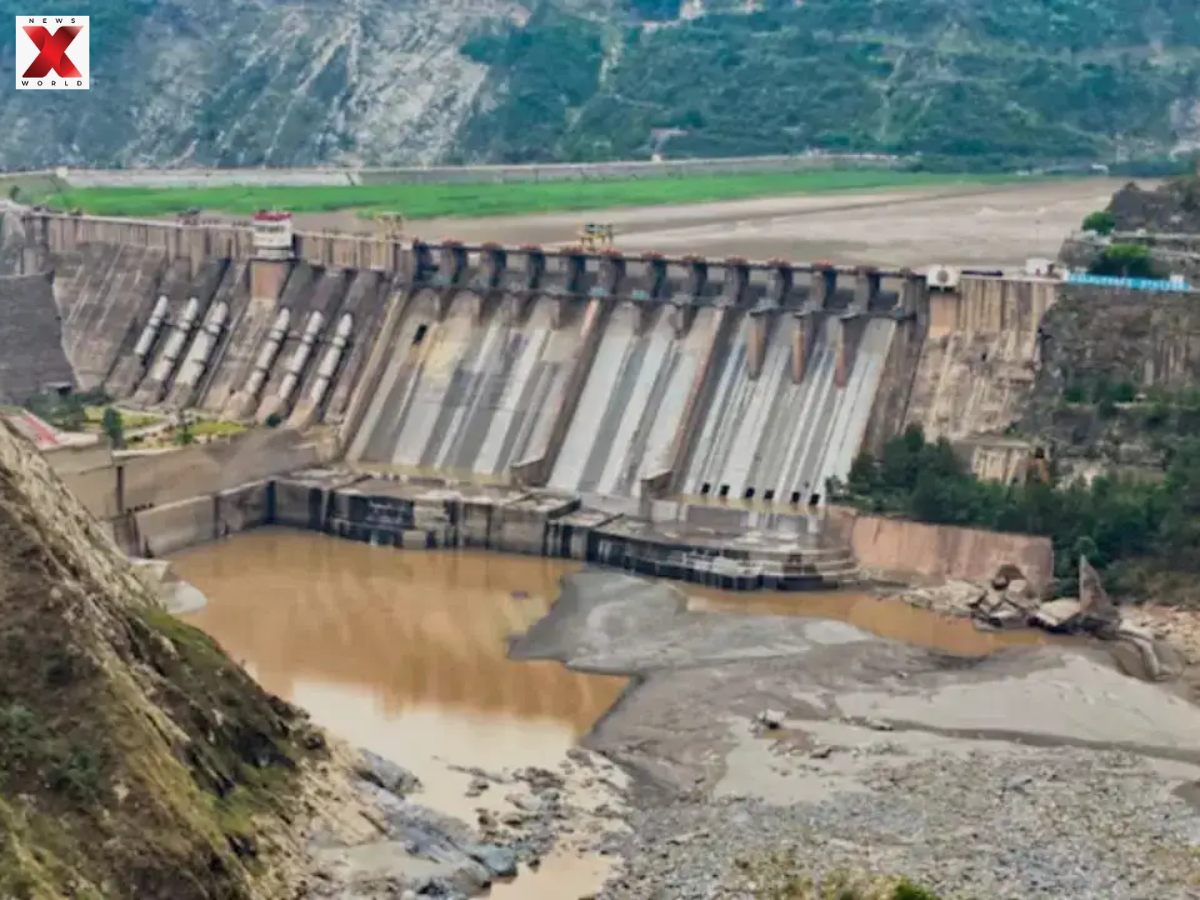

The Indian government just gave the green light to the Dulhasti-II hydroelectric project on the Chenab River in Jammu and Kashmir, and Pakistan isn’t happy about it.
The Union Environment Ministry cleared the decision last month, right after India suspended the Indus Waters Treaty with Pakistan.
What is Dulhasti-II hydroelectric project on Chenab River?
The Expert Appraisal Committee on hydropower projects met in December for the 45th time and signed off on the project. Now, they can start looking for contractors to build the run-of-the-river plant in the Kishtwar district. The whole thing is projected to cost more than Rs 3,200 crore.
Pakistan fired back quickly. Leaders in Islamabad accused India of breaking international agreements and making the region less stable. Senator Sherry Rahman from the Pakistan Peoples Party was especially vocal. She called India’s move a “weaponisation of water” and said it just wasn’t acceptable.
So, what exactly is the Dulhasti-II project? It’s basically an expansion of the existing 390 MW Dulhasti Stage-I Hydro Electric Project, which has been running since 2007.
The plan is to divert water from Stage-I through a new tunnel, almost 3.7 kilometres long, 8.5 meters wide, to build a horseshoe-shaped pondage for Stage-II.
Centre govt has approved the 260 MW Dulhasti Stage II hydropower project in Kishtwar, Jammu Kashmir costing ₹3,277 cr.
The project will use Chenab River water & extend the existing Dulhasti Stage I plant. It will need 60.3 hct of land, including private land from 2 villages. pic.twitter.com/dGsk8Tu5hQ
— Jammu & Kashmir Index 🇮🇳 (@JK_Index) December 26, 2025
They’ll also add a surge shaft, a pressure shaft, and an underground powerhouse with two 130 MW units. Altogether, that’s 260 MW of extra capacity and more annual energy for the region.
The project needs about 60 hectares of land, including 8.27 hectares of private property from two villages, Benzwar and Palmar, in Kishtwar.
The Expert Appraisal Committee took note of the fact that the Chenab basin’s waters are shared by India and Pakistan under the Indus Waters Treaty of 1960.
They said the project’s design sticks to the treaty’s guidelines. But the committee also made it clear: “The Indus Water Treaty stands suspended effective from 23rd April, 2025.”
Why is Pakistan protesting India’s Dulhasti Stage-II project?
The Pakistani government and political leaders have accused India of breaking the Indus Waters Treaty and water as a weapon.
One of the harshest critics has been the former federal minister and Pakistan Peoples Party (PPP) leader, Sherry Rehman. In response to the action by India, she termed it a serious weaponisation of the waters of the Chenab River.
This is a gross violation of the provisions of the Indus Waters Treaty, the X page of the office of Sherry Rahman said.
In another announcement that had been made on the same platform, her office remarked that the authorisation of the Dullhasti venture in the Chenab River by India is an unmistakable and egregious breach of the Indus Waters Treaty.
Any unilateralism on the contentious rivers will directly sabotage the acknowledged water rights of Pakistan and create significant dangers to peace and stability in the region.
Rehman wrote in X, in flagrant defiance of the Indus Waters Treaty (IWT), India has now authorised the Dulhasti Stage-II hydropower project on the Chenab River in Indian Illegally Occupied Jammu and Kashmir (IIOJ&K).
She further said that according to the IWT, the revision of which cannot be unilaterally revoked, as the recent UN rapporteurs have affirmed, the waters of the Indus, Jhelum, and Chenab rivers belong to Pakistan, whereas the Ravi, Beas and Sutlej rivers belong to India.
In reference to the larger hydro push of India, Rehman indicated, that after the treaty was suspended illegally, India has resolved to accelerate some of the contentious hydro projects in the Indus Basin. Such projects are Sawalkot, Ratle, Bursar, Pakal Dul, Kwar, Kiru, and Kirthai-1 and 2. Dulhasti Stage-II is deemed to be part of this strategy.
She warmed, this weaponisation of water is not only insane but unacceptable in a part of the world on the frontline of climate change and environmental pressure. It will pour fuel into an already tense bilateral relationship that is already full of animosity and mistrust.
This was criticised by the Pakistani media, such as Geo TV, which referred to the clearance as a flagrant violation of the Indus Waters Treaty.
Pakistan allege water manipulation, claims will hit country’s food supply
Lately, Pakistan has been saying it’s seeing unusual drops and unpredictable changes in the flow of rivers like the Chenab, Jhelum, and Neelum.
Officials there blame sudden stops and releases of water upstream, and they’re worried these swings are hitting farmers hard, especially now, during the crucial Rabi planting season.
They’re not mincing words, either. Pakistani leaders say this isn’t just about water; it’s a direct hit to the country’s food supply and to people who depend on farming to survive.
After India suspended the Indus Waters Treaty, Pakistan fired back with a warning. If India blocks or seriously changes river flows, Pakistan says it’ll treat that as an “act of war.” Pretty serious stuff.
Islamabad has also called on India to bring the treaty back, and they want to sit down and talk about new terms. On top of that, they’ve reached out to the United Nations Security Council, accusing India of turning water into a weapon.
As for the Dulhasti Stage-II project, Pakistan’s Foreign Office hasn’t said anything official yet.




