

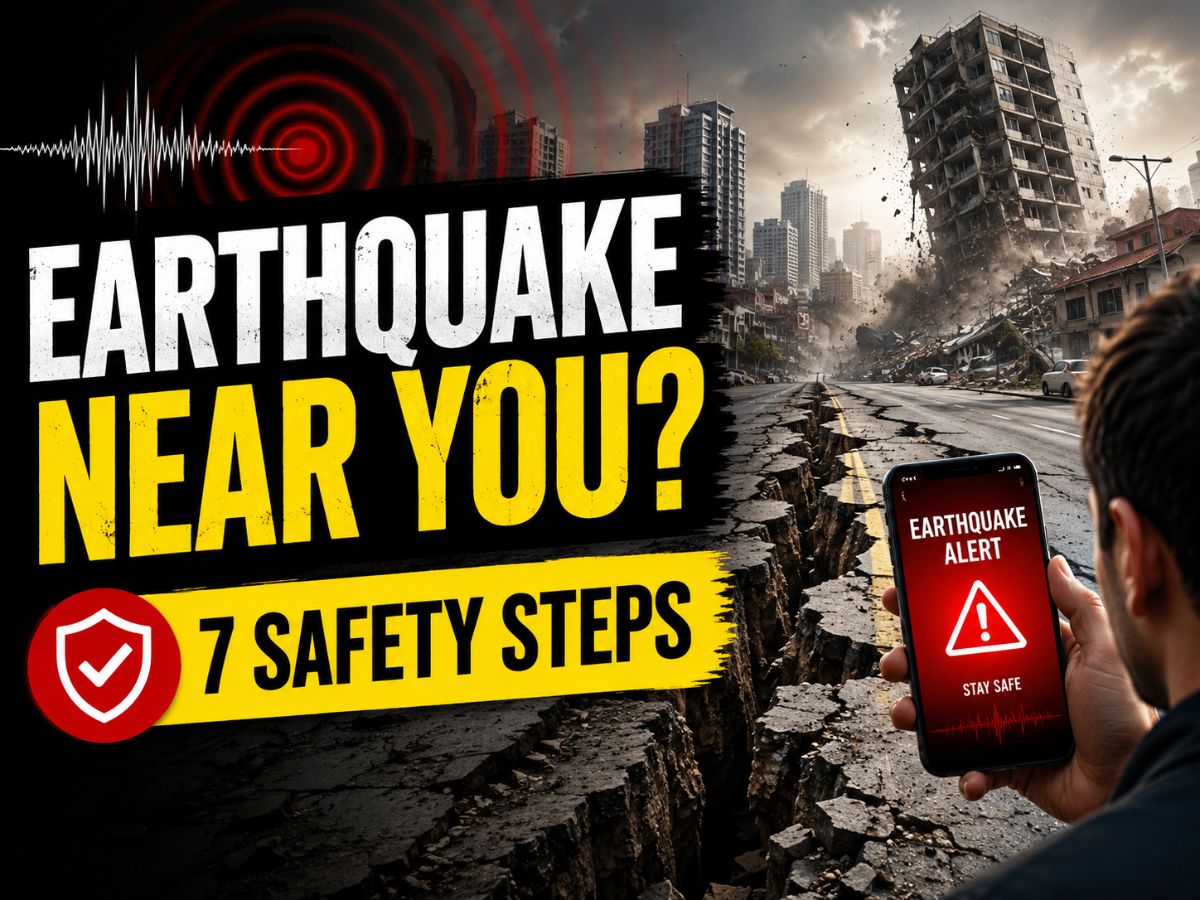
A powerful earthquake can hit with little or no warning, creating panic and confusion within seconds. The recent seismic activity, including the 5.6 to 5.7 magnitude earthquake that struck near Bhutan and sent tremors across North Bengal, Sikkim, Assam and parts of eastern India, is a reminder that earthquake preparedness can save lives.
Why Earthquakes Often Trigger Fears of Another Quake
After a big quake, many people want to know if another is coming. Seismologists say that aftershocks are a normal part of the process as the Earth’s crust settles into its new position after movement along a fault. Scientists can make an educated guess about the chances of aftershocks, but they cannot predict when and where another quake may strike.
After the main quake it is important to stay alert, as aftershocks can happen minutes, hours, days or even weeks after the initial earthquake.
7 Quick Steps To Take During And After An Earthquake
1. Drop, Cover, and Hold On
If the ground starts shaking, immediately drop to your hands and knees, cover your head and neck, and take shelter under a sturdy table or desk if possible. Hold on until the shaking stops. This remains the most widely recommended earthquake safety action.
2. Stay Indoors if You Are Inside
Do not run outside during the shaking. Stay away from windows, mirrors, glass doors, and heavy furniture that could fall. Many injuries occur when people try to move during a quake.
3. Move to an Open Area if You Are Outside
If you are already outdoors, move away from buildings, power lines, trees, and anything that could collapse or fall. Remain in an open space until the shaking ends.
4. Be Careful if You Are Driving
Pull over safely away from bridges, flyovers, power poles, and signs. Stay inside the vehicle until the earthquake stops.
5. Check for Injuries and Provide First Aid
Once the shaking has stopped, assess yourself and those around you for injuries. Provide first aid if you are trained and seek emergency assistance for serious injuries.
6. Watch for Gas Leaks, Fires, and Structural Damage
Inspect your surroundings for hazards such as gas leaks, damaged electrical lines, broken water pipes, or unstable structures. If you smell gas, leave immediately and notify authorities.
7. Prepare for Aftershocks
Aftershocks can occur without warning and may be strong enough to cause additional damage. Stay away from damaged buildings and be ready to take protective action again if the ground starts shaking.
How to Prepare Before the Next Earthquake
Emergency management agencies recommend securing heavy furniture, preparing an emergency kit with water, food, medicines, flashlights, and important documents, and creating a family communication plan before a disaster occurs.
Earthquakes are among the most unpredictable natural disasters, but preparation and quick action can make a significant difference. Remember the simple rule: Drop, Cover, and Hold On, stay alert for aftershocks; and follow official instructions from local authorities. Whether the tremor is minor or major, staying calm and acting quickly is your best defence against injury and danger.
Harshita is a journalist and digital content writer specializing in breaking news, current affairs, travel, education, and trending stories. She is focused on delivering accurate, timely, and engaging content with a strong emphasis on clarity and audience relevance.





