
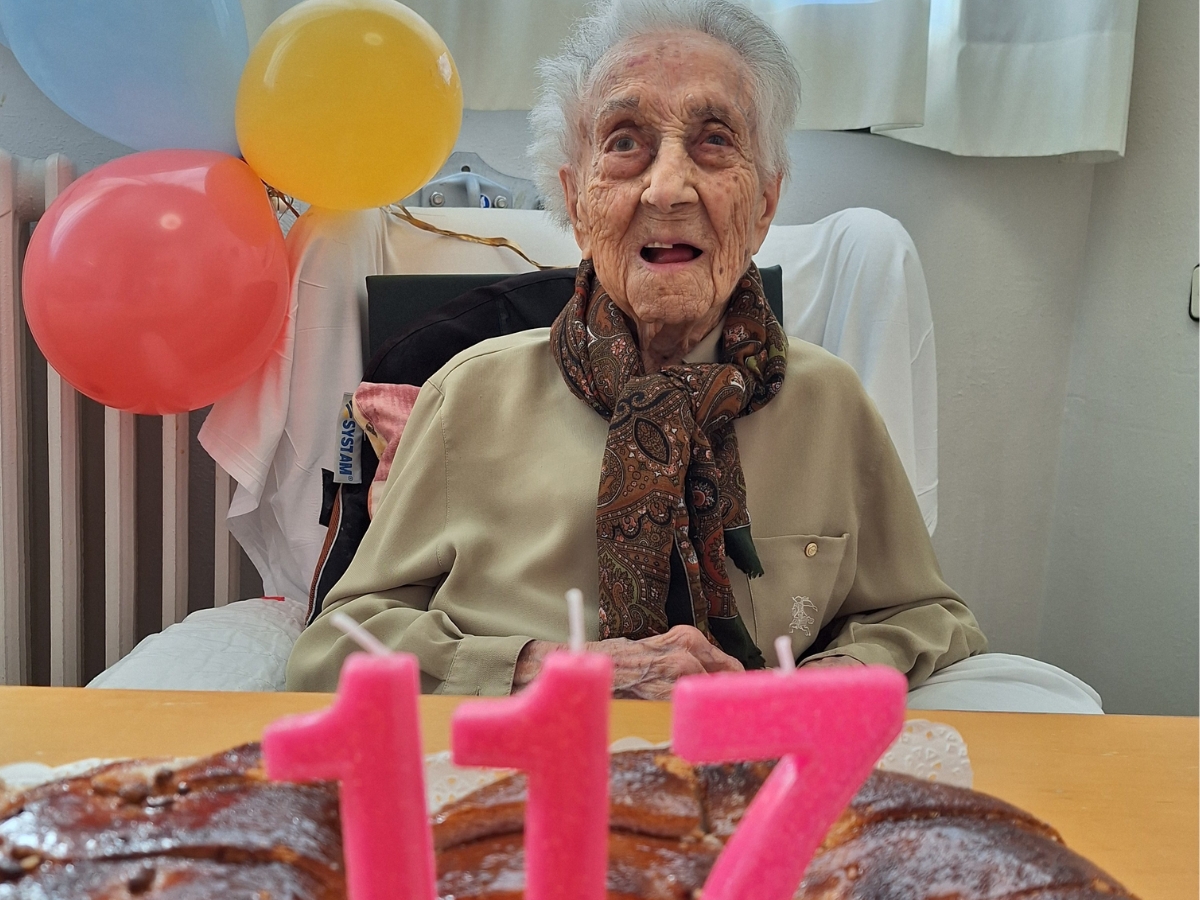

When Maria Branyas Morera died in 2024 at the age of 117 years and 168 days, she held the title of the world’s oldest living person. Before her passing, Branyas made a final request to doctors – study her body to unlock the secrets of her extraordinary life span. Researchers collected blood, saliva, urine, and stool samples at different points in her final years, offering a rare chance to examine the biology of extreme aging.
Maria Branyas Morera Had a Rare Genetic Blueprint
A team from the University of Barcelona and the Josep Carreras Leukaemia Research Institute found that Branyas possessed uncommon genetic variants linked to longevity, immune strength, and healthy heart and brain function.
“She had very good genes that protect against many disorders, many genetic variants that nobody has seen before,” said Dr. Manel Esteller, chair of Genetics at the University of Barcelona’s School of Medicine.
Esteller explained that longevity is shaped by both inheritance and lifestyle.
“The conclusion is that the clues for extreme longevity are a mix between what we inherited from our parents and what we do in our lives. And this mix, the percentage depends, but it can be … half and half.”
Scientists noted that her cells “felt” and “behaved” much younger than her chronological age, allowing her to exceed Catalonia’s average female life expectancy by more than 30 years.
Here’s a picture of Maria Branyas Morera celebrating her 117th birthday from her nursing home in Catalonia 🥰️
📷 Residència Santa María del Tura pic.twitter.com/hTOJPgU98B
— Guinness World Records (@GWR) March 4, 2024
Diet That Contributed To Maria Branyas Morera’s Longevity
While genetics provided a foundation, diet and habits proved equally critical. Branyas never smoked or drank alcohol and adhered to a classic Mediterranean diet rich in fish, olive oil, and – most notably -plain yogurt.
She famously ate three yogurts a day, which Esteller said replenished “good bacteria” in the gut and helped reduce inflammation, a major factor in aging.
“These are good bacteria that provide an advantage to humans,” he explained. Branyas herself once posted online that yogurt “gives life.”
Researchers added in their report, “Whether the dominance of the Bifidobacterium related genus is fully attributable or not to the yogurt diet cannot be completely confirmed. However, we believe that it is likely that a beneficial effect of yogurt ingestion via modulation of the gut ecosystem could have contributed to her well-being and advanced age.”
Low Inflammation, Strong Immunity
Medical tests revealed exceptional cardiovascular health, with high levels of “good” cholesterol, extremely low “bad” cholesterol and triglycerides, and very low systemic inflammation.
Her immune system and gut microbiome resembled those of much younger people, helping her avoid diseases such as cancer, dementia, and major cardiovascular problems, despite her advanced years.
Also Read: These Cities Are At High Risk For Hypertension And Anxiety Due To Their Lifestyle?
The Telomere Paradox
One of the most surprising findings concerned her telomeres, the protective caps at the ends of chromosomes that typically shorten with age and signal a higher risk of death.
Scientists observed a “huge erosion” of her telomeres, but rather than harming her health, this may have protected her from cancer by limiting the lifespan of individual cells and reducing the chance of tumor growth.
“The picture that emerges from studying Branyas shows that extremely advanced age and poor health are not intrinsically linked and that both processes can be distinguished and dissected at the molecular level,” Esteller and colleagues wrote in Cell Reports Medicine.
Maria Branyas Morera Survived Two World Wars, Two Pandemics
Epigeneticists Eloy Santos-Pujol and Aleix Noguera-Castells echoed this, noting that their research, while focused on a single individual, demonstrates that longevity does not necessarily equate to frailty.
Born in San Francisco in 1907, Maria Branyas moved to Spain at age eight. Over her lifetime, she survived two world wars and two pandemics, raised three children, and by her passing had 13 great-grandchildren.
Also Read: Why Leaving Dirty Dishes Overnight Is a Bad Habit for Your Kitchen, Health, and Mind
Zubair Amin is a Senior Journalist at NewsX with over seven years of experience in reporting and editorial work. He has written for leading national and international publications, including Foreign Policy Magazine, Al Jazeera, The Economic Times, The Indian Express, The Wire, Article 14, Mongabay, News9, among others. His primary focus is on international affairs, with a strong interest in US politics and policy. He also writes on West Asia, Indian polity, and constitutional issues. Zubair tweets at zubaiyr.amin




