
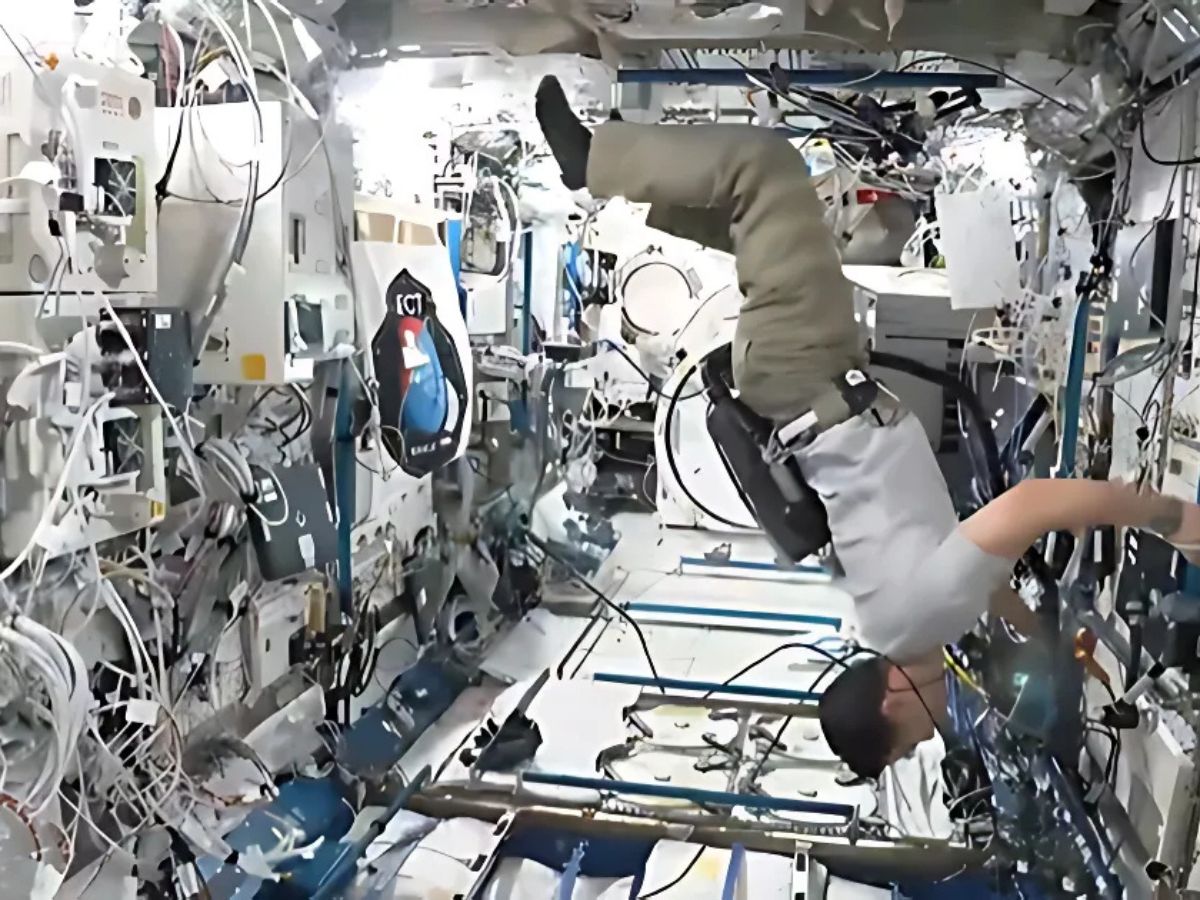

NASA astronaut Jonny Kim in a recent video explained the cleaning routines aboard the International Space Station, while speaking about the “extra challenges” of cleaning in the microgravity.
“Welcome to the International Space Station where we conduct science on a daily basis,” Kim said.
“Now the International Space Station is not just a place where we conduct research on behalf of institutions across the world, but it’s also our home for long periods of time. And like any home, you have to keep it clean and tidy.”
Jonny Kim Speaks About The Floating Dus Challenge in International Space Station,
Unlike on Earth, where dust naturally falls to the ground due to gravity, dust in space floats freely, making it harder to manage.
“In microgravity, dust just kind of floats everywhere,” Kim explained.
How do we clean in space? Similar to how we clean on Earth, but weightlessness has some extra challenges. pic.twitter.com/MOLXm3P7k6
— Jonny Kim (@JonnyKimUSA) July 11, 2025
The ISS is equipped with an environmental control system which includes fans, diffusers, and HEPA filtersto deal with the dust. these systems help gather dust into specific areas and kep station tidy. Astronauts also use a standard vacuum cleaner, similar to those used on Earth, to remove the dust.
In the video, Kim demonstrated how vacuuming is done onboard, saying, “That’s how we clean on the ISS.”
Health Risks of Floating Dust in International Space Station
Dust on the space station poses real health risks in adidition to make the place dirt. Floating particlesthreaten to enter the astronauts’ eyes and noses, which can cause irritation and allergic reactions and grow into infections. ISS is equiped with high-efficiency filters and regular vacuuming takes pace to manage airborne particulates however it still remains a constant concern for the astronauts.
For long there was no deep research abiut these airborne particle aboard the ISS. However recent studeies reveal ISS hosts a stable population of around 55 different types of microorganisms that can add nuisance to the astronauts aboard. These microorganisms which include bacteria, fungi, moulds, protozoa, and viruses have managed to adapt to life in a zero-gravity environment.
A Weekly Routine To Clean International Space Station
The responsibility to control the growth of microbiome population on ISS is on the astronauts and they have successfully managed the problem over the years. The crew aboard the ISS takes on itself to clean the station surfaces using antimicrobial wipes and vacuums stray debris. This is in addition to regular kitchen areas cleaning and preventing sweat-soaked exercise gear and equipment from developing mould that the crew has to deal with.
Also Read: Shubhanshu Shukla, Axiom-4 Crew To Return From International Space Station on July 14: Axiom
Zubair Amin is a Senior Journalist at NewsX with over seven years of experience in reporting and editorial work. He has written for leading national and international publications, including Foreign Policy Magazine, Al Jazeera, The Economic Times, The Indian Express, The Wire, Article 14, Mongabay, News9, among others. His primary focus is on international affairs, with a strong interest in US politics and policy. He also writes on West Asia, Indian polity, and constitutional issues. Zubair tweets at zubaiyr.amin




