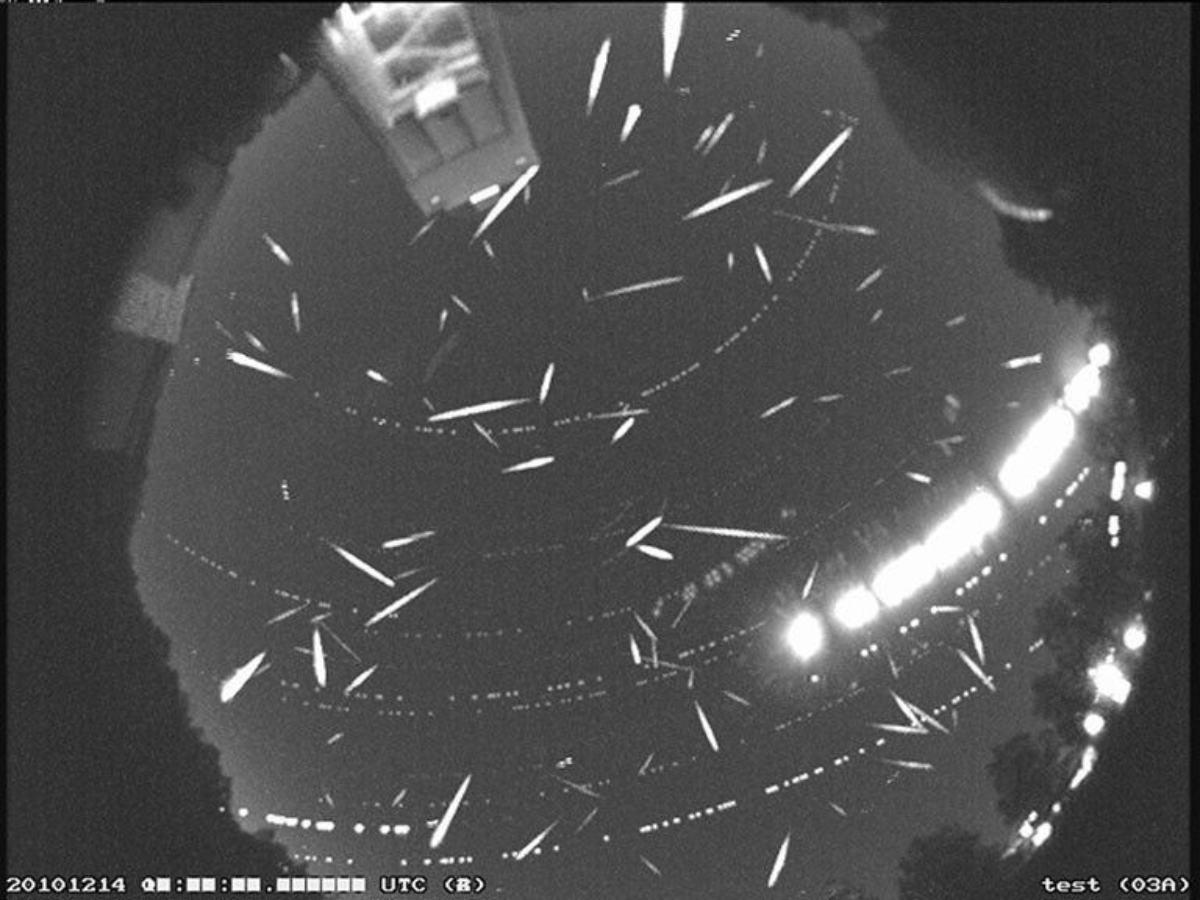

Geminids is an awaited event for many sky watchers and star gazers. This is an annual shower where they can count on witnessing without special equipment. The meteor shower is expected to reach its peak this weekend, and its strongest activity is forecast on the night of 12th and 13th December.
This annual event takes place in December every year is known for producing bright, fast-moving meteors and a higher-than-average number of visible streaks.
Peak nights and expected activity in US
The Geminids begin each year in mid-November and are active for several weeks. The peak of this event occurs over a much shorter window in mid-December.
This year the highest activity was recorded on Friday and Saturday, i.e. 12th and 13th December. There are chances to see 120 meteors per hour. This activity may begin as early as 9 pm (local time), earlier than many other annual meteor showers.
Rates typically rise as the night goes on, with the most consistent viewing often reported after midnight and into the early morning hours. Cloud cover, light pollution, and local weather conditions will affect visibility.
Why Geminids is different from other events
Most meteor showers originate from comet debris, but the Geminids do not. According to experts, the Geminids was discovered in 1983. The object follows an unusual orbit that brings it close to sun, shedding debris that later intersect with the Earth’s atmosphere.
The size of an asteroid is over three miles in diameter. As its fragments enter the atmosphere at high speed, these asteroids burn up and create bright streaks seen from the ground.
The shower is named after the Gemini constellation, the area of the sky from which the meteors appear to radiate. When the Geminids were first observed in the mid-1800s, activity was limited. Since then, the shower has steadily intensified.
Syed Ziyauddin is a media and international relations enthusiast with a strong academic and professional foundation. He holds a Bachelor’s degree in Mass Media from Jamia Millia Islamia and a Master’s in International Relations (West Asia) from the same institution.
He has work with organizations like ANN Media, TV9 Bharatvarsh, NDTV and Centre for Discourse, Fusion, and Analysis (CDFA) his core interest includes Tech, Auto and global affairs.
Tweets @ZiyaIbnHameed