
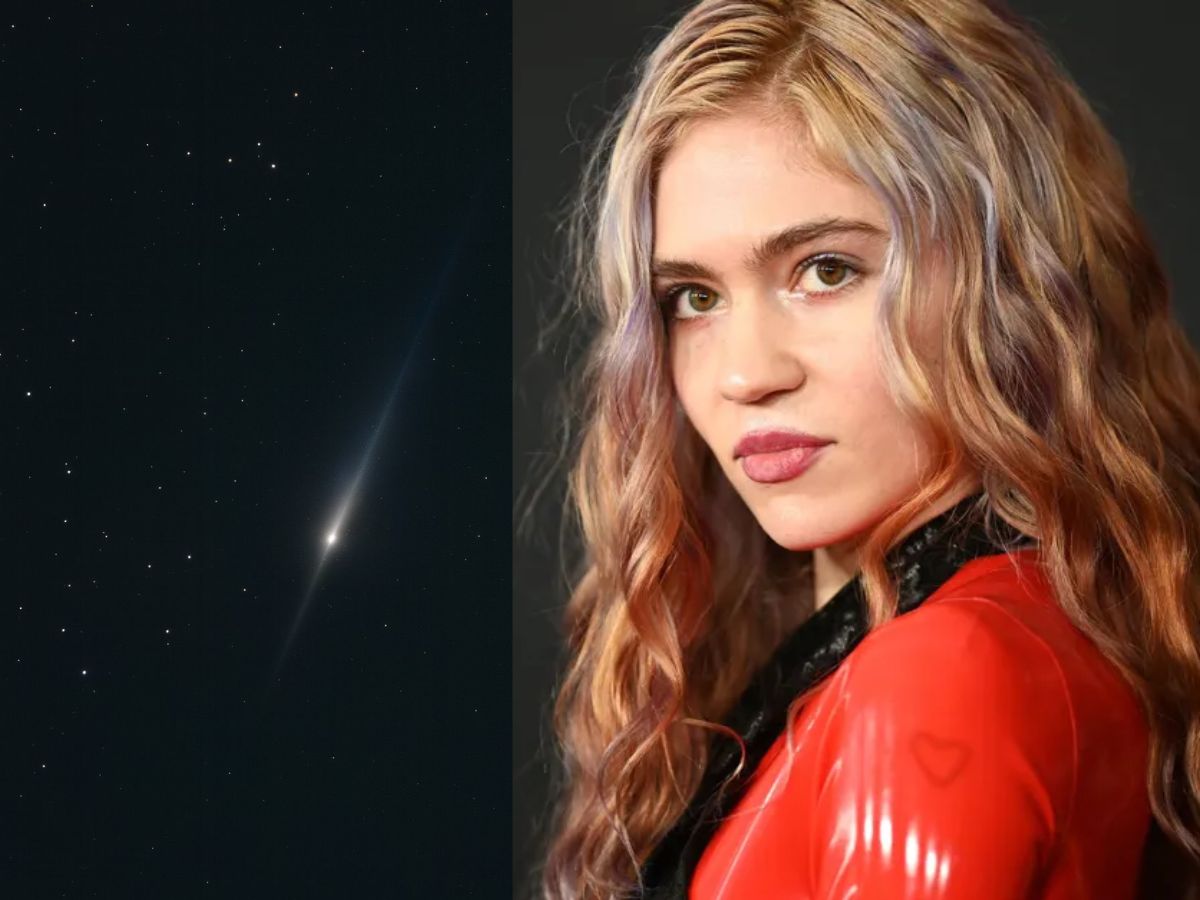

3I/ATLAS is just the 3rd confirmed object detected from outside our solar system. 3I/ATLAS has a hyperbolic orbit which means it will not return to the solar system. Therefore, 3I/ATLAS is just passing through the solar system.
Astronomers have observed 3I/ATLAS using multiple telescopes (such as the Hubble Space Telescope and the James Webb Space Telescope) in order to learn about its size, speed and chemistry.
The Main Reason 3I/ATLAS Is Getting So Much Attention
3I/ATLAS has got a lot of attention because unlike most comets in our solar system, 3I/ATLAS exhibits atypical characteristics. The ion coma and comet tail are typical features of a comet; however, the chemical composition and behaviour of 3I/ATLAS are different from the typical inner solar system comets. Therefore, the big question that astronomers and the public have been discussing is whether or not 3I/ATLAS is a normal interstellar comet or if it’s something that is more unusual or rare.
Grimes Steps Into the Debate
Grimes chimed in online about 3 I/ATLAS’s mystery, creating new public intrigue about the object and increasing worldwide attention to the object among both scientists and non-scientists alike. The fascination with 3I/ATLAS has also become not just a scientific discussion; it can now be said to be a cultural phenomenon.
This story is totally captivating for little humans. I love when there are scientific discoveries or debates that are as legible and interesting for little humans as they are to adults. Media that is as fun for adults as it is for kids is noble (because it encourages real… https://t.co/zyRTVKxUDT
— 𝖦𝗋𝗂𝗆𝖾𝗌 ⏳ (@Grimezsz) November 29, 2025
What It Means For Us
3I/ATLAS represents the first time people have actually seen a cosmic object from another star system (though some people argue that it’s simply an ordinary comet) while reminding everyone that our galaxy, and indeed all galaxies, are vast, mysterious locations filled with new discoveries. The amount of attention paid to this object, from both scientists and artists alike, illustrates that regardless of age, both groups of people are equally curious about new space discoveries.
This article is for informational and educational purposes only. The opinions and comments of individuals mentioned do not reflect verified scientific facts. Readers should refer to official space agencies and research sources for accurate astronomical information.
Vani Verma is a content writer with over 2 years of experience in lifestyle, entertainment, health and digital media. She has a knack for creating engaging and research-driven content that resonates with readers, blending creativity with clarity. Passionate about media trends, culture, and storytelling, she strives to craft content that informs, inspires, and connects.




