

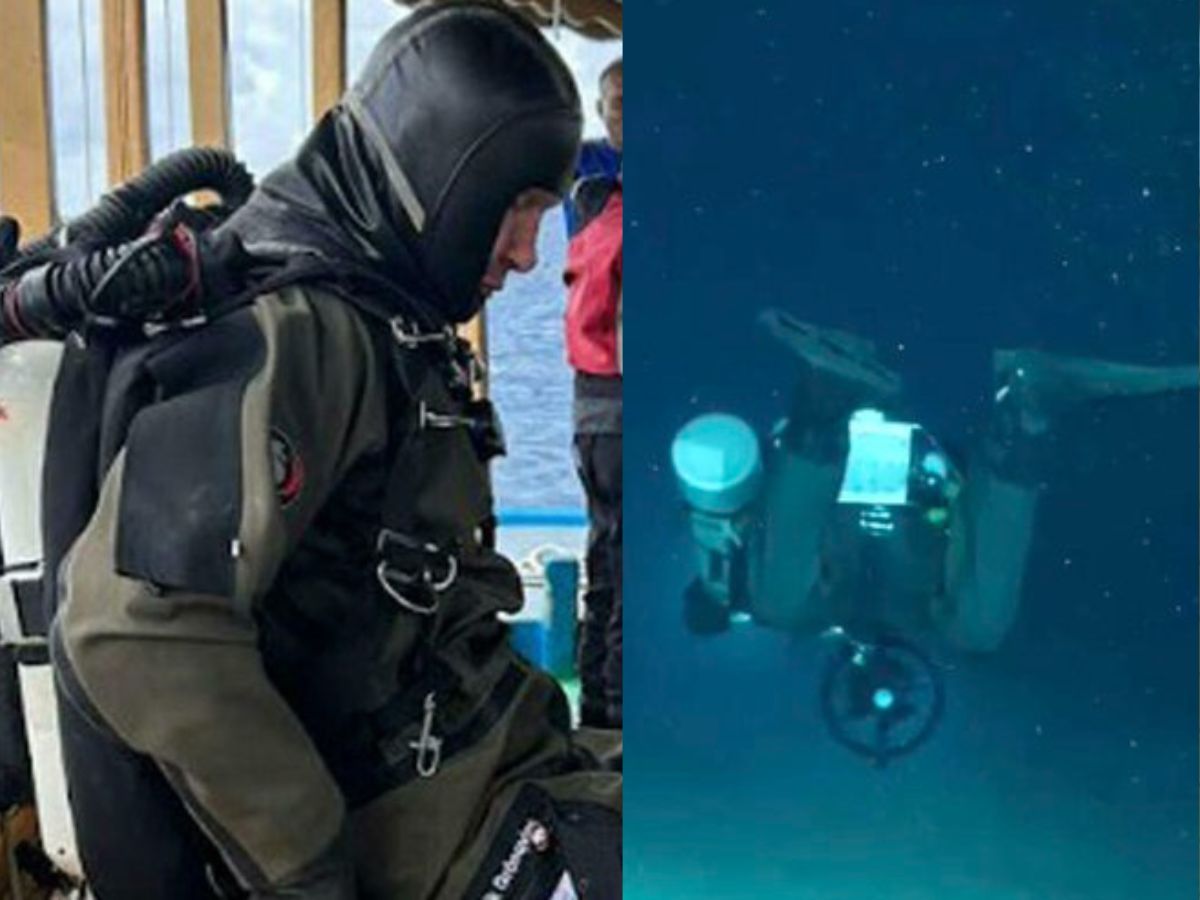
Animation Recreates Final Moments of Italian Divers Lost in Maldives Cave and provides a haunting visualization of what might have transpired during Italy’s most lethal diving incident. The animation, constructed from data supplied by recovery crews and diving specialists, illustrates the concluding phases of a profound cave exploration that resulted in the deaths of five Italian scientists, among them esteemed marine ecologist Monica Montefalcone and her daughter, Giorgia Sommacal. The group disappeared on May 14, 2026, while exploring a pitch-black cave system some 50-55 metres below the surface near Alimathaa Island in the Maldives. Days later, specialist divers from Finland found the victims deep inside the cave after traversing narrow passages, near-zero visibility, and difficult underwater conditions. The recovery effort also claimed the life of a Maldivian rescuer who died from decompression sickness.
Veteran Marine Scientists Among Victims
The expedition was led by Monica Montefalcone, 51, a marine ecologist and professor at the University of Genoa, who had extensive experience diving in Maldivian waters. Her daughter, Giorgia Sommacal, was among those who died. The other victims were biologist Federico Gualtieri, researcher Muriel Oddenino, and diving instructor Gianluca Benedetti, who had lived in the Maldives for seven years. Benedetti’s body was recovered shortly after the incident, while the remaining four were found days later inside the cave.
The recovery operation itself proved highly dangerous. A diver from the Maldives National Defence Force died from decompression illness while taking part in efforts to retrieve the victims. To assist local teams, specialist divers from Finland were brought in with advanced technical diving equipment, including closed-circuit rebreathers. The experts eventually located the four missing bodies inside the third and deepest chamber of the cave system.
According to Shareef, the victims were found ‘pretty much together’ deep inside the cave. The final recoveries were completed on May 20 after days of challenging operations in near-zero visibility conditions.
Three weeks on from the horrific diving accident in the Maldives, where 5 Italian divers sadly lost their lives 🇮🇹
One of the most accurate videos, with an excellent hypothetical reconstruction of the events as they happened
Based also on the heroic recovery of the bodies pic.twitter.com/lIkoFIJCVD
— Mambo Italiano (@mamboitaliano__) June 3, 2026
Investigators Examine What Went Wrong
Authorities are exploring several possible causes of the tragedy, including whether the group descended deeper than expected during the expedition. Shareef said the researchers had received permission to study soft corals at the site, but officials were unaware that cave diving would be part of the mission.
‘What we didn’t know was that it was cave diving,’ Shareef said. ‘Because, as divers will tell you and appreciate, it’s a very different discipline with its own sets of challenges and risks involved, and particularly at that depth, there are any number of things that could have gone wrong.’
The cave entrance is located about 55 metres below the surface. While some natural light reaches the first chamber, the remaining sections are completely dark.
Experts Debate Possible Causes
Veteran Maldivian diver Shafraz Naeem, who has explored the Devana Kandu cave system more than 30 times, warned about the risks associated with deep dives using compressed air. ‘It is incredibly dangerous to conduct dives at these depths on compressed air,’ Naeem said. ‘Theoretically, oxygen toxicity starts to occur on compressed air at about 55 metres. That is very risky and very dangerous. You never know when oxygen toxicity will hit you.’
However, Riccardo Gambacorta, a former diving instructor of victim Muriel Oddenino, believes another underwater incident may have triggered the disaster. ‘My personal opinion is that an unexpected incident may have occurred underwater. They essentially did not anticipate a certain situation,’ he said.
Other experts have suggested factors such as nitrogen narcosis, equipment failure, disorientation caused by disturbed sediment, or other human and environmental challenges common in deep cave diving.
Investigation Ongoing
Experts note that dives beyond recreational limits require specialized gas mixtures and technical equipment due to the physiological dangers associated with extreme depth.
Authorities are also examining whether underwater currents or other environmental conditions contributed to the tragedy. No official conclusion has yet been reached.
The deaths of the five Italian researchers, along with the Maldivian rescuer who died during recovery efforts, have deeply affected the international diving community and renewed focus on the risks associated with deep cave exploration.
(Inputs From Reuters)
Harshita is a journalist and digital content writer specializing in breaking news, current affairs, travel, education, and trending stories. She is focused on delivering accurate, timely, and engaging content with a strong emphasis on clarity and audience relevance.





