
Five Indian workers employed on electrification projects in Mali have been abducted by unidentified gunmen, according to security officials quoted by news agency AFP. The incident took place near Kobri, a region that has seen growing insecurity in recent months.
“We confirm the kidnapping of five Indian nationals,” a representative of the company employing them told AFP. Following the abductions, other Indian employees working with the same firm were moved to Bamako for safety. No militant group has so far claimed responsibility.
Recent Pattern of Abductions in Mali
The kidnapping comes just weeks after a similar high-profile abduction of foreign nationals. In September, militants belonging to the Al-Qaeda-linked Group for the Support of Islam and Muslims (JNIM) seized two Emirati nationals and one Iranian near Bamako. The hostages were released last week in exchange for a ransom reportedly exceeding $50 million, AFP reported.
The Indian Ministry of External Affairs has not yet issued a statement on the latest incident.
Also Read: Trump Gives Hungary Exemption On Russian Oil Rules Amid EU Tensions
Security Crisis in Mali
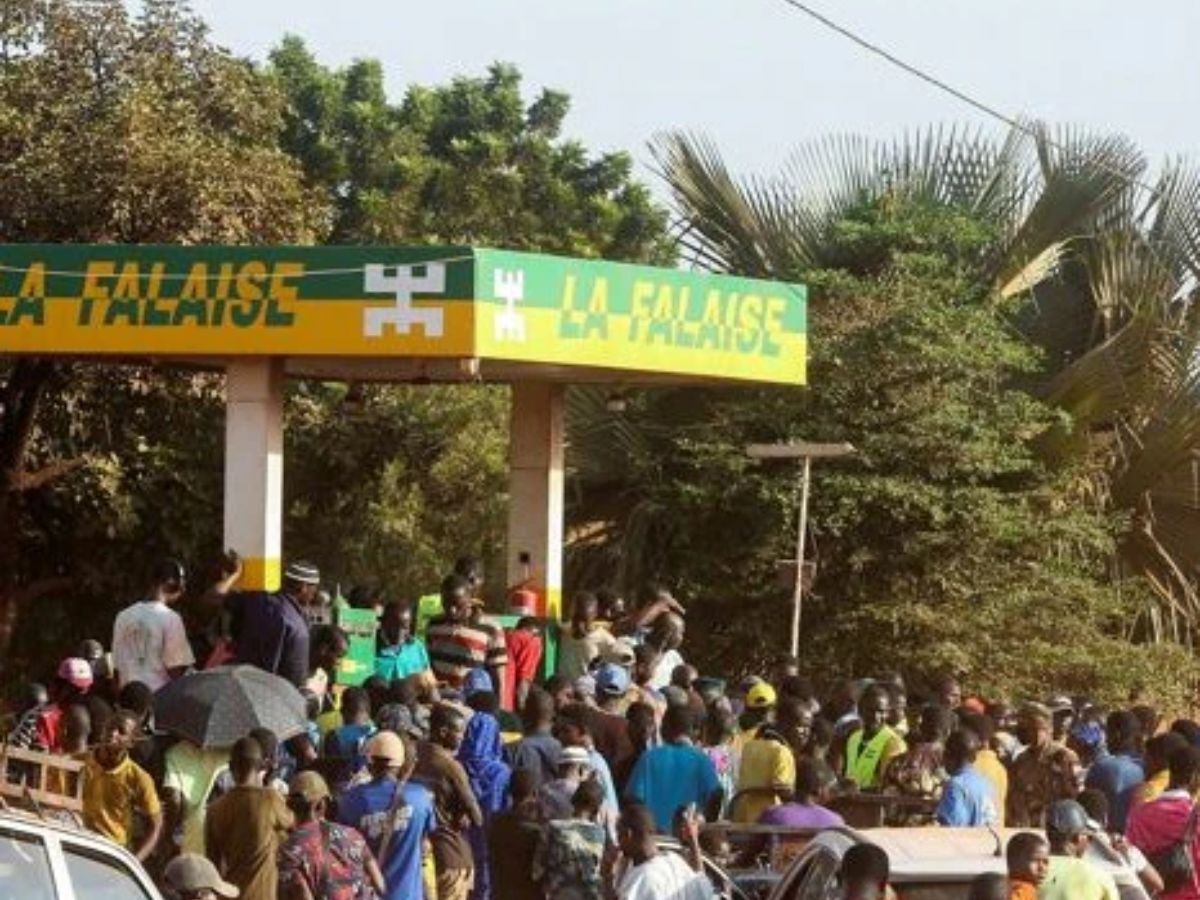
Mali continues to experience widespread unrest driven by armed criminal networks and jihadist organizations affiliated with Al-Qaeda and the Islamic State group. The country is currently under military junta rule, and its instability has been compounded by a severe fuel blockade.
The blockade has pushed Mali into an economic crisis, forcing school closures, limiting agricultural activity, and restricting electricity access. On Monday, President Assimi Goita appealed to citizens to reduce non-essential travel, saying the government would “do everything possible to deliver fuel.”
Rise of JNIM and Regional Conflict in Mali
The worsening security situation is closely tied to the growth of Jama’at Nusrat al-Islam wal-Muslimin (JNIM), a coalition of armed groups aligned with Al-Qaeda. Formed in 2017, JNIM brought together several factions, including:
Al-Qaeda in the Islamic Maghreb (AQIM)
Ansar Dine
Al-Murabitun
The Macina Group
The merger strengthened coordination among these groups and broadened their influence across the Sahel.
Violence Against Civilians in Mali
JNIM’s leader, Iyad Ag-Ghali, has been a key figure in northern Mali’s political and militant landscape for decades. A former leader of Tuareg uprisings in the 1990s, he founded Ansar Dine in 2012 with the stated aim of implementing his interpretation of Islamic law.
Since then, JNIM has expanded its presence across central Mali and border regions with Burkina Faso and Niger. The group has used guerrilla tactics, improvised explosive devices, targeted assassinations, and local-level negotiations to deepen control in areas where state presence is limited.
Human rights groups have documented the group’s abuses, including intimidation and violence against civilians accused of cooperating with government forces. JNIM has also targeted schools, roads, and communication infrastructure to weaken state authority.
Zubair Amin is a Senior Journalist at NewsX with over seven years of experience in reporting and editorial work. He has written for leading national and international publications, including Foreign Policy Magazine, Al Jazeera, The Economic Times, The Indian Express, The Wire, Article 14, Mongabay, News9, among others. His primary focus is on international affairs, with a strong interest in US politics and policy. He also writes on West Asia, Indian polity, and constitutional issues. Zubair tweets at zubaiyr.amin