
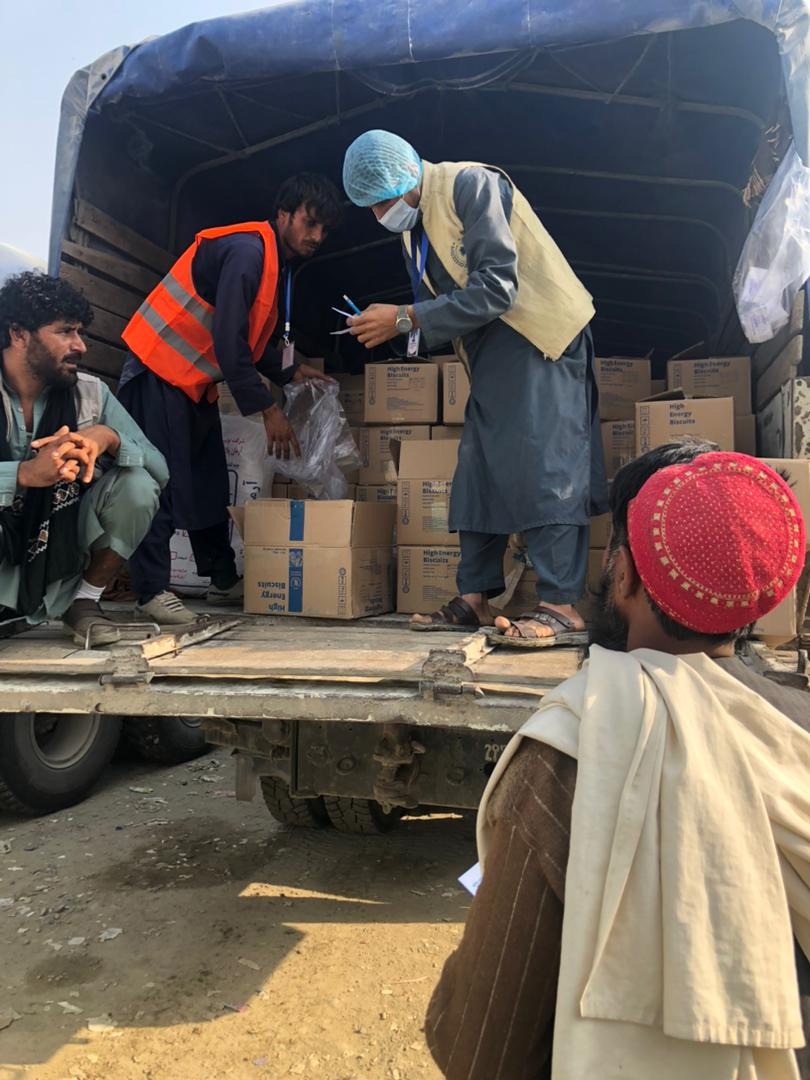

The hunger crisis in Afghanistan is spiraling out of control, with the World Food Programme (WFP) warning that the situation is deteriorating by the day, Tolo News reported.
The economic crisis, successive droughts, and the forced return of thousands of Afghan migrants have put immense pressure on the country’s limited resources, exacerbating the plight of vulnerable groups, including women, children, and returnees from neighboring countries.
In its latest report, this UN-affiliated agency stated that women, children, and returnees from neighboring countries are the most vulnerable groups in this crisis.
UN Body Seeks Additional Financial Aid to Help People in Afghanistan
According to Ziauddin Safi, WFP communications officer, the agency requires nearly USD 540 million to carry out its programs aimed at reaching the most vulnerable Afghans across the country over the next six months.
“For the next six months, the World Food Programme in Afghanistan needs nearly 540 million US dollars to carry out its programs aimed at reaching the most vulnerable Afghans across the country,” Ziauddin Safi, the WFP communications officer, said.
However, some economic experts believe that for long-term economic growth, investment in infrastructure projects is essential, as per Tolo News.
Mir Shaker Yaqubi, an economic affairs expert, notes that aid becomes effective only when it takes on a developmental shape and positively impacts development, welfare, and economic comfort. “These aids are humanitarian and prevent a serious crisis, but they cannot in any way be considered as a fundamental solution to Afghanistan’s economic problems,” he said.
Experts Say Afghanistan Needs Long-Term Economic Solution
Another economic expert, Sayed Masood, shares a similar perspective, but with a different emphasis. He believes that Afghanistan’s crisis is not primarily economic but rather political. “We have the facts and elements necessary to grow and organize the economy,” he said. “In reality, Afghanistan’s crisis is a political one, especially with the current global and regional engagement, which is preventing developmental projects from moving forward.”
The Ministry of Economy also considers the continuation of aid from international relief organizations to be beneficial to the country under current conditions.
Abdul Latif Nazari, Deputy Minister of Economy, said: “Humanitarian aid is a serious and essential need under the current circumstances, particularly with the return of migrants from neighboring countries. Therefore, our request is that international aid organizations and the global community continue their humanitarian and emergency assistance to the people of Afghanistan.”
Previously, the United Nations had requested over two billion dollars to provide aid to approximately 23 million people in Afghanistan.
(Inputs From ANI)
Also Read: Afghanistan Chokes Under Crisis: Drought and Overcrowding Push Kabul to Breaking Point




