
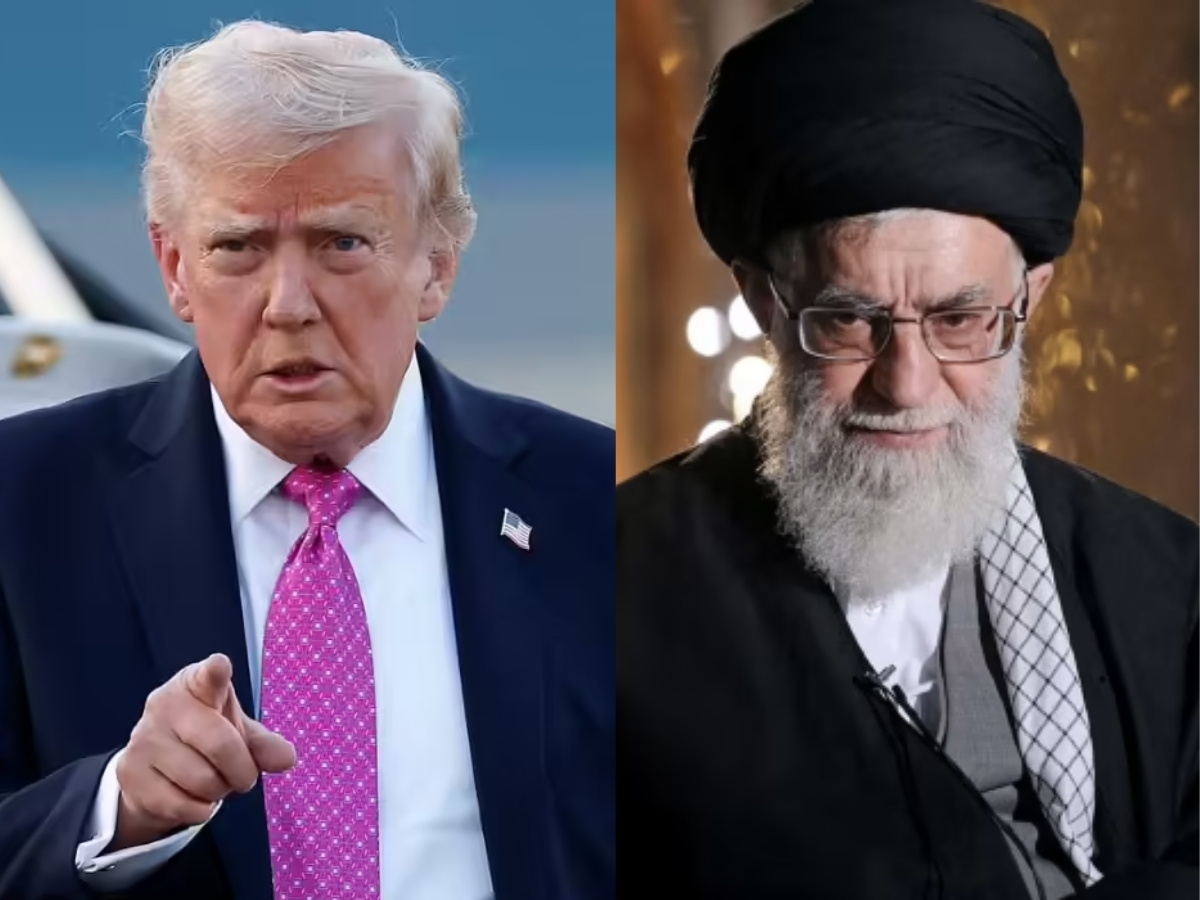

President Donald Trump has several options to respond to Iran’s lethal suppression of anti-government protests, according to reports by the NY Post and Daily Mail quoting experts. The reports say the plan includes targeting Tehran’s leadership, security forces, energy infrastructure, and nuclear facilities.
Reports indicate the death toll from the unrest in Iran may have reached into the thousands. Trump has repeatedly hinted at potential military action against Iran if the situation continues.
Donald Trump Signals Potential Direct Intervention In Iran
Trump suggested that direct US intervention may be imminent following the cessation of negotiations with Tehran on Tuesday. Addressing the unrest, the president warned Iranian leaders to halt the violence against protesters.
“They’ve got to show humanity. They’ve got a big problem, and I hope they’re not going to be killing people, and I’m going to have a report very soon. It would seem to me that they have been badly misbehaving,” Trump said Tuesday evening.
Reports say that the president’s response could range from military strikes to cyber operations or even non-military interventions, such as enabling Starlink satellite internet access for protesters amidst a nationwide communications blackout.
Will US Kill Iran’s Supreme Leader Ayatollah Ali Khamenei?
A direct strike on Supreme Leader Ayatollah Ali Khamenei could have a profound impact, according to experts quoted by The Post.
“A single strike may not be that effective depending on the target, but a single strike to take out the leader of the regime would see the protests energized and serve as an effective message to Iran,” he said.
However, experts quoted by the Post caution that eliminating Khamenei could destabilize the entire regime and trigger widespread disorder.
Strikes Against Iranian Security Forces
Beyond leadership, Trump could also focus on Iran’s security apparatus, including the Islamic Revolutionary Guard Corps (IRGC) and national police, which have been central to the crackdown.
Experts say that the limited strikes against security forces would send a strong signal to Tehran while demonstrating support for the Iranian people.
Observers say that the targeted attacks on security forces may not be sufficient to fully impede Tehran’s capacity to suppress dissent.
Iran’s Nuclear and Energy Infrastructure Remain Key Targets
Iran’s nuclear facilities, already struck during a joint US-Israeli operation last June, remain a priority. Reports say some near weapons-grade enriched uranium survived those airstrikes, according to a senior Israeli official. Israel also claimed to have destroyed Iran’s missile defense systems, leaving the nuclear sites vulnerable to further attacks.
In addition, Iran’s oil infrastructure and tankers as potential targets. Attacks on these assets would significantly damage an already weakened Iranian economy.
Experts say the Trump administration has non-kinetic options that do not involve direct military action. Deploying Starlink satellites, for example, could allow Iranian protesters to communicate despite a government-imposed communications blackout.
Zubair Amin is a Senior Journalist at NewsX with over seven years of experience in reporting and editorial work. He has written for leading national and international publications, including Foreign Policy Magazine, Al Jazeera, The Economic Times, The Indian Express, The Wire, Article 14, Mongabay, News9, among others. His primary focus is on international affairs, with a strong interest in US politics and policy. He also writes on West Asia, Indian polity, and constitutional issues. Zubair tweets at zubaiyr.amin




