
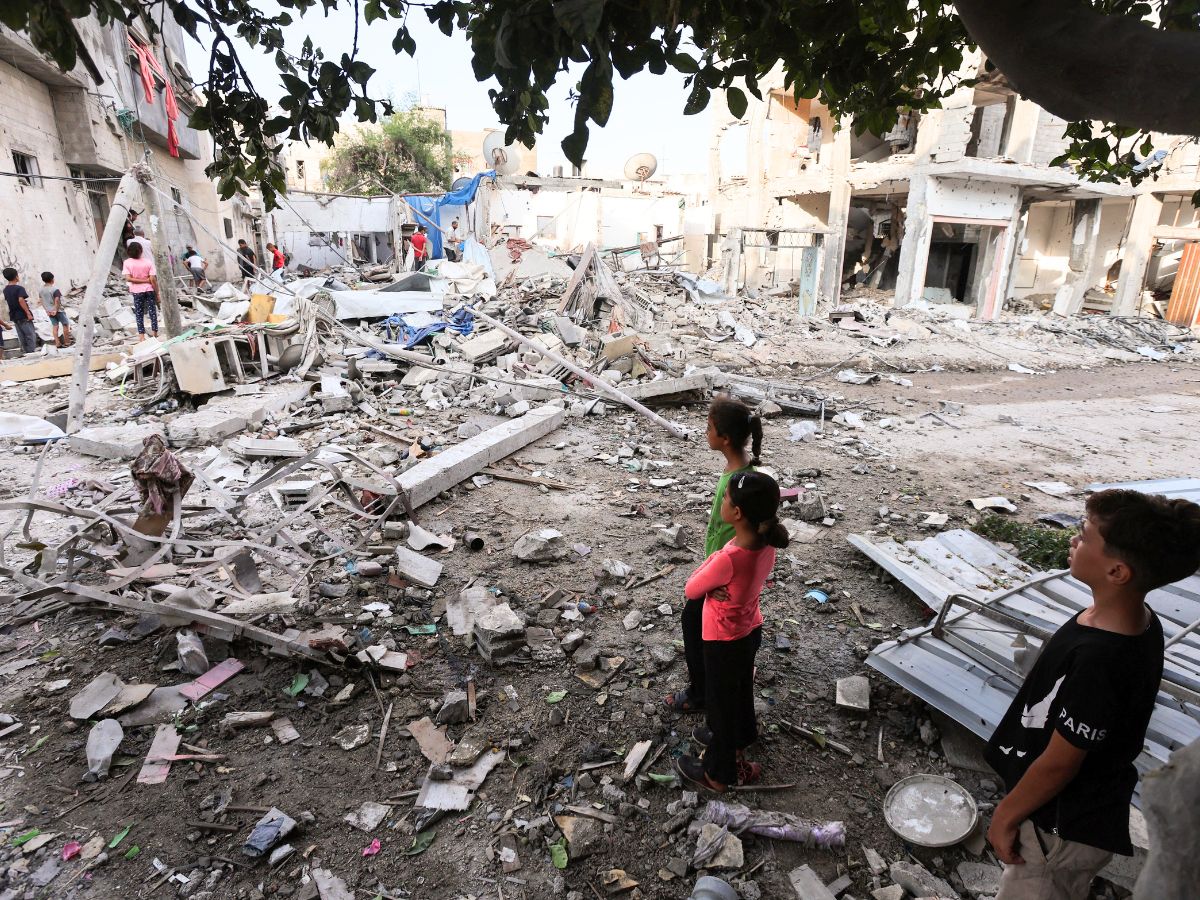

The death toll in Gaza from Israel’s ongoing offensive has surpassed 70,000, according to the enclave’s health ministry, which reported 301 additional fatalities since Thursday, bringing the total to 70,100.
Of these, two were killed in recent Israeli strikes, while the remainder were identified from remains recovered from the rubble after being buried for some time.
Israel has not immediately commented on the updated figures and has questioned the accuracy of Gaza’s data, though it has yet to release its own estimates.
Bodies identified
Israel’s bombardment of Gaza – triggered by the deadly October 7, 2023 Hamas attack on Israel – has left much of the strip in ruins, making it difficult to gather accurate information on casualties.
In the first months of the war, officials counted bodies that arrived in hospitals and registered names and identity numbers.
In the later stages, Gaza health authorities said they held off including thousands of reported deaths in the official tally until forensic, medical and legal checks could be made.
Since a fragile ceasefire took hold on October 10, the reported death toll has kept climbing steadily as authorities there take advantage of the relative calm to search for bodies in the wreckage.
The war in Gaza began after Hamas-led militants killed 1,200 people, most of them civilians, and seized 251 hostages in their attack on southern Israel.
Israel’s retaliatory offensive has shattered whole families.
Moaz Mghari said he had lost 62 relatives, including his parents and four siblings, in a series of Israeli airstrikes that destroyed two residential buildings near the entrance to Bureij camp in the central Gaza Strip.
He told Reuters he had been at a nearby clothing shop when he heard the sound of explosions and the sky turned dark with dust. He rushed home to find his family’s building turned to rubble.
“Then I began to realize what happened, I lost everything, I lost everyone,” Mghari, said.
Israel’s military has denied targeting civilians since the conflict started more than two years ago.
Pre-war Gaza had robust population statistics and better health information systems than in most Middle East countries, public health experts told Reuters.
The U.N. often cites the health ministry’s death figures and says they are credible.
(With Reuters Inputs)
Sofia Babu Chacko is a journalist with over five years of experience covering Indian politics, crime, human rights, gender issues, and stories about marginalized communities. She believes that every voice matters, and journalism has a vital role to play in amplifying those voices. Sofia is committed to creating impact and shedding light on stories that truly matter. Beyond her work in the newsroom, she is also a music enthusiast who enjoys singing.




