

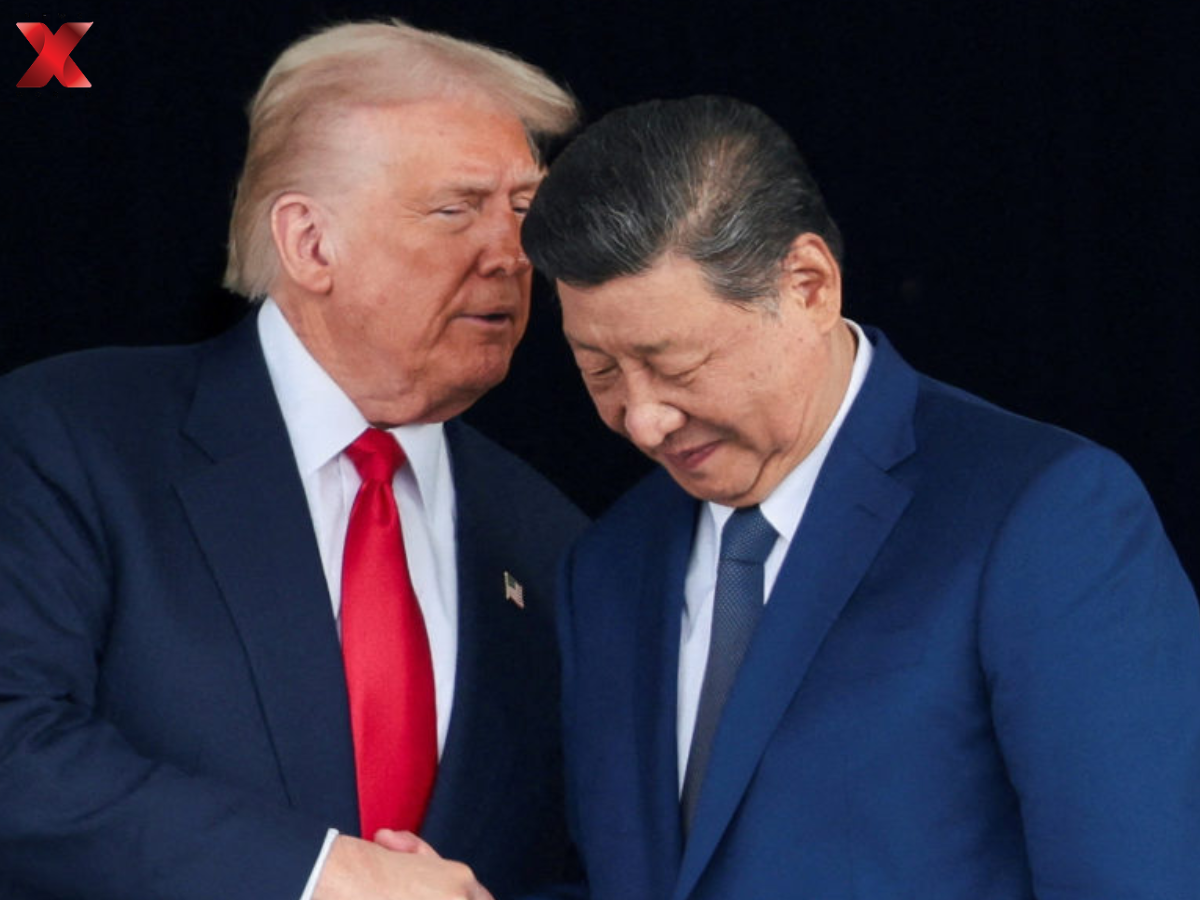
IRAN-US WAR: Donald Trump asked Chinese President Xi Jinping in a letter not to give Iran weapons, and Xi responded that China was not supplying Tehran, the U.S. president told Fox Business Network in an interview that aired on Wednesday, April 15.
Trump, in the interview taped on Tuesday, did not say when the letters were exchanged. Last week, he threatened countries with an immediate 50% tariff if they supplied Iran with weapons.
“I wrote him a letter asking him not to do that, and he wrote me a letter saying that, essentially, he’s not doing that,” Trump told FBN’s “Mornings with Maria” program.
He also said he did not expect shifts in the global oil market over the war with Iran and changes in Venezuela to impact the dynamics of his planned meeting with Xi next month. “He’s somebody who needs oil. We don’t,” Trump said.
One month prior to the visit of President Trump to Beijing, China is increasing the pressure on the U.S., preparing legal weaponry in case of a retaliatory strike against foreign companies that it considers as causing harm to Chinese interests.
The state media and officials claimed that the actions were aimed at sending a message that China could not be poked around by other powers and that Beijing was not ready to compromise its.
It is not only Iran that is getting squeezed by the U.S. blockade of the Strait of Hormuz but also two of its most impactful relations in Asia: India and China are also getting the screws turned on them.
As some 98 percent of Iranian oil exports to China are sold to China, and a summit between President Donald Trump and Chinese leader Xi Jinping is just weeks off, the maximum pressure campaign that Washington is undertaking against Iran poses the risk of destabilizing the already delicate detente that the administration had so carefully nurtured with Beijing.
India, with its complex relationship with U.S., is growing to be increasingly incompatible with U.S. policy with its economic interests, the most eminent of which is the shock in the energy currently damaging its economy. Trump will visit China in mid-May, and in recent weeks, the administration gave numerous indications that it would prefer to have the bilateral relationship established to an extent that would allow the high-stakes meeting to proceed.
(With Inputs From Reuters)
With 13 years on the line, Ashish Kumar Singh loves everything when it comes to movies, music, travel and pop culture. Formerly employed at ANI, Pinkvilla, India Today and HT, Ashish has interviewed some of the top celebrities of India, including Shah Rukh Khan, Aamir Khan, Ranveer Singh, Ranbir Kapoor and Hrithik Roshan, among others. Breaking news excites him and deadlines are what he chases. Interviewing comes naturally to him. Hit him up at ashish.kumar02singh@gmail.com.