
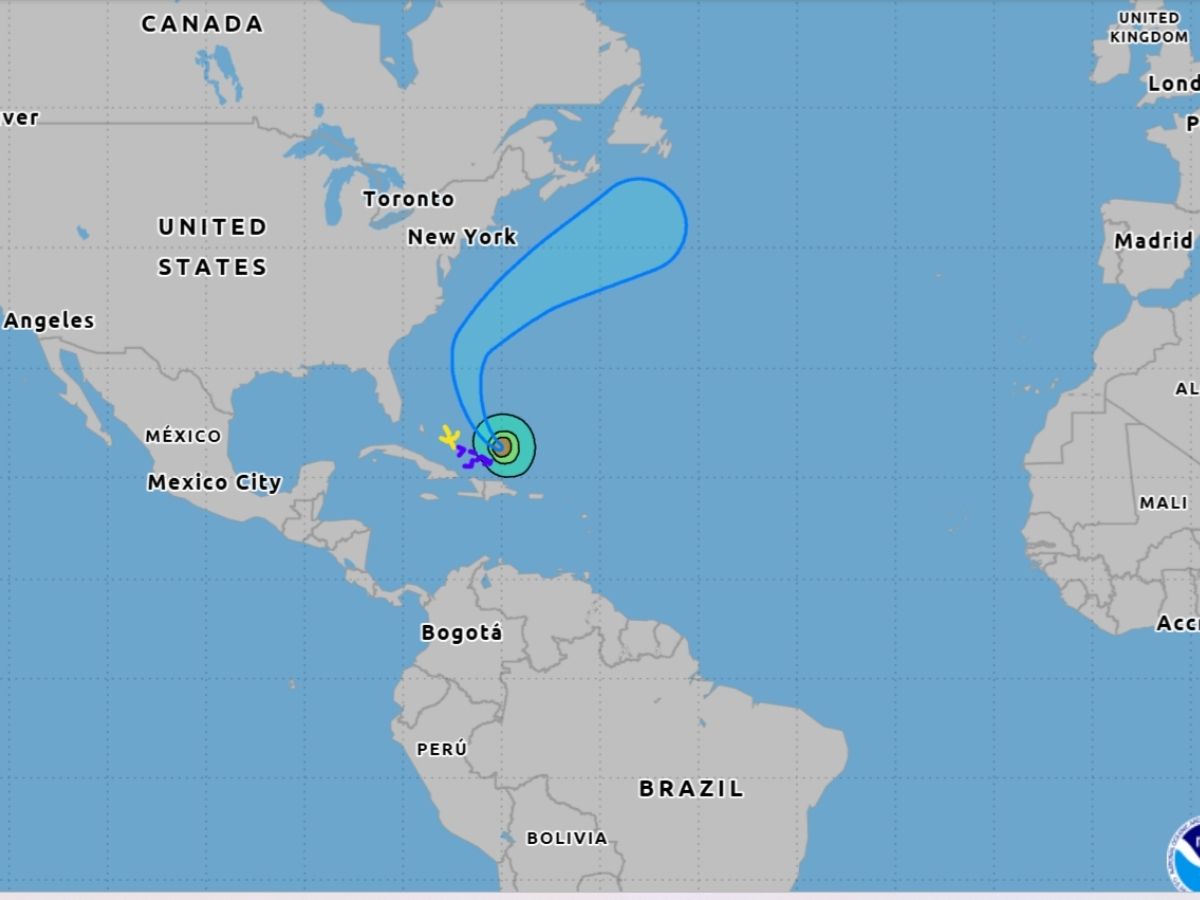

Hurricane Erin has reintensified to a powerful Category 4 storm, packing maximum sustained winds of 130 miles per hour, the US National Hurricane Center (NHC) said early Monday. The storm’s outer bands began impacting the southeast Bahamas and the Turks and Caicos Islands,, according to a report published by The Associated Press late Sunday.
An advisory issued by the NHC for Hurricane Erin stated:
- Bands of heavy rainfall are expected today over portions of Hispaniola and through Tuesday for the Turks and Caicos and portions of the southeast and central Bahamas. Flash and urban flooding are possible.
- Tropical storm conditions are expected in the Turks and Caicos Islands and in the southeast Bahamas today. Tropical storm conditions are possible in portions of the central Bahamas late today through Tuesday.
- Erin is also expected to produce life-threatening surf and rip currents along the beaches of the Bahamas, much of the east coast of the US, Bermuda, and Atlantic Canada during the next several days.
- Interests along the Outer Banks of North Carolina and Bermuda should monitor the progress of Erin as there is a risk of strong winds associated with the outer rainbands during the middle part of the week.
5 am AST Mon, Aug. 18 Key Messages for Hurricane #Erin.https://t.co/UJeRyj4gF1 pic.twitter.com/S8K9cIQS6P
— National Hurricane Center (@NHC_Atlantic) August 18, 2025
Richard Pasch of the National Hurricane Center told the Associated Press, “You are dealing with a major hurricane. The intensity is fluctuating. It’s a dangerous hurricane in any event.”
According to the report, hurricane-force winds are extending up to 60 miles from Erin’s center, with tropical-storm-force winds reaching 230 miles out, with the particular pack of strong winds expected to grow, effectively increasing the storm’s reach.
Impact on Caribbean Islands
Erin’s outer bands soaked Puerto Rico and the Virgin Islands on Sunday with heavy rains and tropical-storm winds, knocking out power for roughly 147,000 customers, according to Luma Energy, which manages the islands’ power grids, as reported by the US-based news agency. According to the report, over 20 flights were cancelled due to the storm, though ports have since reopened as conditions improved.
Effects of Climate Change
Scientists have in recent times linked the rapid intensification of hurricanes to climate change. Warmer ocean temperatures and increased atmospheric moisture pave the way for hurricane formation, causing them to strengthen more quickly and unleash heavier rainfalls.




