

Russia on Wednesday confirmed it had tested successfully the Poseidon, a nuclear-powered, unmanned underwater vehicle that Moscow describes as a breakthrough strategic weapon. President Vladimir Putin stated that the test, carried out on Tuesday, entailed firing the device from a carrier submarine and starting its onboard nuclear power unit, calling the outcome “a huge success.
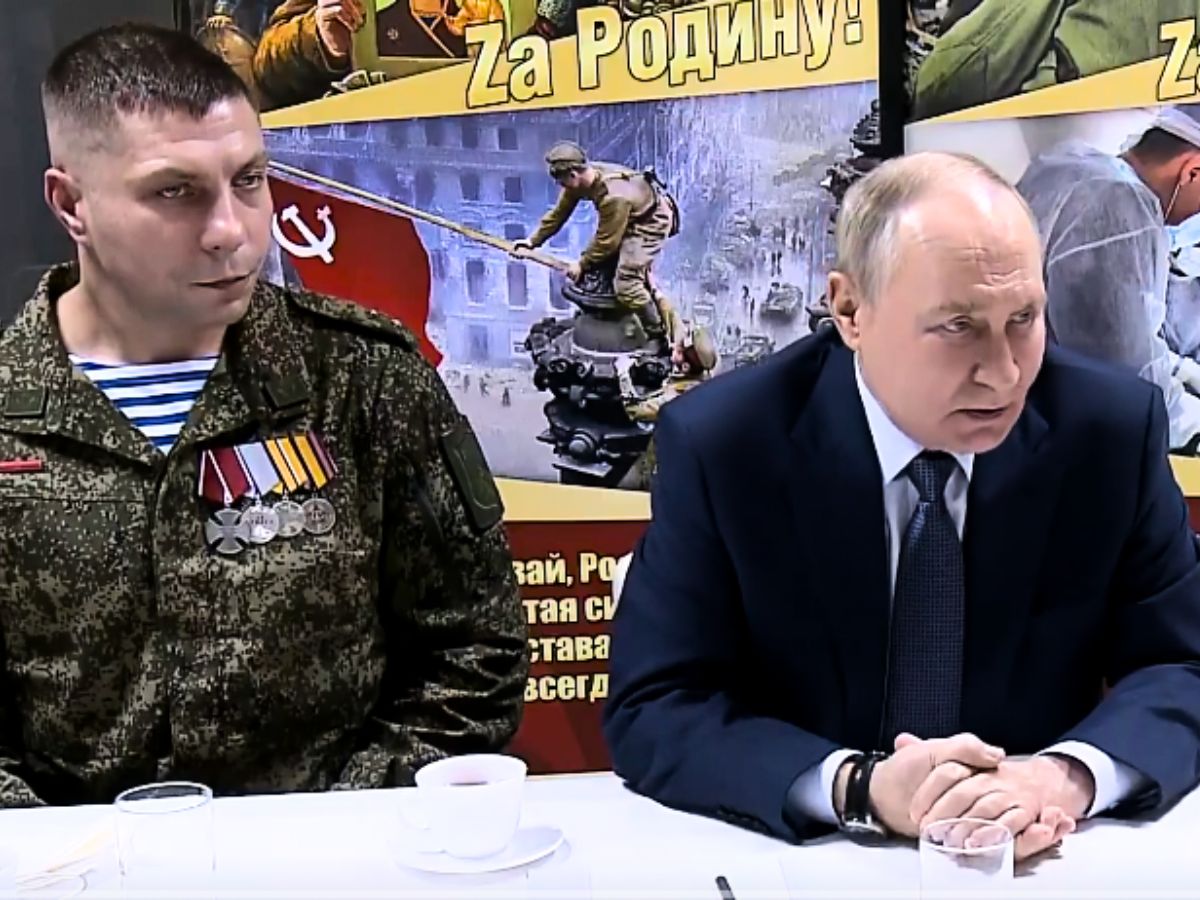
For the first time, we were not only able to launch it using a launch engine of a carrier submarine, but also launch the nuclear power unit on which this device spent some time,” Putin said, visiting soldiers injured in the Ukraine conflict. “Nothing like this,” he said, claiming that the Poseidon’s energy “far surpasses” that of the Sarmat intercontinental missile.
The revelation comes just days after Russian officials brayed about the testing of other nuclear-powered systems, and in the wake of public denunciation from US President Donald Trump, who called on Moscow to focus its efforts on bringing an end to the war in Ukraine instead of testing new weapons. Russian officials seem to have gone ahead anyway, using the tests to highlight Moscow’s advancing strategic capabilities.
⚡️ Vladimir Putin announces successful tests of ‘Poseidon’ nuclear-powered underwater drone
Its capabilities ‘significantly surpass’ the ‘Sarmat’ missile pic.twitter.com/JZAFMJzbyh
— RT (@RT_com) October 29, 2025
What is Poseidon?
Poseidon, also referred to by project designations like Status-6 and by the NATO codename Kanyon, is a submarine-fired unmanned underwater nuclear-powered torpedo designed to stay at deep ocean depths for extended periods, covering vast distances beyond the range of many existing missile-defence systems. Russian state media and officials indicate Poseidon can carry nuclear warheads of massive size and deliver coastal targets from the sea.
Among the characteristics Moscow emphasizes are virtually unlimited persistence due to nuclear power and the capability for undersea approaches toward targets, thereby complicating detection and intercept compared to conventional ballistic or cruise missiles. Russian commentary has identified some as capable of producing apocalyptic consequences on coastal areas, such as radiation pollution; technical details remain closely guarded by Russian authorities.
Russian authorities say Poseidon surpasses the Sarmat ICBM in power and is a great leap in strategic deterrence. Yet numerous technical and operational specifics have not been confirmed in the public sphere.
Independent analysts mention a number of open questions: the precise yield and type of warhead the system would be equipped with, the consistency of its nuclear power source in operating conditions, how many units are production-capable, and whether the dramatic effects sometimes attributed in media reports such as causing a radioactive tsunami would be achieved as stated.
No matter the hype, analysts observe that the gap between Kremlin declarations and verifiable, deployable strength can be considerable. Confirmation of being ready to operate will rely on independent intelligence, satellite photos, and forthcoming public data from official defence sources.
Strategic Context
Moscow frames the creation of Poseidon and other new weapons as retaliations against what it sees as threats from missile-defence plans and the enlargement of NATO. By expanding its strategic force mix to include an unmanned, nuclear-powered underwater vector, Russia seeks to enhance second-strike deterrence the ability to deliver crushing retaliation even if conventional and land-based nuclear capabilities are eliminated.
Experts maintain that the test is intended not just to confirm technology but also to send a geopolitical message: that Russia’s strategic deterrence is still strong even as its conventional forces are fighting in Ukraine.
Regional and Global Implications
The advent of nuclear-powered autonomous underwater weapons creates new challenges for naval surveillance and anti-submarine warfare. Indo-Pacific and Atlantic navies and coastal nations will probably re-examine undersea monitoring, port and coastal defenses, and the ability to detect submarines. The test might spur investments in undersea sensors, ASW platforms, and multilateral intelligence sharing.
For international security and arms control, Poseidon makes classical arms-limitation structures based on missiles and strategic bombers more difficult. The weapon’s unconventional operational profile will likely fuel renewed controversy over transparency, verification and norms surrounding autonomous nuclear systems.
What Comes Next
Russia will likely continue to display and test cutting-edge strategic systems as it develops their capabilities and deployment schemes. Autonomous verification of Poseidon’s complete operational status and capabilities will be paramount to taking correct estimation of the actual strategic balance. On the other hand, regional defence planners and navies will watch closely and make adjustments to surveillance and deterrence postures.
Putin’s statement highlights that the development of nuclear deterrence does not extend to land- and air-based technology alone the oceans are becoming pivotal to future strategic planning.
ALSO READ: Israel Reaffirms Gaza Ceasefire After Deadly Strikes Leave 104 Dead
Sofia Babu Chacko is a journalist with over five years of experience reporting on Indian politics, crime, human rights, gender issues, and stories about marginalized communities. She believes journalism plays a crucial role in amplifying unheard voices and bringing attention to issues that truly matter. Sofia has contributed articles to The New Indian Express, Youth Ki Awaaz, and Maktoob Media. She is also a recipient of the 2025 Laadli Media Awards for gender sensitivity. Beyond the newsroom, she is a music enthusiast who enjoys singing. Connect with Sofia on X: https://x.com/SBCism




