

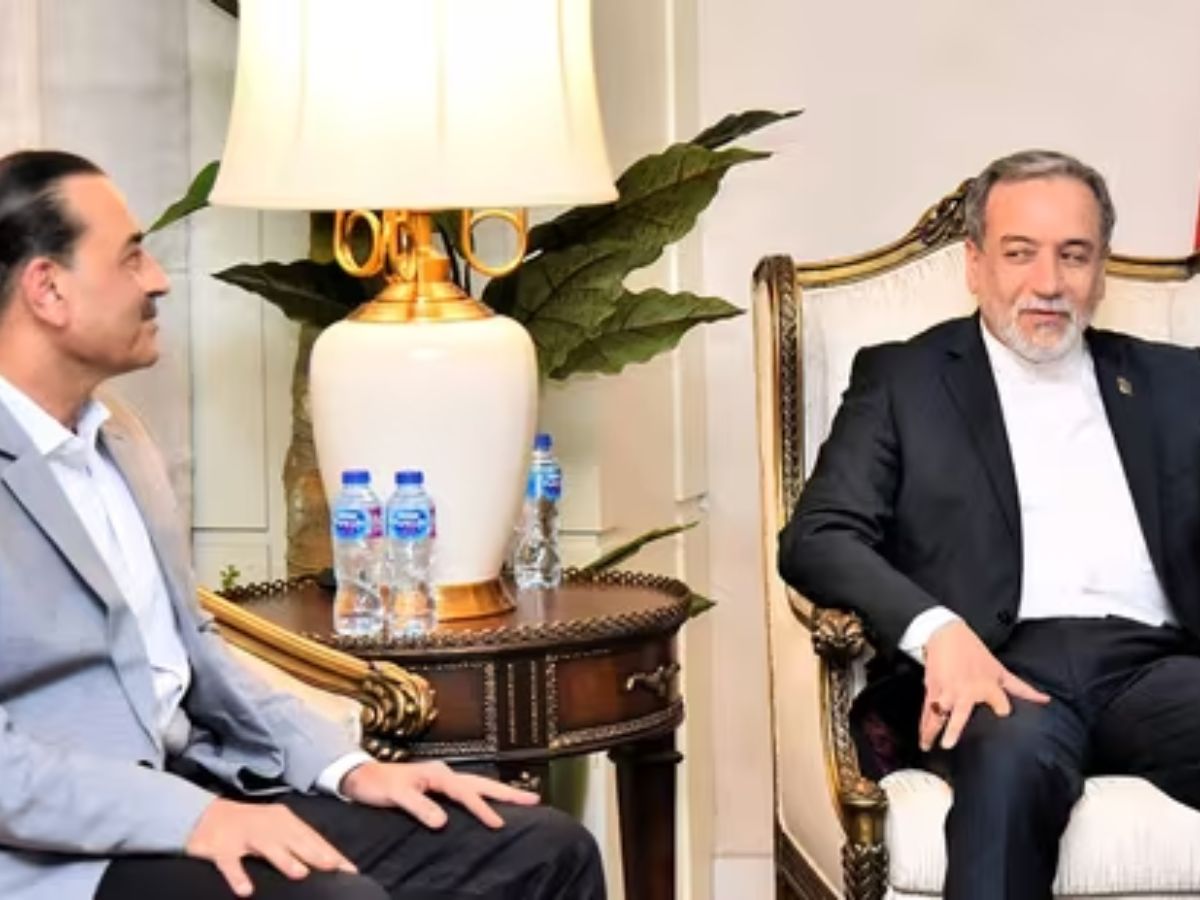
The Iranian Foreign Minister Abbas Araghchi returned to Islamabad on Sunday because his presence at the 2026 conflict mark required it. The weekend activities of Araghchi, which included meetings with Omani officials, led to his return to Pakistan after completing his official duties. The international observers consider his return to Pakistan a positive development because it shows that the two sides have reached an agreement to establish a permanent solution for their ongoing conflict.
US President Donald Trump increased uncertainty after he canceled the scheduled visit of envoys Steve Witkoff and Jared Kushner, but he asserted that the US “has all the cards” because Tehran introduced a new “paper,” which he called a peace proposal. The back-channel mediation efforts that Pakistani Prime Minister Shehbaz Sharif and Army Chief Asim Munir lead have become the main path for reducing tensions between the two parties.
Sovereignty-Centric De-escalation & Maritime Security Directives
Tehran’s renewed framework for peace uses a “principled position” to reject Western-proposed “imposed negotiations,” which take place during economic blockades. Araghchi’s return depends on his ability to meet international demands for reopening the Strait of Hormuz while Iran demands a security system that excludes Western military involvement.
Iran seeks to establish a maritime protocol through its partnership with Oman, which will guarantee safe passage while it demands the immediate termination of the US-led naval blockade that restricts access to Iranian ports. The original approach aims to shift from a military deadlock to an international security framework that will restrict “warmongers” through treaties instead of single-state military power.
Strategic Reciprocity & The Financial Reparation Mandate
The present diplomatic situation requires all parties to engage in extensive efforts to achieve “strategic reciprocity,” which Iran uses as a basis for its demand of more than temporary peace. The complete sanctions relief and national asset unfreezing requirements serve as essential components for reaching final agreements according to the new Islamabad terms. The current discussions center on “war reparations” and the complete end of fighting, which extends to all battlefields, including those with regional allies.
Iran tests Washington’s commitment to diplomatic relations by presenting a “much better” proposal, which it delivered in less than an hour after the US canceled its previous agreement. The solution exists as an acknowledgment of Iranian sovereignty, which plays a pivotal role in determining the future stability of the Middle East.
Bhumi Vashisht is a passionate media graduate and emerging voice in digital journalism, currently working with NewsX as an Entertainment and Viral Content Writer for the past 10 months. With a strong understanding of trending digital culture, celebrity news, and audience engagement, she specializes in crafting compelling entertainment stories and viral content that resonate with modern readers. Known for her creative storytelling approach and sharp eye for trends, Bhumi brings fresh perspectives and strategic content ideas to the fast-paced media industry.





