
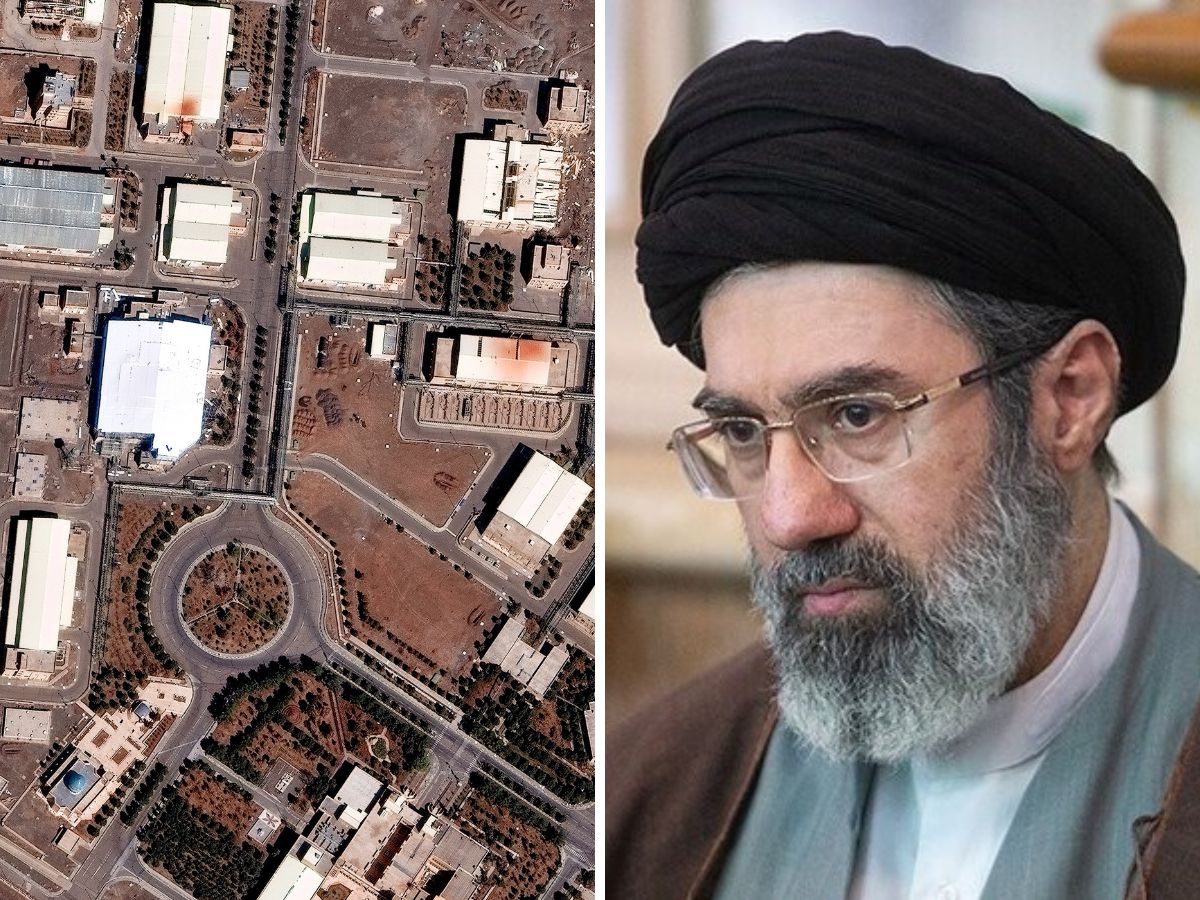

Iran-US-Israel War: The United States intelligence has warned that Iran is racing to build a nuclear bomb amid the ongoing Middle East war, which has entered its third week.
Iran has moved its remaining uranium stockpile to Pickaxe Mountain, a facility located deep underground and considered an almost impenetrable bunker, a report by Fox News quoted US intelligence sources as saying.
The report further mentioned that scientists are reportedly working there around the clock. Even bunker-buster bombs may not be effective against it, as the facility is deep-seated underground.
Experts believe that the site could only be neutralized by deploying ground forces.
US Mulling Ground Deployment Of Forces
With US intelligence warning that Iran is actively working to build a nuclear bomb, the US Secretary of State, Marco Rubio, reportedly told the US Congress that “people are going to have to go and get it,” hinting at a ground invasion to secure the enriched uranium.
Earlier, many experts had warned that Iran has over 440 kg stockpile of Highly Enriched Uranium (HEU), which represents the greatest nuclear threat as it can be easily developed into weapons-grade nuclear fuel, a Guardian report stated.
IAEA Details Iran’s HEU Stockpiles
On Monday, IAEA chief Rafael Grossi said the UN watchdog estimates that around 200 kg of Iran’s highly enriched uranium, which remained intact after airstrikes last June, is likely stored in deep tunnels at a nuclear complex outside Isfahan.
He further added that another “unknown amount” of HEU is believed to be located at Natanz, where Iran has constructed a new deeply buried and fortified facility called Kuh-e Kolang Gaz La – known among Western analysts as Pickaxe Mountain.
Trump Acknowledges Challenge In HEU Rescue
When questioned about the ‘Uranium’ rescue, US President Donald Trump on Saturday said he would not send US forces until Iranian defence “would be so decimated that they wouldn’t be able to fight on the ground level”.
“At some point maybe we will,” Trump said. “We haven’t gone after it. We wouldn’t do it now. Maybe we will do it later.”




