

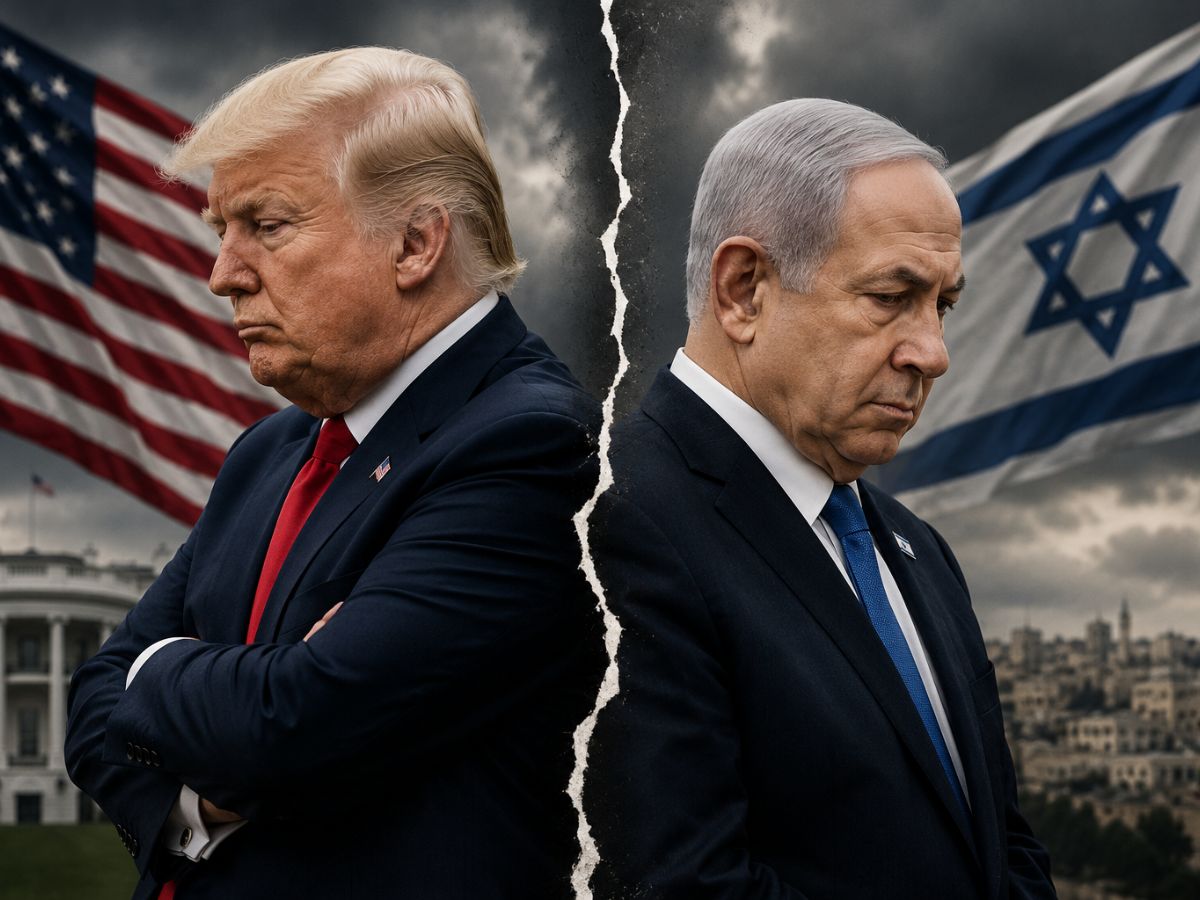
US President Donald Trump and Israeli Prime Minister Benjamin Netanyahu are heading for a ‘break-up’ if we go by the public statements made by the POTUS over the past few weeks. Bibi might have thought that the war against Iran would bring the two leaders closer, but instead, it has completely thrown the other side of the coin – the two leaders are clashing publicly. From the beginning of the war, differences in priorities between the US and Israel had remained visible but not publicly. Over the weekend, those divisions appeared more pronounced than ever, as both leaders sought to demonstrate political independence from one another. For Netanyahu, domestic criticism has intensified, with political opponents accusing him of turning Israel into a client state of Washington and failing to push back against Trump. US President, meanwhile, has also faced criticism both from political rivals and voices within his own coalition, with accusations that he has allowed Israel to shape US policy.
Tensions Between US And Israel
The increasingly public friction follows weeks of mounting tensions between the two leaders. According to reports, Trump had become “furious” over recent Israeli military actions that he believed were intentionally timed in ways that risked undermining sensitive backchannel negotiations underway with Tehran. The tensions reached a new peak when Netanyahu ordered a large-scale airstrike targeting Beirut’s Hezbollah-controlled Dahieh district just hours before the US and Iran were expected to announce a preliminary agreement.
Trump later described a heated conversation with Netanyahu during an interview with Fox News.
“What the fk are you doing?”* Expressing frustration over the timing of the strike, Trump added, “It is so bad, I couldn’t believe it. An hour before we are supposed to sign the deal.”
He further criticized Netanyahu’s decision-making, saying, “Why did Bibi have to do a fking attack? I was so pissed off. I let him know. He has no fking judgment.”*
Trump Lashes At Netanyahu
In an interview with the Financial Times on Sunday, Trump signaled that Israel would ultimately have to align with Washington’s diplomatic efforts.
“Won’t have any choice.” Trump added, “I call the shots. I call all the shots. He doesn’t call the shots.”
Despite Trump’s comments, Netanyahu appeared to assert his own position. Last week, Israel carried out strikes on a petrochemical facility in southern Iran. US officials later stated that American forces did not participate in the operation.
Publicly, the move appeared to signal defiance toward Washington. However, later reporting by The Wall Street Journal indicated that Netanyahu had informed Trump during a Sunday conversation that Israel considered retaliation unavoidable, while Trump had only requested that any response remain limited.
The strikes followed another reportedly tense phone call. According to Trump, he warned Netanyahu that further escalation could eventually leave Israel confronting Iran without US backing.
Trump Says Netanyahu Nearly Derailed Iran Peace Agreement
Trump later intensified his criticism of Netanyahu, claiming that the Israeli prime minister had nearly disrupted efforts to secure a peace agreement with Iran. Speaking during a phone interview with The New York Times, Trump accused Netanyahu of delaying progress through the Beirut strike and described him as difficult to work with.
“He’s a very difficult guy.”
Trump also argued that Israel should recognize Washington’s role in pursuing diplomacy and preventing Iran from developing nuclear capabilities.
“And to be honest with you, he should be very thankful to us for doing this. Because if Iran had a nuclear weapon, Israel wouldn’t be around for two hours.”
More Americans Support Palestine Than Israel
Beyond the leaders, there is a changing public sentiment in the United States, according to polls. A Gallup survey found that, for the first time, Americans expressed greater sympathy toward Palestinians than Israelis in the conflict.
According to the poll:
41% of Americans said they sympathize more with Palestinians
36% said they sympathize more with Israel
The remaining respondents said they were undecided or favored both sides or neither
While Gallup noted that the gap was not statistically significant, the results marked the first time in more than two decades of asking the question that Israel did not hold the lead.
Also Read: Iran-US-Israel War LIVE and Latest Updates
Zubair Amin is a Senior Journalist at NewsX with over seven years of experience in reporting and editorial work. He has written for leading national and international publications, including Foreign Policy Magazine, Al Jazeera, The Economic Times, The Indian Express, The Wire, Article 14, Mongabay, News9, among others. His primary focus is on international affairs, with a strong interest in US politics and policy. He also writes on West Asia, Indian polity, and constitutional issues. Zubair tweets at zubaiyr.amin





