

US President Donald Trump met executives from seven major American defense contractors on Friday, as the Pentagon assesses its military supplies following recent operations, including US strikes on Iran.
Announcing the meeting in a social media post, Trump said discussions focused on defense production and scheduling as the United States works to replenish weapons and equipment used during recent military engagements.
“We just concluded a very good meeting with the largest US Defense Manufacturing Companies where we discussed Production and Production Schedules,” Trump wrote.
The meeting comes amid reports that Iran may have successfully targeted a critical component of the United States’ missile defense network during the early stages of the ongoing conflict.
Iranian Strike Reportedly Destroys THAAD Missile Defense Radar
A report by Bloomberg, citing a US official, said Iran destroyed a radar system crucial for directing American missile defense operations in the Gulf region during the opening days of the war.
Satellite imagery reviewed by CNN showed that an RTX Corp. AN/TPY-2 radar and associated support equipment were destroyed at Muwaffaq Salti Air Base. The radar is used by the US Terminal High Altitude Area Defense system (THAAD).
According to the report, US officials later confirmed that the equipment at the base had been destroyed.
Data compiled by the Foundation for Defense of Democracies indicates that two Iranian strikes targeted locations in Jordan, one on February 28 and another on March 3. Both attacks were initially reported to have been intercepted.
What is THAAD? Radar Worth $300 Million
According to the Bloomberg report, the destroyed radar, valued at roughly $300 million, was part of the AN/TPY-2 radar system integrated with the THAAD missile defense network.
The system provides crucial tracking data used to detect incoming ballistic missiles and guide interceptors toward their targets.
Without the radar, missile interception responsibilities could fall more heavily on the MIM-104 Patriot Missile System. These systems use PAC-3 interceptor missiles, which are already reported to be in limited supply.
Experts Say THAAD Strike Would Be One of Iran’s Most Successful Attacks
Experts say that successfully hitting such a radar would mark a major operational achievement for Tehran.
Observers further say that if successful, an Iranian strike on a THAAD radar would mark one of Iran’s most successful attacks so far.
All The THAAD Systems US Posseses
The United States currently operates eight THAAD systems worldwide, including deployments in South Korea and Guam.
Each battery costs roughly $1 billion, with the radar itself accounting for about $300 million of that total, according to the Center for Strategic and International Studies.
Missile defense experts say the loss of such a system would be a major setback given the limited number of batteries currently available.
US Army’s current force of eight THAAD batteries still falls short of the nine-battery structure requirement set in 2012.
How a THAAD Battery Works
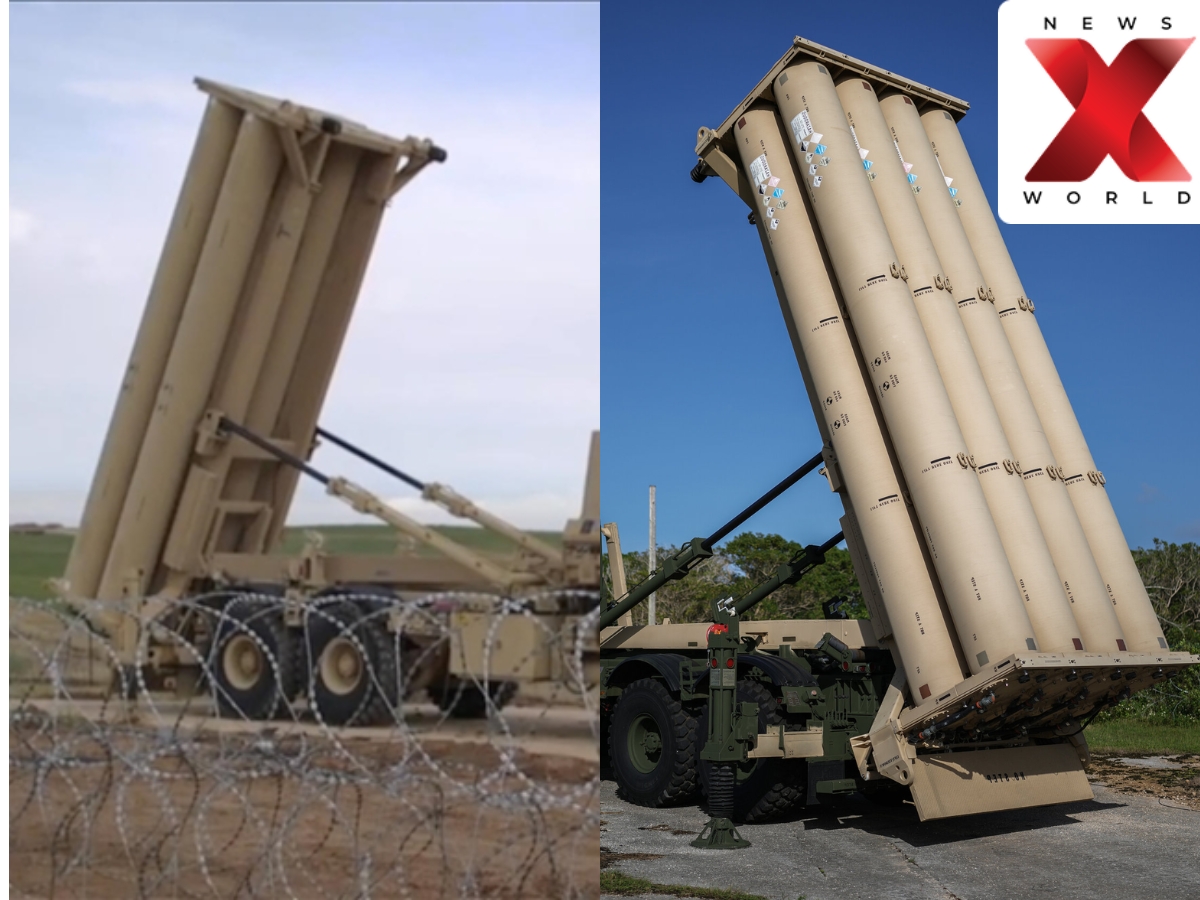
A typical THAAD battery includes around 90 soldiers and six truck-mounted launchers capable of firing interceptor missiles.
Each launcher carries eight interceptors, giving a total of 48 interceptor missiles per battery. The system also includes a TPY-2 radar, a tactical fire-control system, and communications equipment.
The interceptor missiles used in the system are manufactured by Lockheed Martin, with each missile costing about $13 million.
THAAD systems are designed to destroy ballistic missiles near the edge of the atmosphere, allowing them to counter more complex threats than shorter-range Patriot missile defense batteries.
Zubair Amin is a Senior Journalist at NewsX with over seven years of experience in reporting and editorial work. He has written for leading national and international publications, including Foreign Policy Magazine, Al Jazeera, The Economic Times, The Indian Express, The Wire, Article 14, Mongabay, News9, among others. His primary focus is on international affairs, with a strong interest in US politics and policy. He also writes on West Asia, Indian polity, and constitutional issues. Zubair tweets at zubaiyr.amin




