
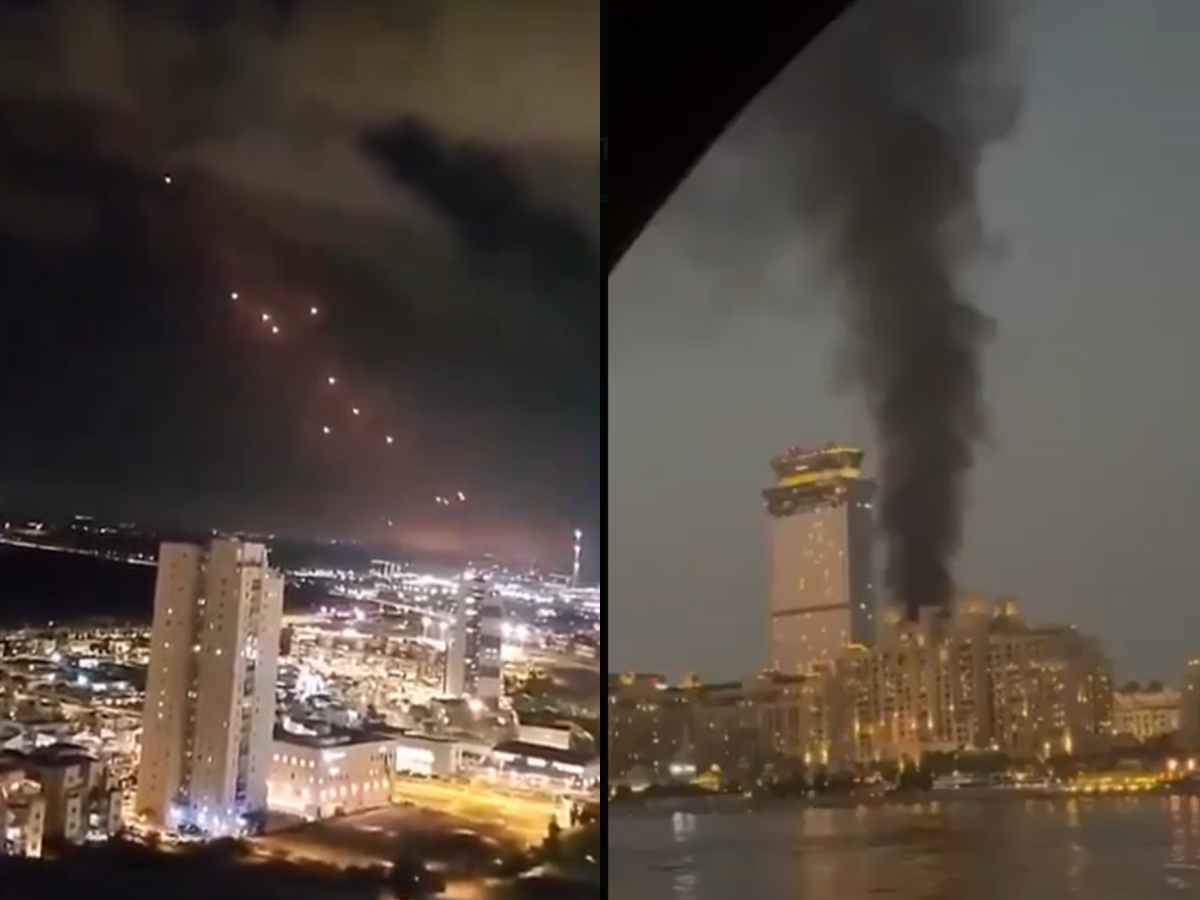

The war involving the United States, Israel and Iran has now turned into a wider regional crisis. One country that is feeling much of the impact is the United Arab Emirates (UAE). Even though the UAE is not directly fighting in the war, experts say it has become one of the main targets of Iranian retaliation. Because of this, the country is facing security threats as well as economic and political pressure.
The conflict began on February 28, when the United States and Israel launched major strikes on Iran. The attacks have killed several senior Iranian leaders which include Supreme Leader Ali Khamenei. Iran has quickly responded with retaliation and launched drone and missile strikes across the Gulf region.
Missiles and Drones Target the UAE
One major reason the UAE is paying the price is the large number of attacks directed toward it. According to the UAE’s defence ministry, more than 1,700 missiles and drones have been launched toward the country since the war started. Officials say that over 90 percent were intercepted by air defence systems.
However, some projectiles still managed to get through. A few landed in populated areas, hitting homes, offices and roads. These attacks killed four civilians and injured more than a hundred people.
Iran’s Islamic Revolutionary Guard Corps (IRGC) has openly said it is targeting US “bases” and strategic interests in neighbouring Arab countries, and many of those attacks have been directed toward the UAE.
Why the UAE Is Being Targeted
Experts say there are several reasons why Iran is targeting the UAE. One important reason is the country’s close security partnership with the United States. The UAE is considered a major defence partner of Washington and has spent billions of dollars on American military equipment, including fighter jets and air defence systems.
Iran sees the UAE as a key US ally in the Gulf and a natural target for retaliation because of their relationship. Reports say that Sanam Vakil, an analyst from Chatham House, said that attacking the UAE sends a clear signal to Washington and its partners.
“By striking the UAE, Iran is not only targeting a key US partner,” Vakil said. She added that the attacks also show that a country that sits at the heart of global finance and trade “cannot be insulated.”
Dubai’s Global Importance Makes It a Symbolic Target
Another reason the UAE is feeling the pressure is the global importance of Dubai. The city is a major centre for tourism, aviation, business and international trade.
“Dubai is really the epicenter of globalization,” said Fawaz Gerges, a professor of international relations at the London School of Economics. According to reports, he further said that Iranian leaders see Dubai as a symbol of the Western-linked global economic system.
Even a small attack on Dubai can grab global attention and create panic. Pictures of fires near hotels or reports of incidents close to Dubai International Airport quickly spread around the world.
Economic and Aviation Impact for UAE
The war has also caused serious economic disruption in the UAE. Missile threats and regional airspace closures have forced airlines to cancel thousands of flights. Even Tourism and business activity have also slowed down.
The conflict has also messed up the global energy markets. Oil prices have gone up because of fears about the safety of the Strait of Hormuz which is one of the world’s busiest routes for oil and gas shipments and has been shut by Iran.
Geography and Proximity to Iran
Location is another key factor. The UAE is very close to Iran. The two countries are separated by only about 100 kilometres of water across the Persian Gulf. This short distance makes it easy for missiles from Iran and drones to reach the UAE territory compared to other countries in the region.
A War the UAE Did Not Choose
The UAE government has repeatedly said that it does not want to be part of the war. Officials from Dubai have called for deescalation of tensions. The country’s ambassador to the United Nations has also warned that the conflict could have serious consequences for the entire region.
Even though the UAE is not directly involved in the fighting, it is still stuck in the middle of the crisis.




