
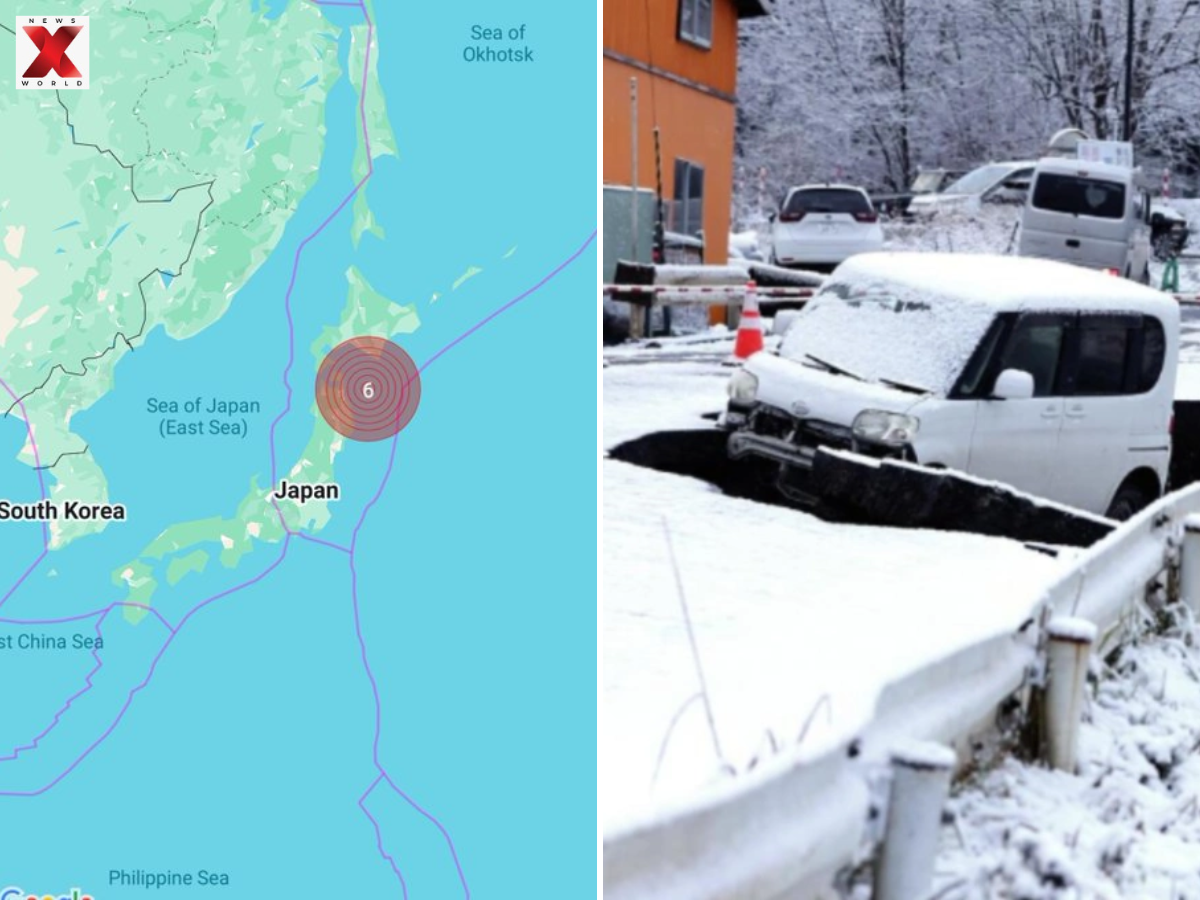

On Wednesday, the European Mediterranean Seismological Centre announced that an earthquake of magnitude 5.7 hit off the east coast of Honshu, Japan. EMSC reported the depth of the quake to be 31 km. It was previously estimated the magnitude to be 6.5 with depth of 57 km.
The event was a powerful earthquake of magnitude 7.5 which struck the northeastern part of Japan towards the end of Monday injuring over 20 people and causing tsunami alerts which were reduced to advisories some hours later.
Another high magnitude (M5.7) #earthquake in #Japan
So far 6 earthquakes of magnitude> 5.5 in last 1 week
. https://t.co/IIqCwpFRe8 pic.twitter.com/x05ryM7Cnj— KaKnKi (@kaknki_) December 10, 2025
The tsunami that the Japan Meteorological Agency (JMA) first reported as high as 3 metres (10 feet) would hit Japan had been struck by the earthquake off the coast at 11:15 pm (14:15 GMT) on Monday.
The JMA said that tsunamis between 20 and 70cm (7 to 27 inches) high had been observed in several ports in the prefectures of Hokkaido, Aomori and Iwate.
Why the Country Faces Constant Seismic Threats
The occurrence of earthquakes in Japan is not a new phenomenon. Actually, it has one of the most active countries in the world and the cradle of seismology or the science of earthquakes. It is also the place where the study of tsunamis (the word in Japanese means harbor and wave) started.
Japan has also frequently dominated the headlines of other countries with Earthquake-related damage with the most notable damage of a 9.0 magnitude earthquake, tsunami and nuclear meltdown causing the largest nuclear disaster since Chernobyl in 1986.
Four major tectonic plates rest on Japan hence, it is one of the areas in the globe that are most prone to tectonic activities.
The active tectonics of the region make Japan and its surrounding area home to 18 percent of all earthquakes in the world, as said Saeko Kita, seismologist at the International Institute of Seismology and Earthquake Engineering in Ibaraki, Japan.
Japan experiences approximately 1, 500 earthquakes every year that can be felt by people. Actually there is seismic activity of some form recorded every five minutes or so.
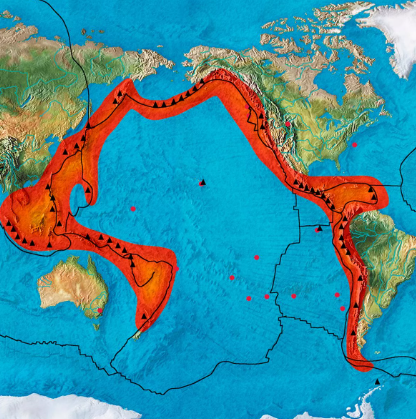
Having that much earthquake activity along the horseshoe shaped area commonly known as the Ring of Fire and the Pacific rim has over 400 active volcanoes is no exception.
It is located on the eastern coast of Australia up to the eastern coast of Russia and down the western coast of North America and the western coast of Chile.
Japan earthquakes and the ring of fire
It is a geologically active zone whereby earthquakes, tsunamis and volcanoes are prevalent. The U.S Geological Survey and the International Tsunami Information Center reported that about 80 percent of the greatest earthquakes and tsunamis in the world take place in this region.
Taiwan and the Philippines are located above three major tectonic plates and prone to earthquake activity as well, according to Lucy Jones, a seismologist and an over three-decade employee of the U.S. Geological Survey.
And though this is in a larger and more populated nation, Japan, than Taiwan and the Philippines, more focus has been directed towards Japan, in part, due to an impression that greater numbers of people are vulnerable to earthquakes, Jones said.
She said that long history of tracking and researching the effects of earthquakes and tsunamis, coupled with the efforts to prepare against such disasters that Japan had invested in over the years, had contributed to that perception.
Following the 1995 Kobe earthquake, the Japanese government changed its disaster response which enabled it to collect information in five minutes after an earthquake, according to Geller of the University of Tokyo, and enabled it to deploy disaster relief forces rapidly.




